HWS News
8 October 2026 Keeping the Aperture Open
At the Anderton Economic Policy Symposium, Bank of America CEO Brian Moynihan explored AI, leadership and the economy through a lesson he learned long before banking: Keep looking beyond what you already know.
A history major from a family of eight, Brian Moynihan knew little about banking or business when he became a lawyer. He started a family and joined a successful practice -— until a client made him an offer.
“I was lucky,” he said.
Without knowing it would work out, the future CEO and Chair of the Board of Bank of America left law for banking, to eventually become the leader of the second-largest bank in the country and one of Wall Street’s longest-tenured CEOs.
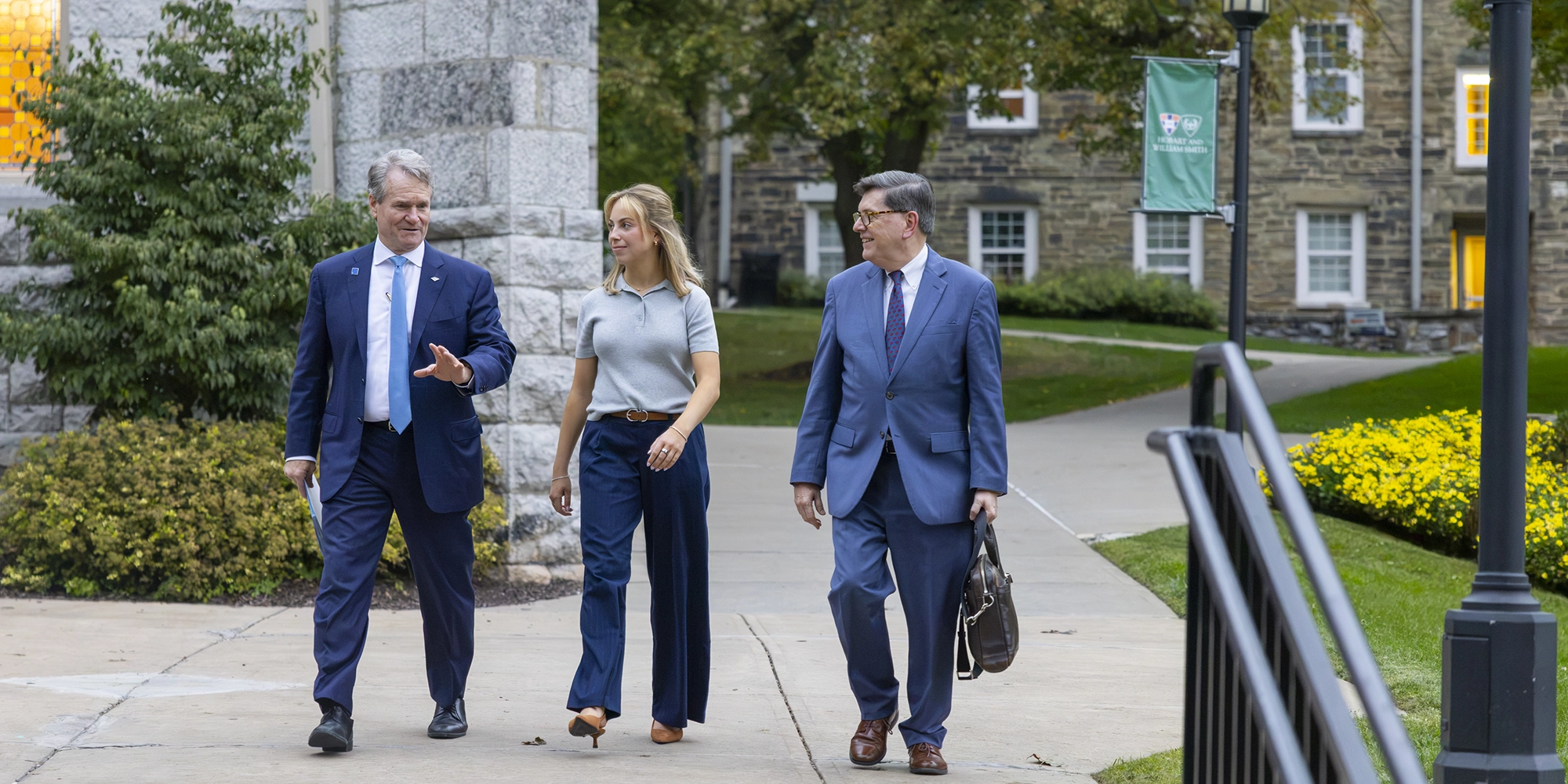
Moynihan was on campus Tuesday night as the featured speaker for the 2026 Anderton Economic Policy Symposium, where he shared lessons from some of the most consequential events of the last 25 years including the 2008 financial crisis, 9/11 and the COVID pandemic.
Established in 2022 by former Trustee James F. Anderton IV ’65, the symposium brings leaders in economics and public policy to HWS to engage with students. Professor of Economics Feisal Khan, who administers the symposium, recalled discussing potential speakers with Anderton months ago when Anderton suggested Moynihan.
“I thought, ‘How the heck am I going to get Brian Moynihan here?’” Khan said. Anderton, it turned out, knew someone. “Thank you for that,” Khan told him from the stage, “and thank you for giving us this fantastic opportunity.”
Moynihan's Campus Visit
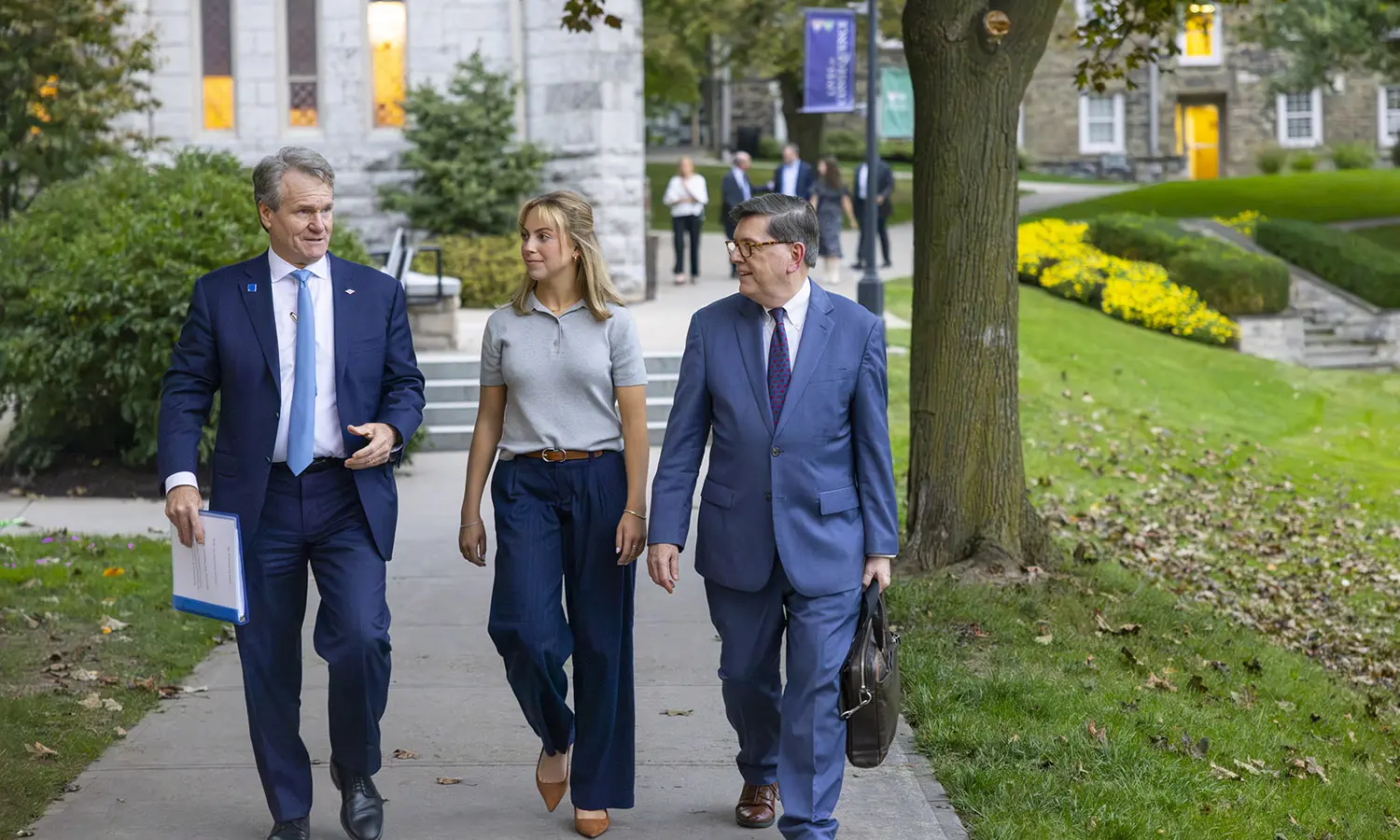
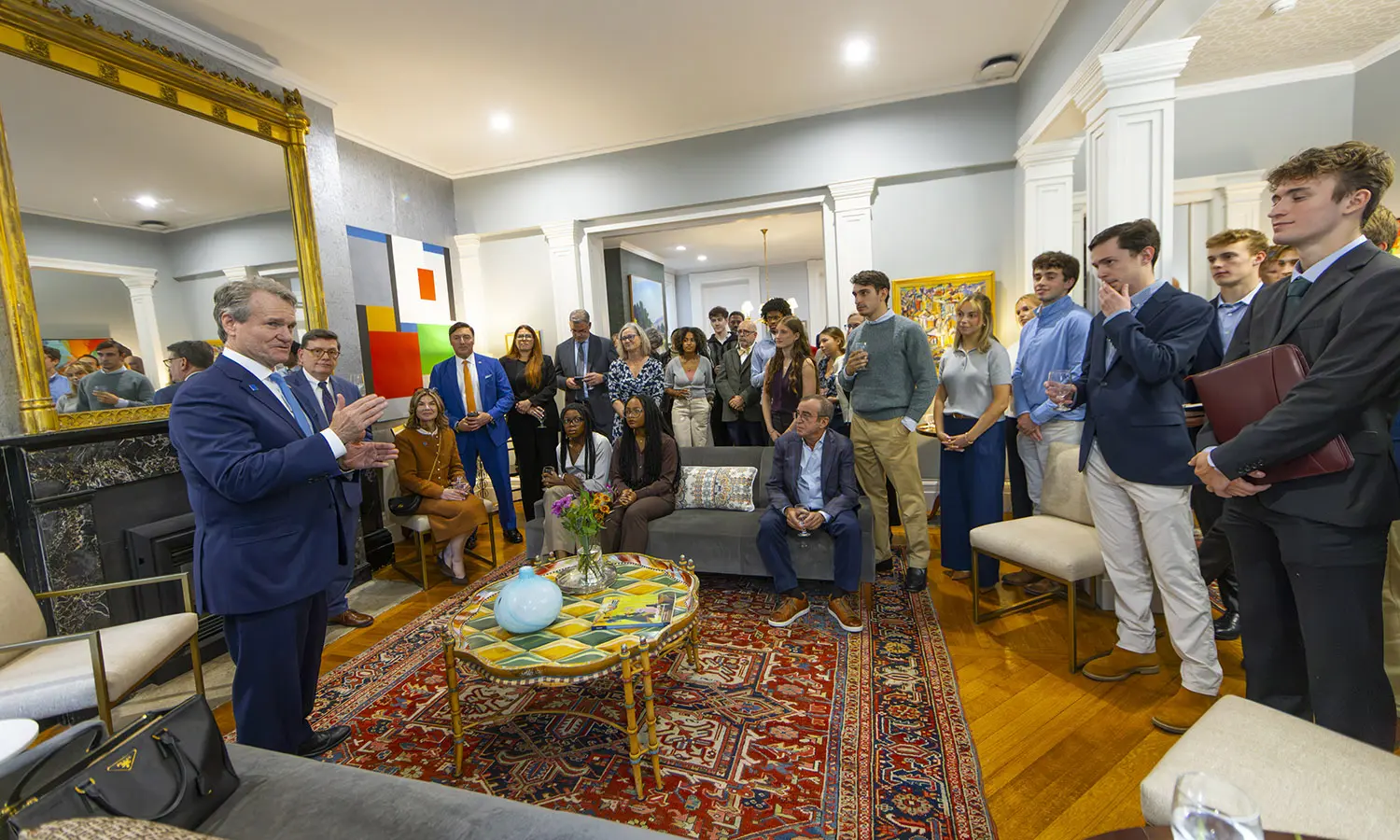
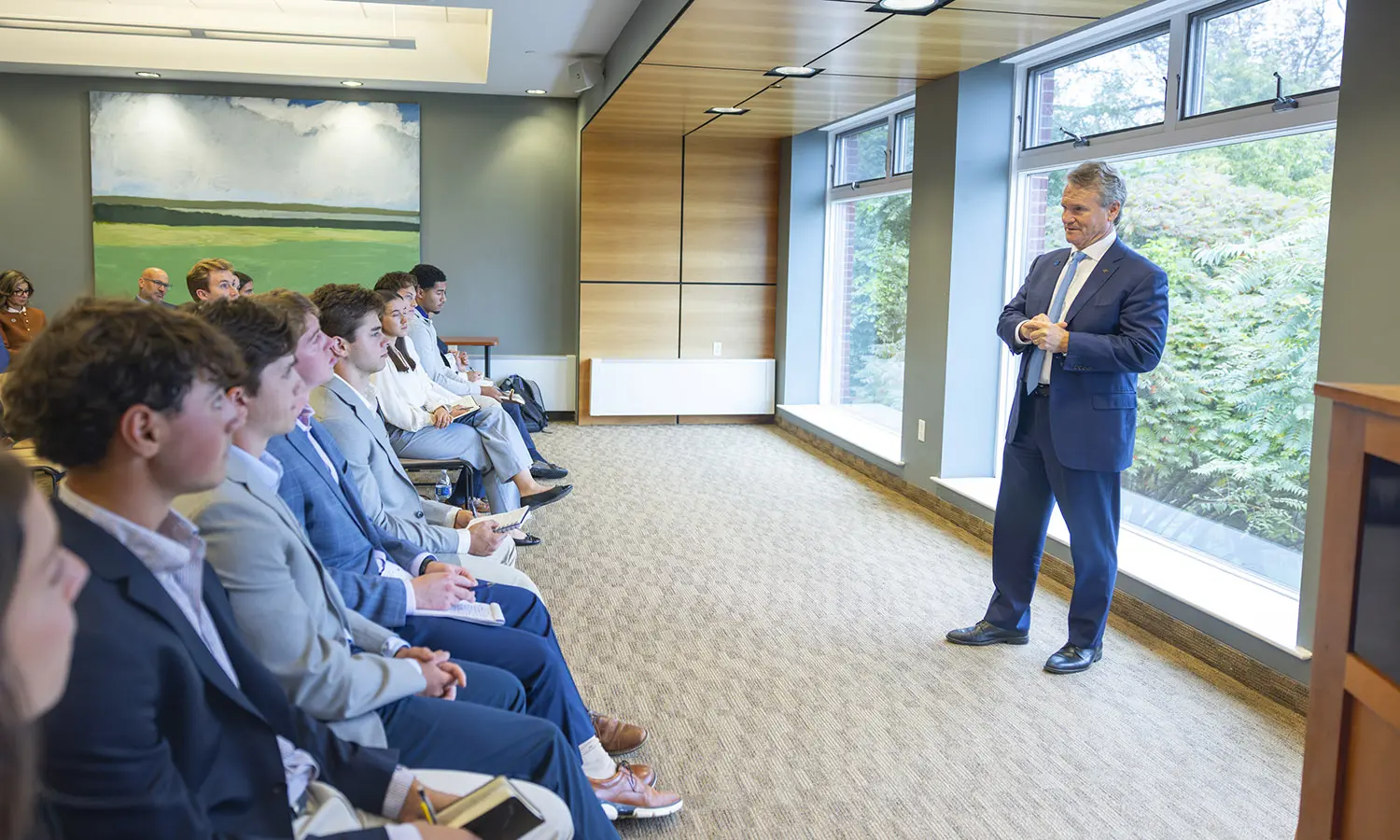

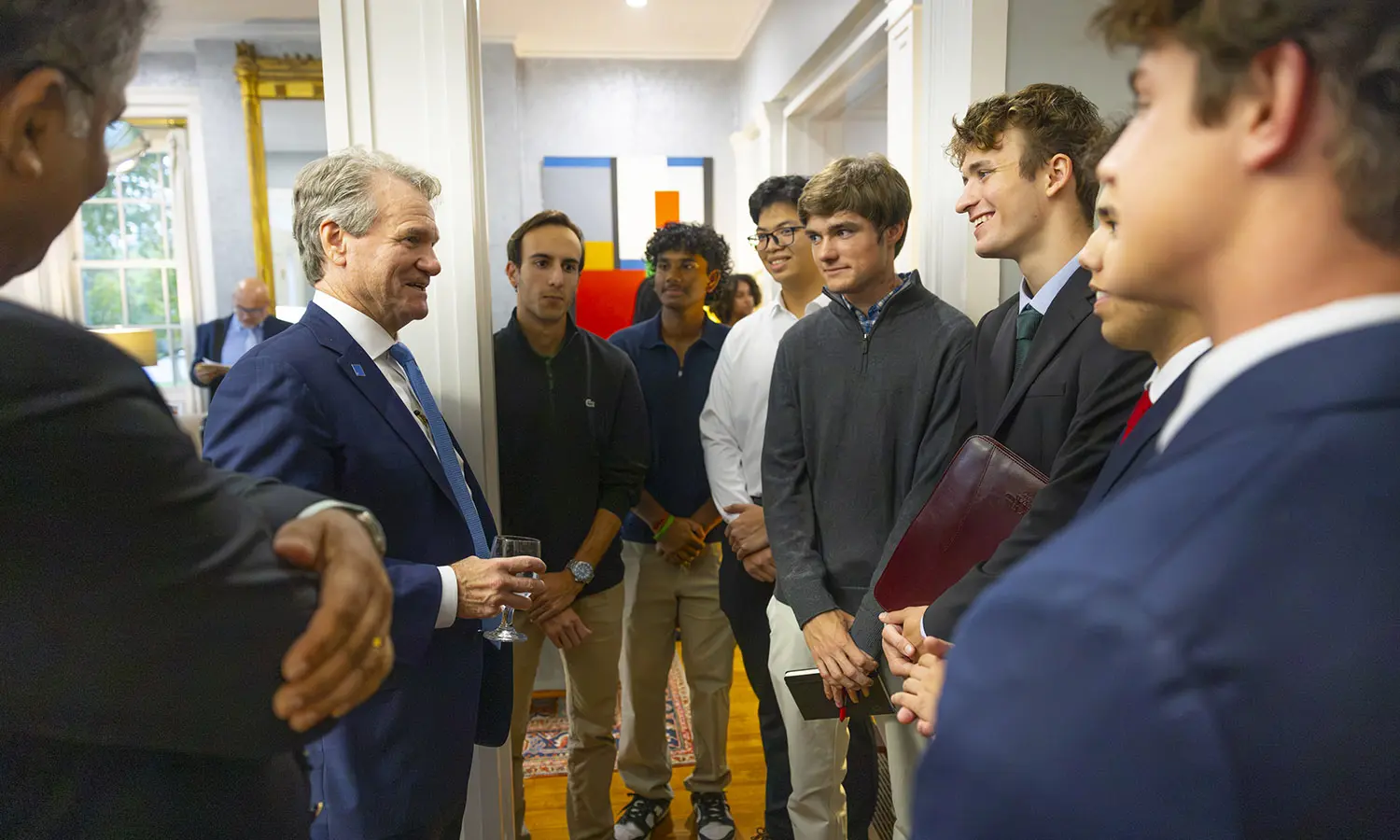

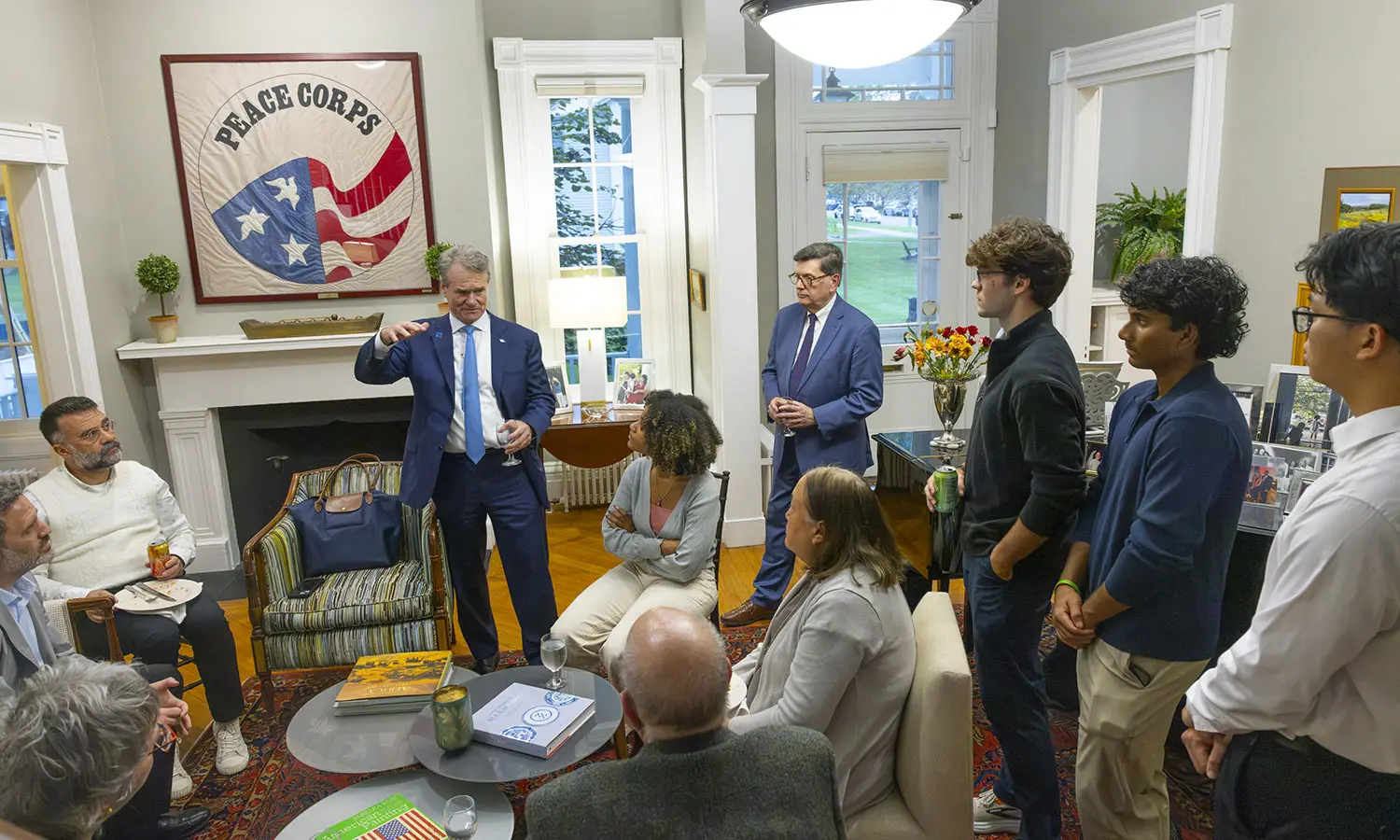
When asked to talk about his perspective as an undergraduate, Moynihan said history courses at Brown University and stacks of newspapers on his paper route forever changed his perspective.
“I didn’t know the Wall Street Journal existed until I started delivering it as a student,” he said. Starting out at 6 a.m. every morning, Moynihan delivered 600 newspapers a day.
“I just love the feel of real newspapers,” Moynihan said. Reading articles beyond his natural interests, he explained, helped him make connections he otherwise would have missed.
Curiosity — the willingness to look beyond whatever an algorithm serves up — became a recurring theme throughout the evening’s conversation with Gearan, who asked what news occupies his attention most today.
Harnessing the AI Engine
Moynihan pointed to artificial intelligence; current geopolitics; the challenge of adapting to higher interest rates and growing government debt. Of those, he said, AI gets a good share of headlines.
Moynihan described AI as a “powerful engine” driving another industrial revolution — technology capable of changing more than just the speed of work, but how professionals do it.
In medicine, for example, AI can process enormous volumes of information and accelerate the search for promising discoveries. In the haystacks, he said, researchers can now find the needle.
For students, he said, familiarity with AI in the workplace can narrow the advantage once conferred by years of professional experience. But the technology comes with a warning: it cannot become a substitute for learning, thinking or judgment.
“My advice to people is harness (AI), learn from it. Make it your tool to make yourself successful,” he said. “The danger is, don't lose your curiosity. Don't lose your willingness to learn."
That makes a liberal arts education especially valuable, he said, but only if that education continues to expand.
"You have to open your aperture and keep it open or the whole world starts closing in, and then when all these students leave Hobart and William Smith, they're going to be less smart the next day unless they keep that aperture open.”
A View Inside the Economy
Bank of America, Moynihan explained, sees economic activity at enormous scale through businesses and employees across the country and around the world, and the movement of money among some 70 million consumer clients — from paycheck deposits and card purchases to ATM withdrawals and checks. Together, Moynihan said, they can reveal a distinction between what consumers say about the economy and what they actually do.
In September, he said, consumer spending among Bank of America customers was about 5% higher than a year earlier. Cruise bookings were up about 13%, while restaurant spending had increased by roughly 3% to 4%.
“Some people feel what they feel, but what they do is different,” Moynihan said.
His assessment of the economy: “It’s solid.”
A roughly 2% growth rate, he said, is consistent with the long-term growth of a mature U.S. economy, although inflation, interest rates and the cost of borrowing remain concerns, particularly for small and midsized businesses.
Rather than predicting what happens next, Moynihan said his job is to study what the evidence shows now as he “thinks through the conditions” shaping businesses and consumers.
“Keepers of the Why”
That attention to conditions also shapes Moynihan’s approach to management. One of the most common mistakes new managers make is continuing to do the work they did before they were promoted.
“Their job is to help their team do their job,” Moynihan said.
Management, he said, works “bottom up, not top down.” Employees need to believe their manager is invested in helping them succeed; leaders have to explain the purpose behind the work instead of issuing orders.
Managers, Moynihan said, are the “keepers of the why.”
“People have to believe you’re in it for them,” he said. “Otherwise, they’ll spit you out.”
At the highest levels, that responsibility becomes especially important during a crisis.
Moynihan was in Manhattan on Sept. 11, 2001, traveling down the West Side Highway when the second plane struck the World Trade Center. He returned shortly afterward and spent days helping navigate the business response while employees were coping with the deaths of colleagues and friends.
The experience taught him that leadership during a crisis begins with listening and absorbing the anxiety of others.
A leader, he said, must “be calm when the world is not calm and be thoughtful when the world is not thoughtful.” The goal, he said, is to lower the temperature even when, beneath the surface, the organization is working furiously to respond.
In times of crisis, leaders must be steady and careful. “You cannot show freneticism … if they see the leader panic, then all hell breaks loose.”
The Private Sector’s Role
Leadership’s role leads to a larger question: What does a corporation owe the people and communities around it?
Moynihan’s answer begins inside the company.
For roughly 15 years, he said, Bank of America has compared its compensation against cost-of-living benchmarks, including calculations from the MIT Living Wage Calculator, to keep its lowest wages above that threshold. Last year, Bank of America raised its U.S. minimum hourly wage to $25.
Better compensation and benefits, he said, served to reduce turnover and improve productivity. In jobs that once had turnover rates of about 30%, Moynihan said, the rate fell to about 12%.
Other changes include reducing the organization from 13 layers to seven and awarding company stock to non-executive employees.
For Moynihan, the scale of private enterprise gives businesses both an opportunity and an obligation that philanthropy and government, with its stratospheric national debt, cannot match. Businesses, by contrast, can invest in employees and communities through the economic activity they generate every day.
“It has to be private sector,” Moynihan said. “We create jobs, we make profit, and we can do it again tomorrow.”
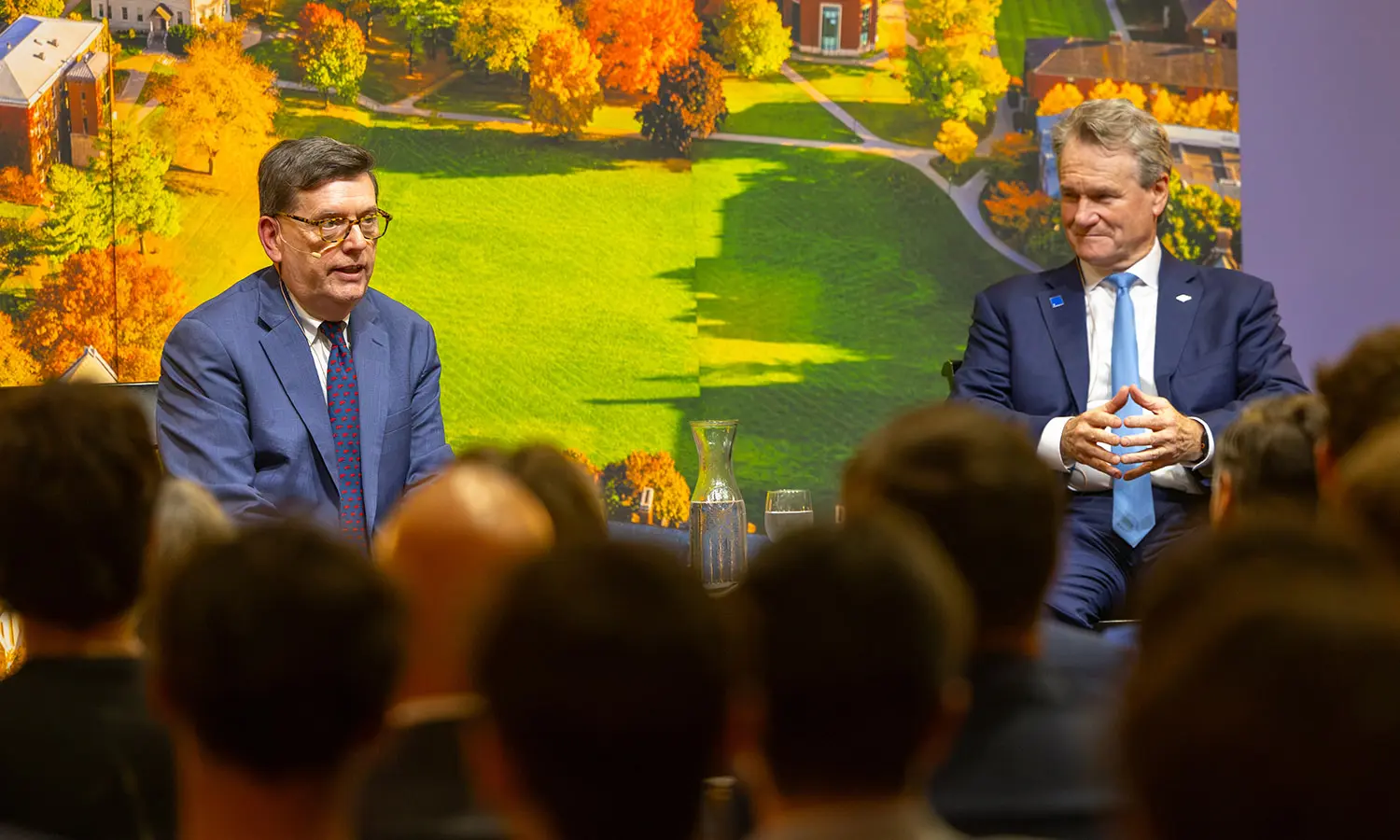
Top: President Mark D. Gearan and Bank of America CEO Brian Moynihan during the 2026 Anderton Economic Policy Symposium.