
Photo Listing
THIS WEEK IN PHOTOS
-
 Kate Dymes '18 visits John Opera’s exhibit on display in the Davis Gallery at Houghton House.
 -
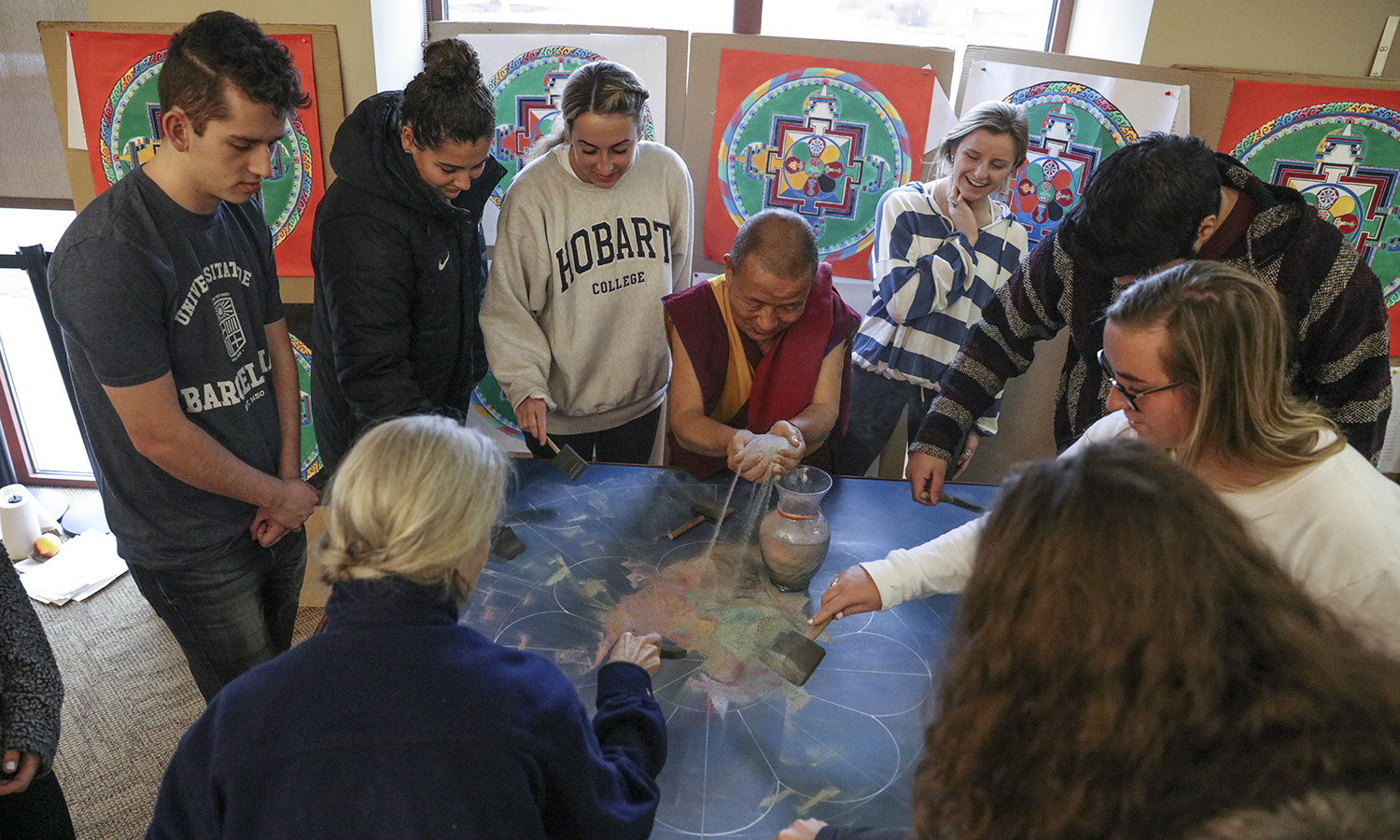
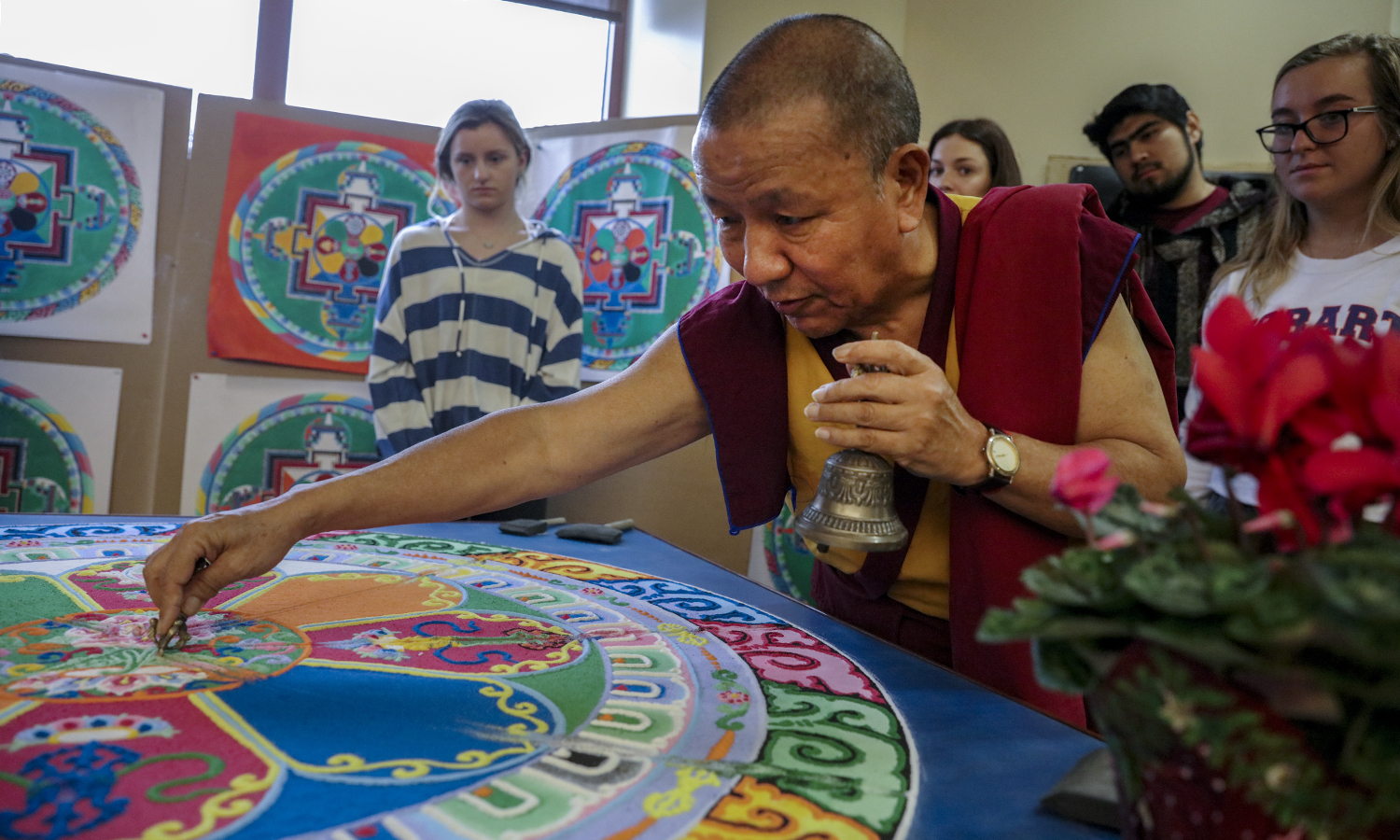 Venerable Tenzin Yignyen apportions the mandala.
 -
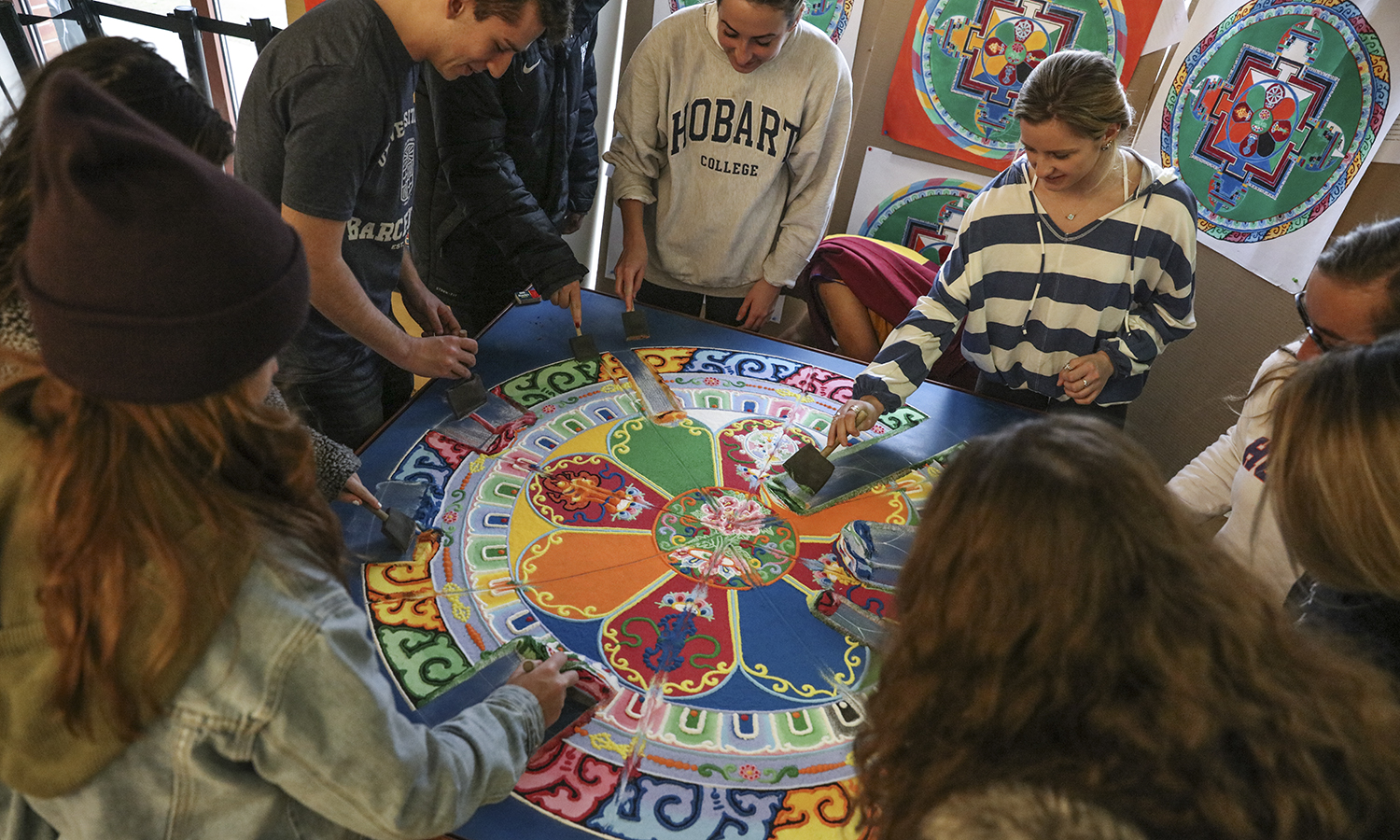 Students begin to wipe away the mandala.
 -
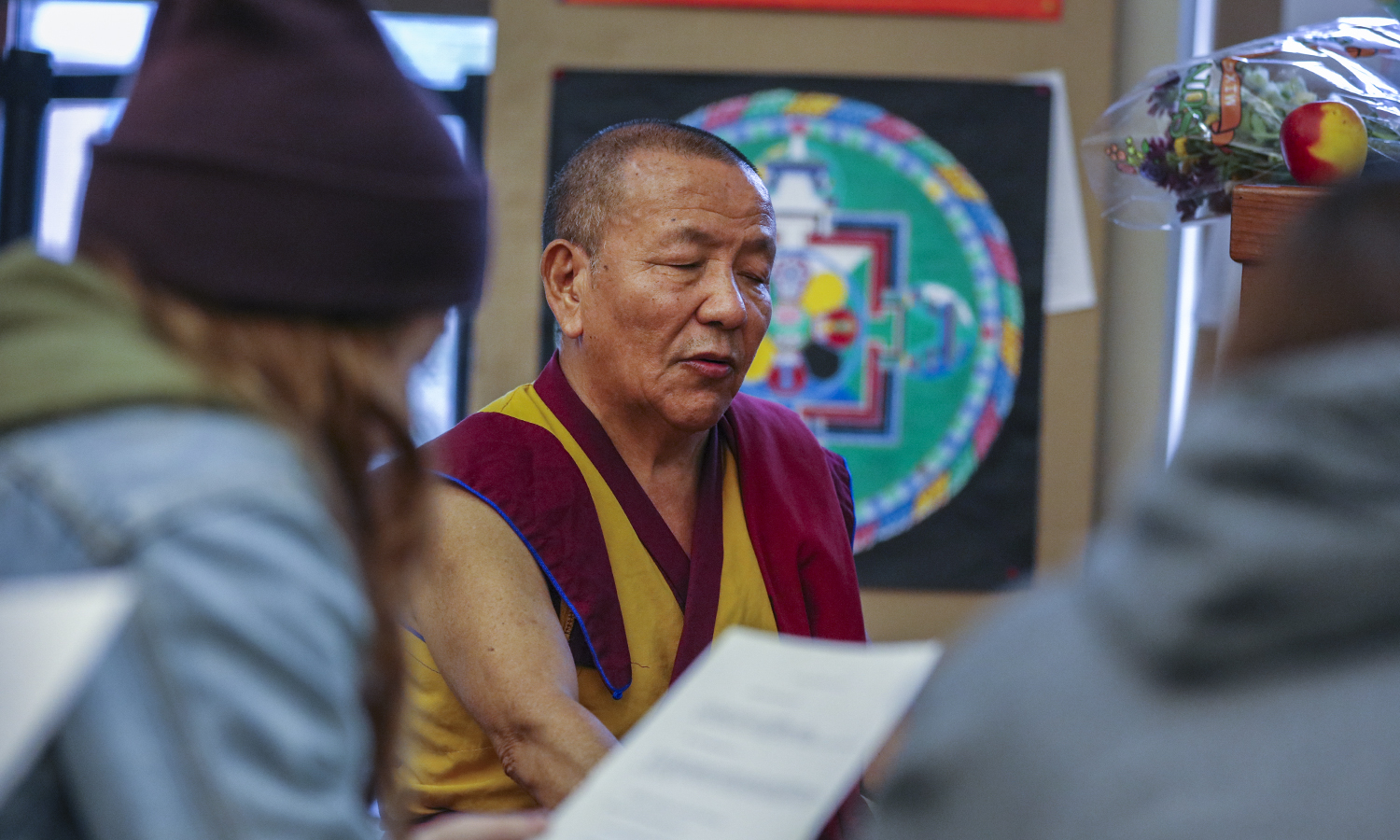 Mandalas are created for initiation rituals, meditations and to purify and promote harmony in the world.
 -
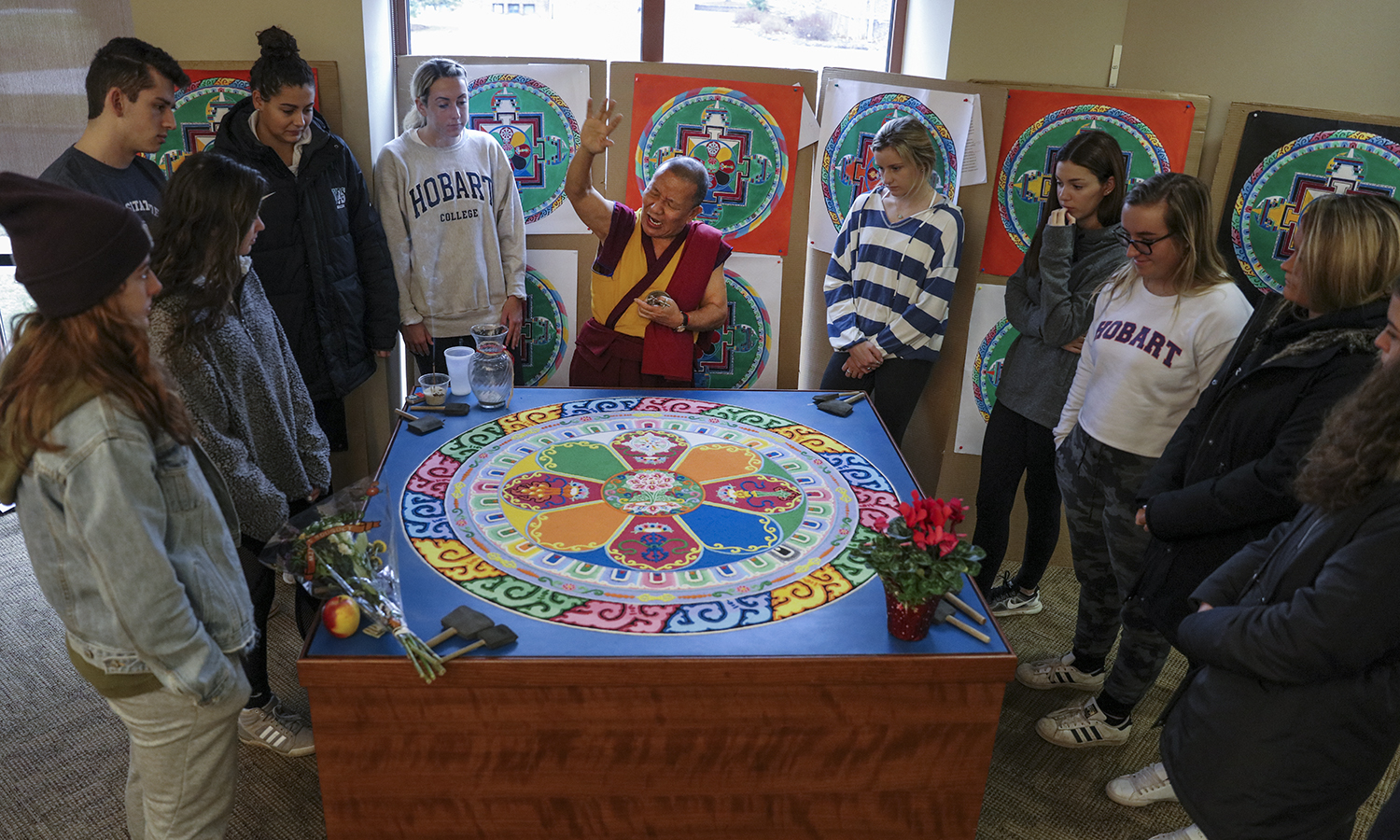 The Venerable Tenzin Yignyen asks for the deities' healing blessings during the ceremony.
 -
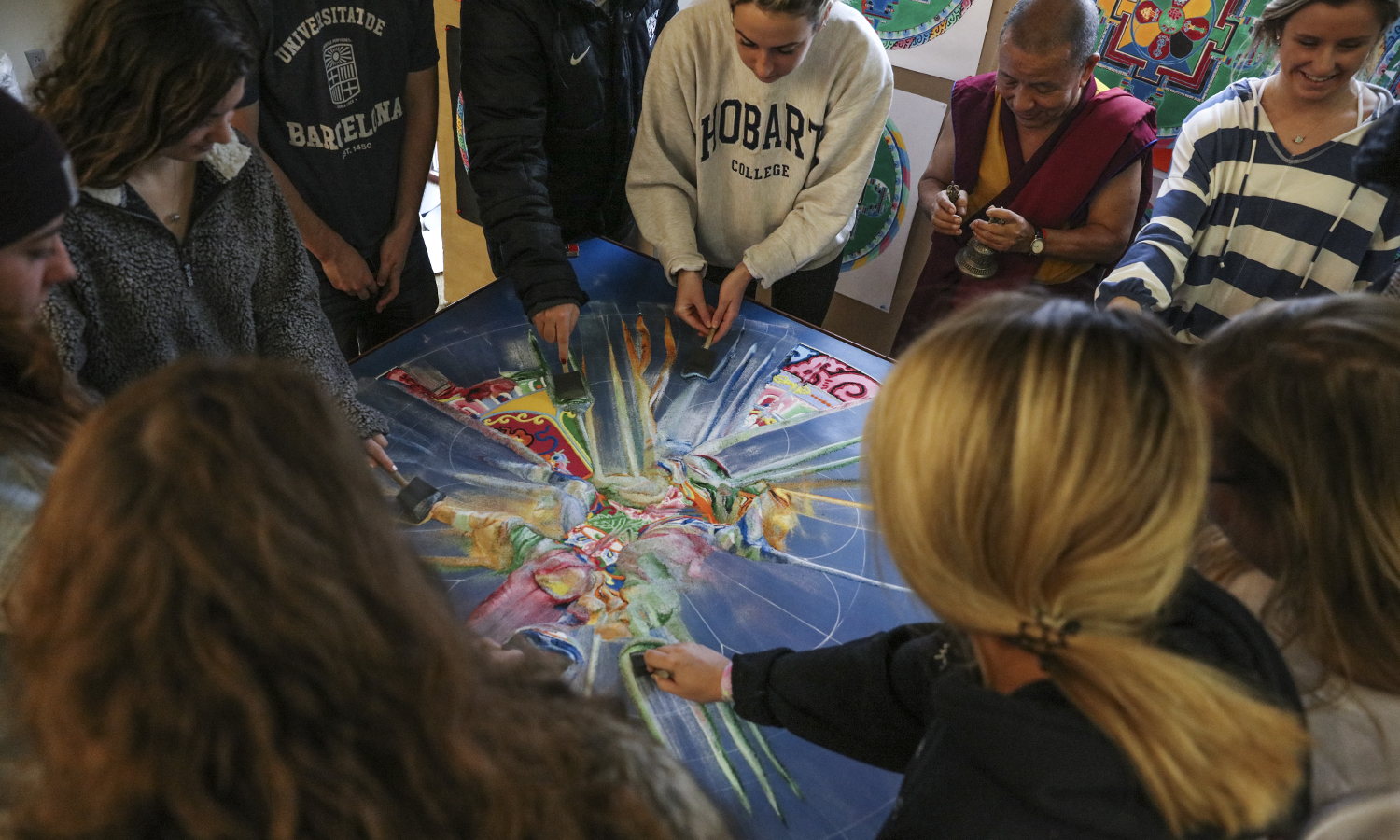 Mandalas are created in the tradition of selflessness and non-import, and are therefore disassembled upon completion.
 -
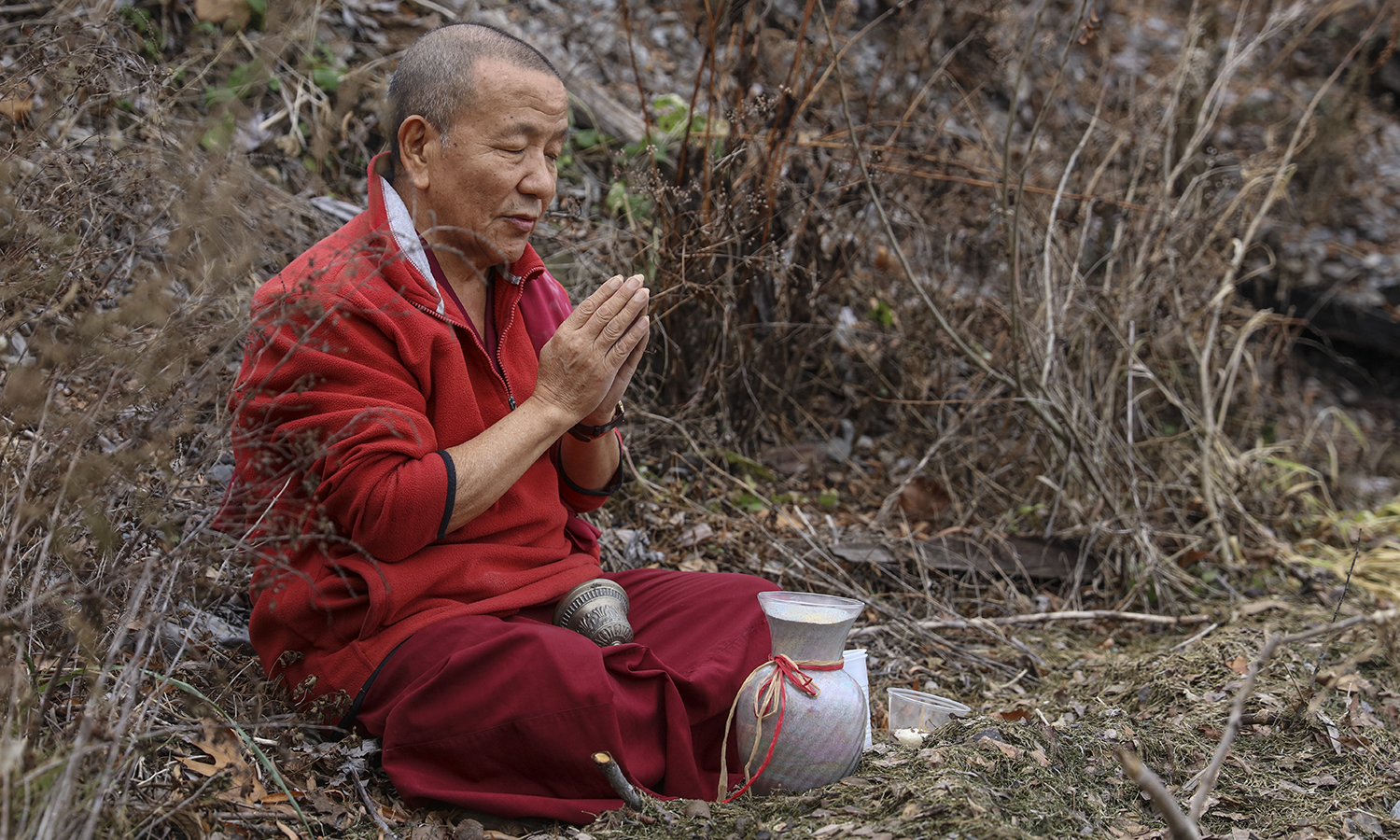 The Venerable Tenzin Yignyen says students who take the mandala course learn much more than Buddhist history, art and philosophy. In the classes, Yignyen shares the principles for living a balanced, peaceful, compassionate and loving life.
 -
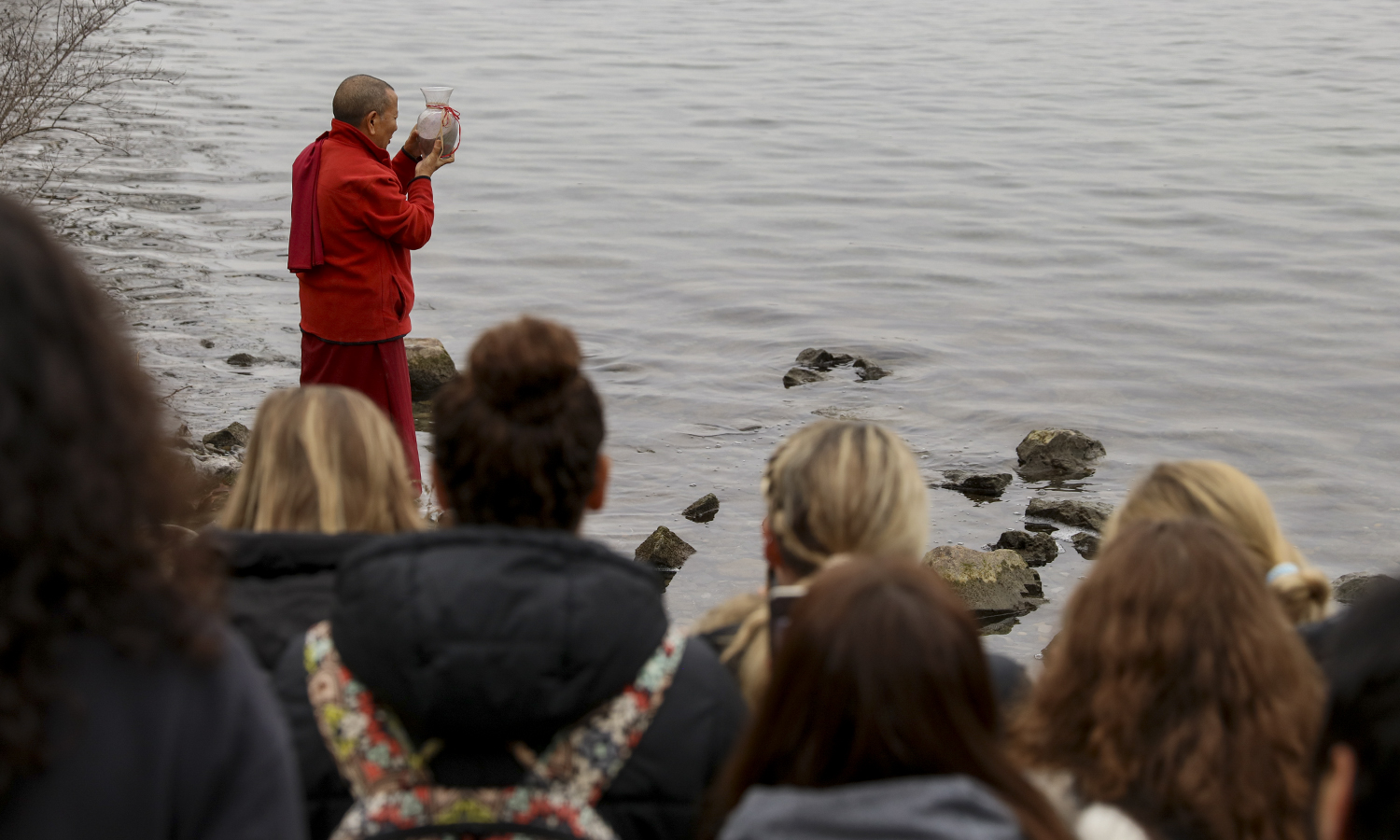 Encircled by students and community members, the Venerable Tenzin Yignyen concludes the sacred practice of creating and dismantling a Tibetan Buddhist sand mandala.
 -
 After the grains of sand have been collected, they are then offered to the closest body of water for the benefit of marine life, the environment and all sentient beings.
 -
 The Venerable Tenzin Yignyen leads a procession of students and community members to the shore of Seneca Lake for the conclusion of the dismantling ceremony.
 -
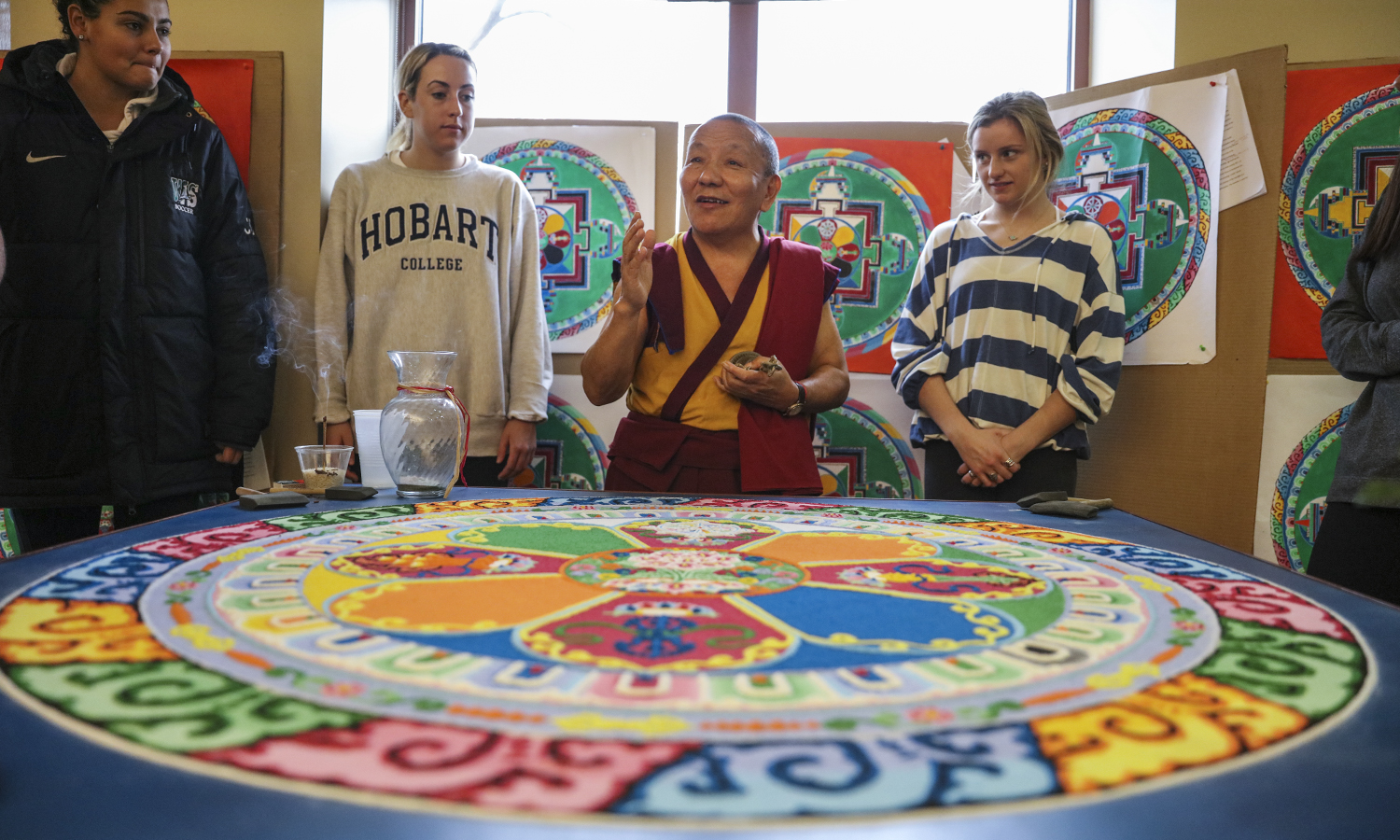 The Venerable Tenzin Yignyen speaks about the intricacies involved in making the traditional sand mandala.
 -
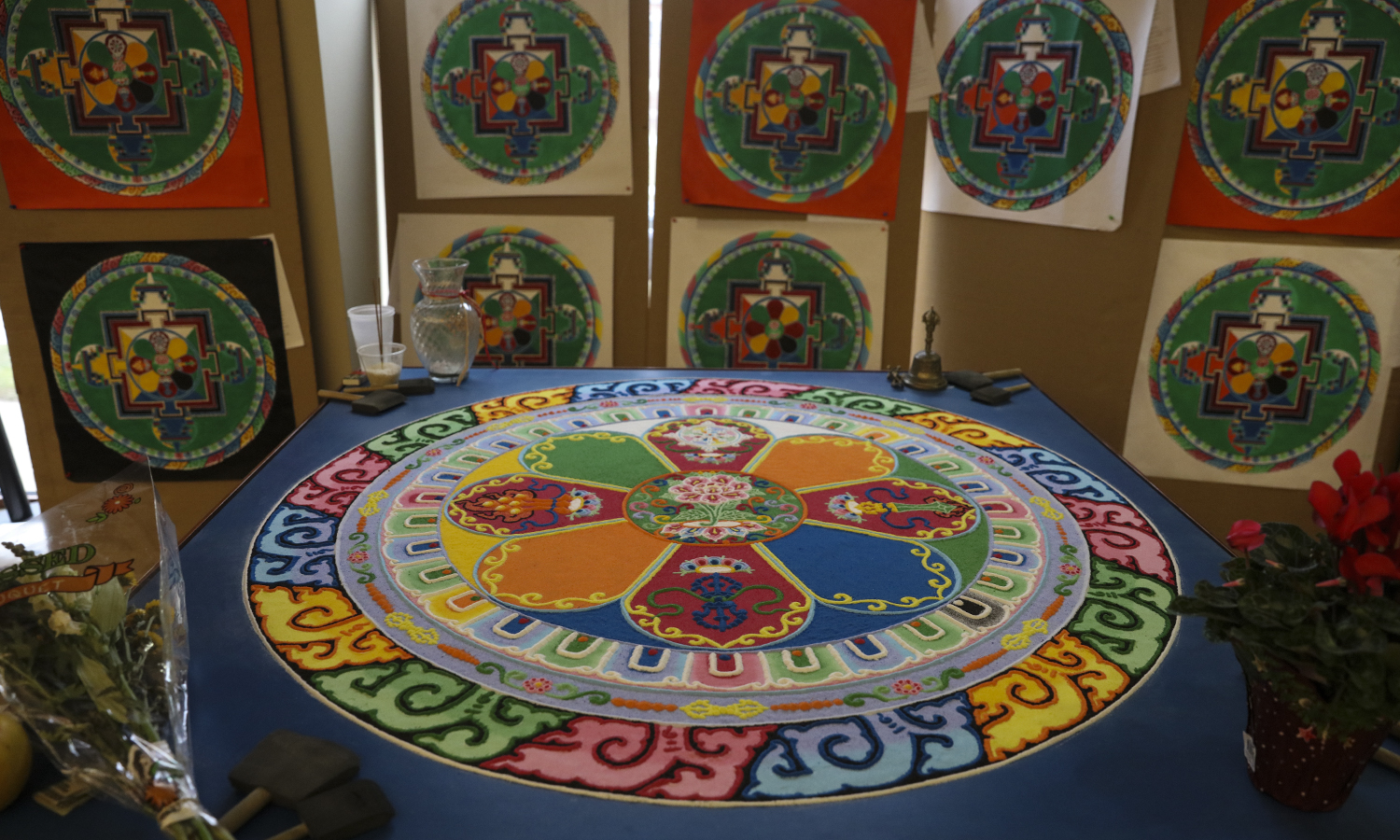 Tibetan mandalas are some of the most complex and selfless art forms in the world. They are recognized as expressions of Buddha's enlightened mind, and represent a cosmic or spiritual dwelling place for a deity.
 -
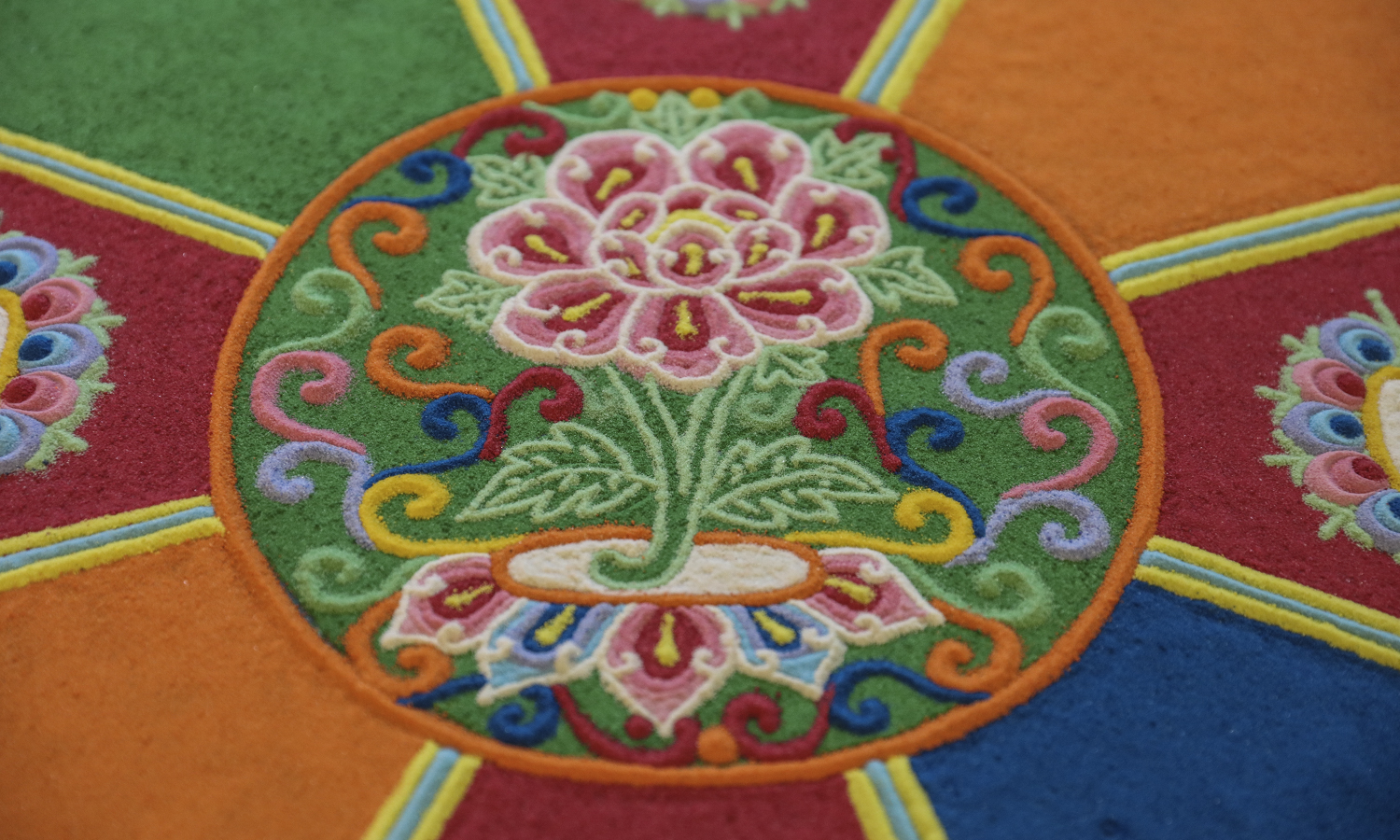 Mandalas can be constructed from wood, precious jewels, rice, flower and other materials. Sand is considered to be an ideal medium because of the high number of grains required and the great skill necessary to create the mandala.
 -
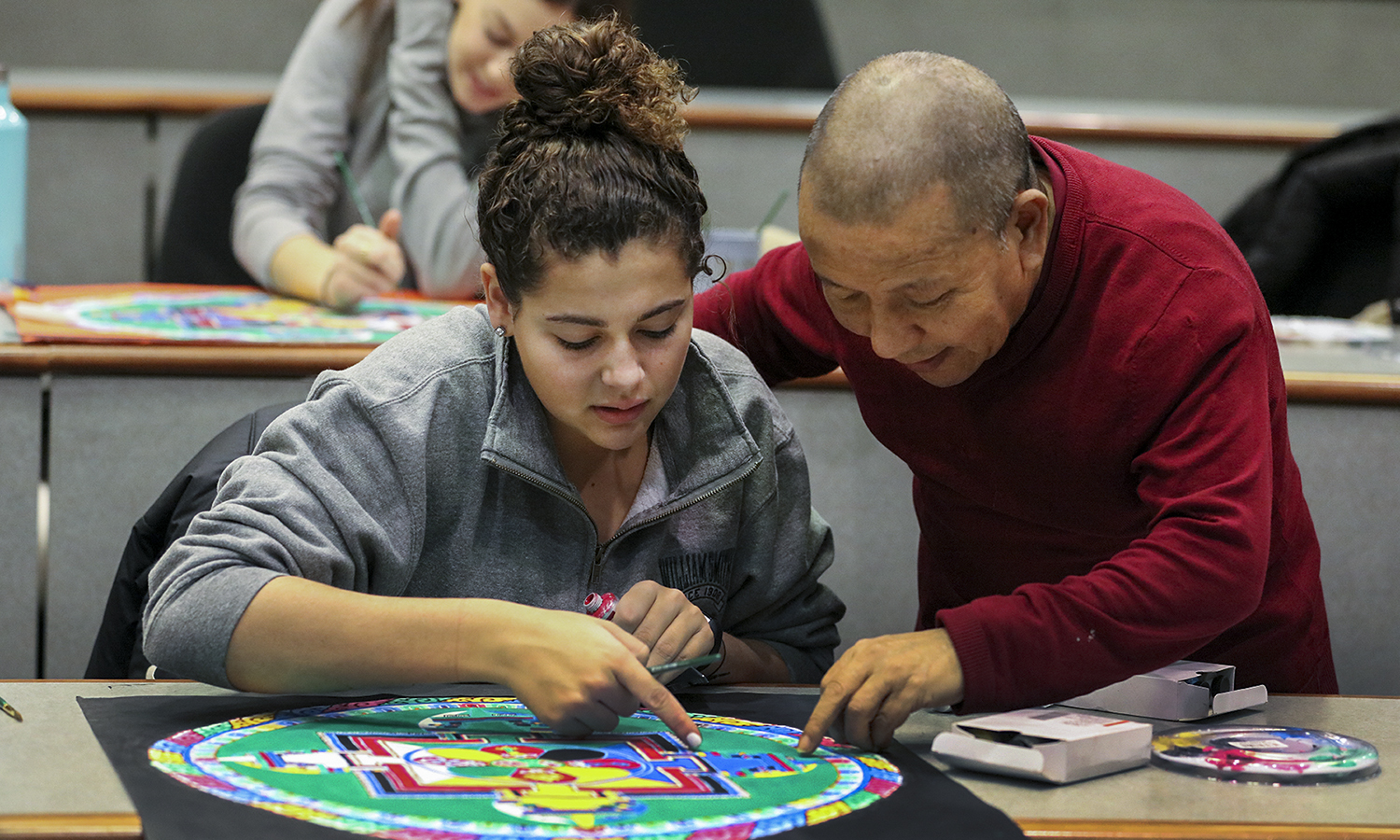 In this special edition of This Week in Photos, we follow the Venerable Tenzin Yignyen, instructor of Asian Studies, and his Tibetan Mandala Painting class as they create and dismantle a sand mandala, an ancient Buddhist tradition that symbolizes lifes unwavering march from beginning to end. In the photo above, Yignyen gives feedback to Clare O'Conner '21 on her mandala drawing.
 -
 In class, students are introduced to the world of the Tibetan Buddhist through emersion in history and understanding of the mandalas use. Students learn methods for drawing the geometric outlines, complete an individual painted version, and participate in the creation of a sand mandala.
 -
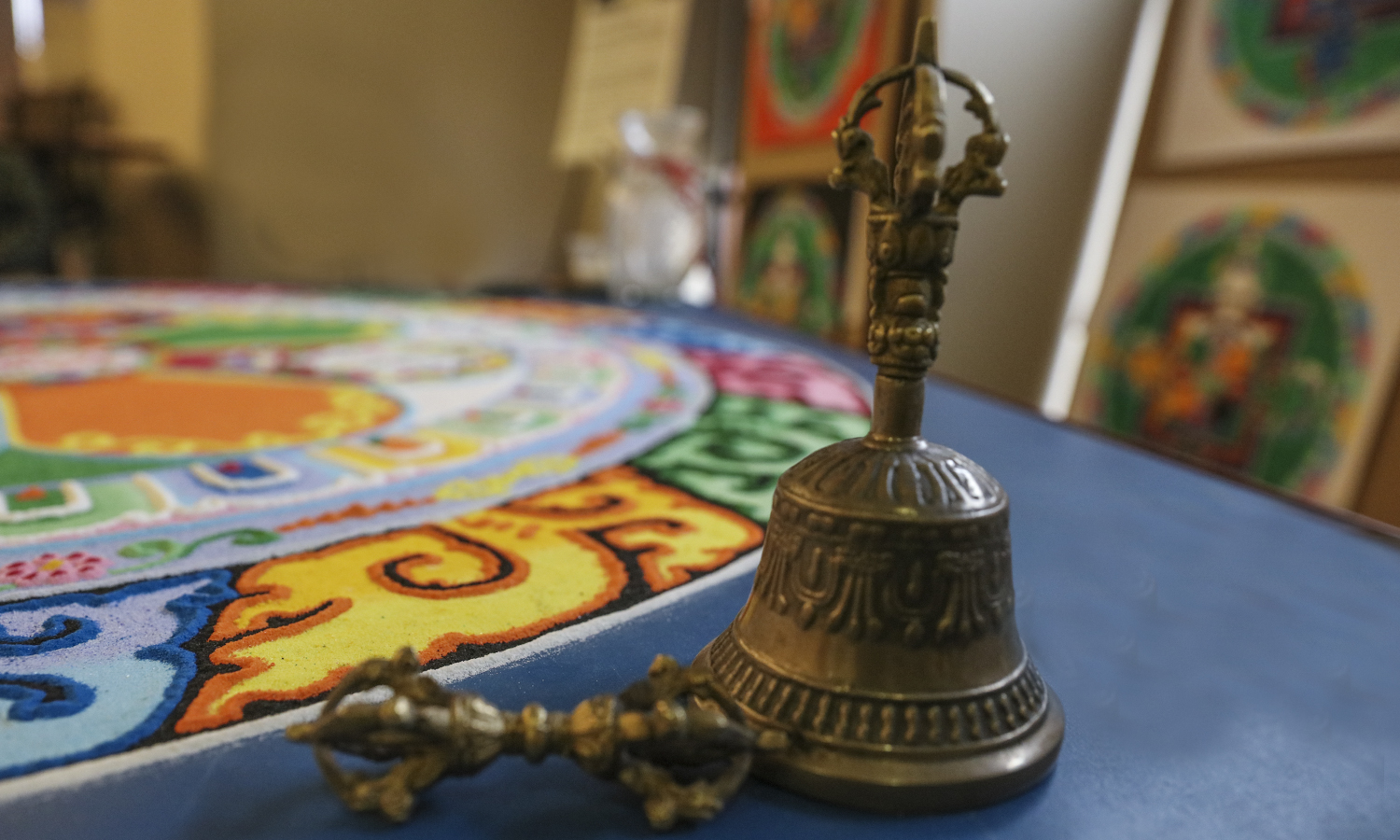 According to Tibetan Buddhist history, the purpose, meaning and techniques involved in the spiritual art of the sand mandala painting were taught by Buddha Sakyamuni in the sixth century B.C. in India.