
Photo Listing
THIS WEEK IN PHOTOS
-
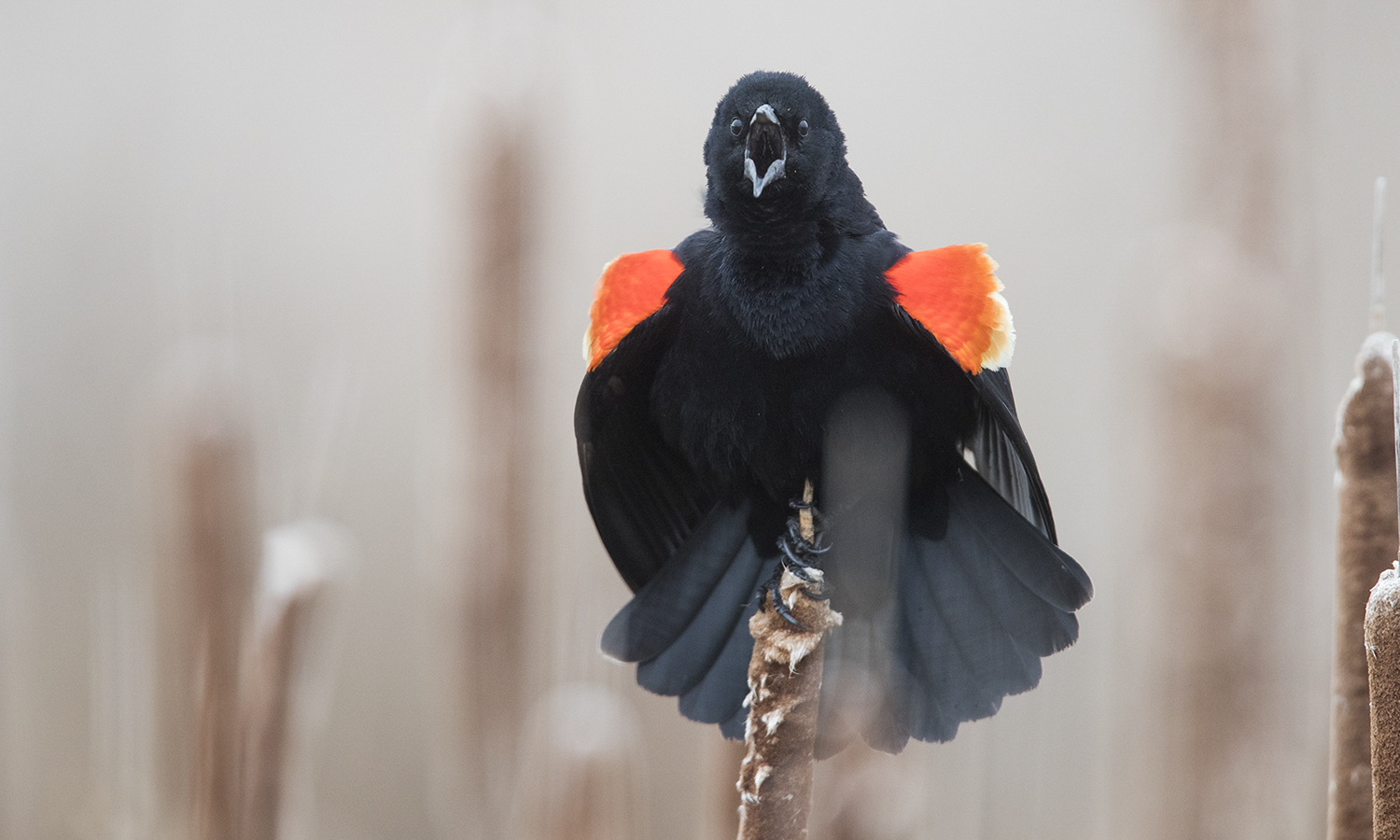 From atop a cattail, a Red-winged Blackbird defends the nesting territory he has claimed.
 -
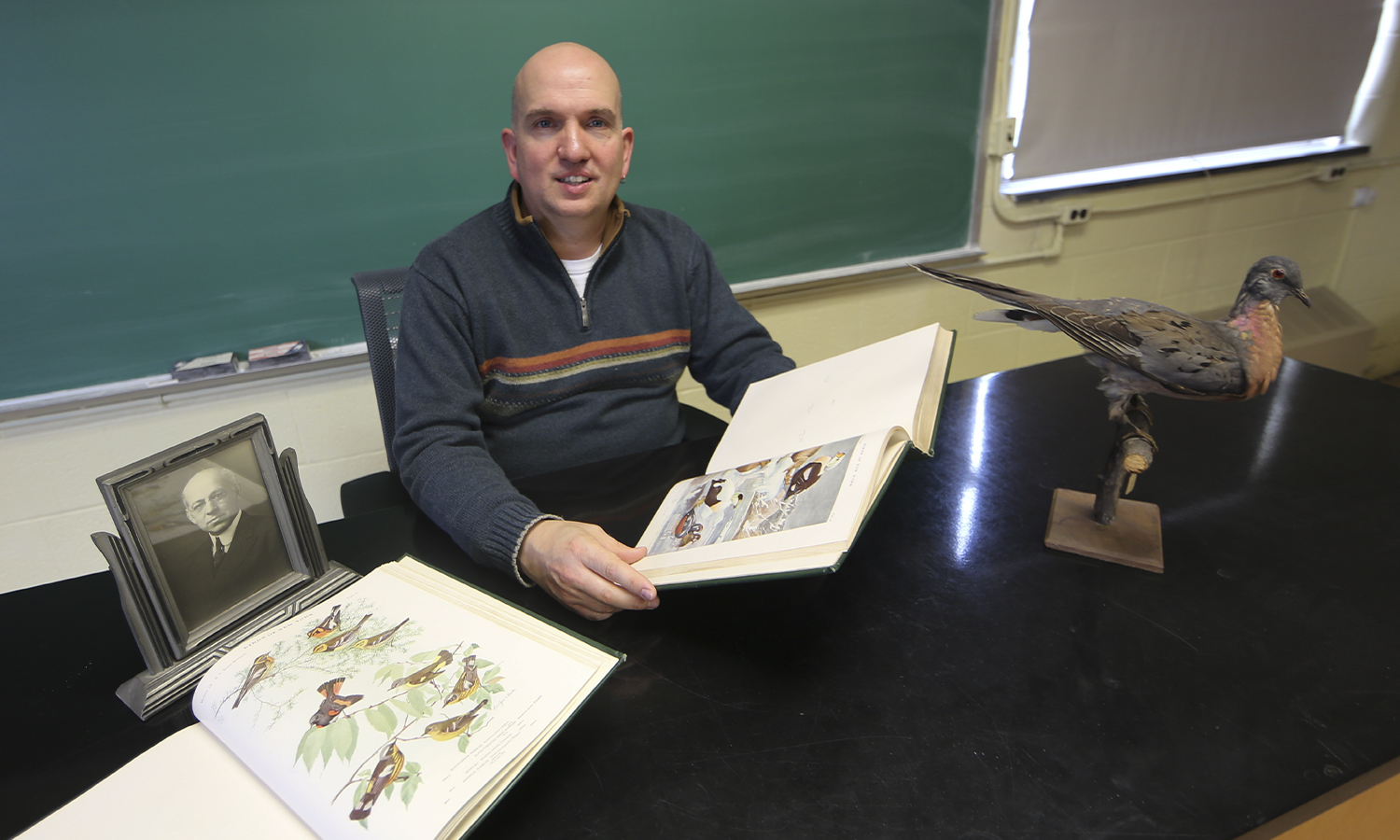 On campus, Deutschlander examines some of the contents of the bird collection at Eaton Hall, which includes 300 birds from renowned ornithologist Elon Howard Eaton P'37, Professor of Biology Theodore Odell from the Class of 1920 and William Smith.
 -
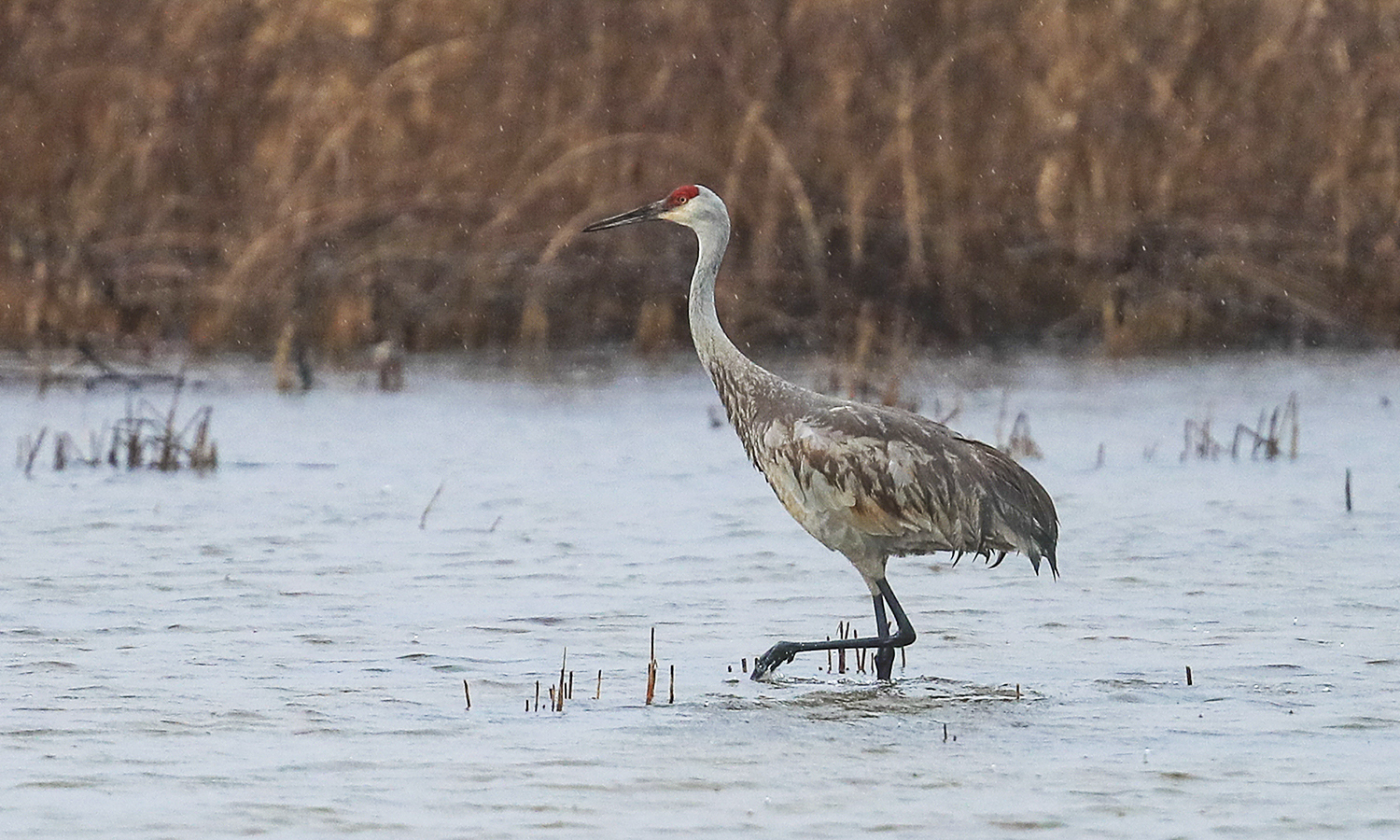 Only in recent years have Sandhill Cranes, like the one shown here, started nesting in the area. Hard to miss, these birds can grow to be 4-feet tall and have a wingspan up to 7.5 feet.
 -
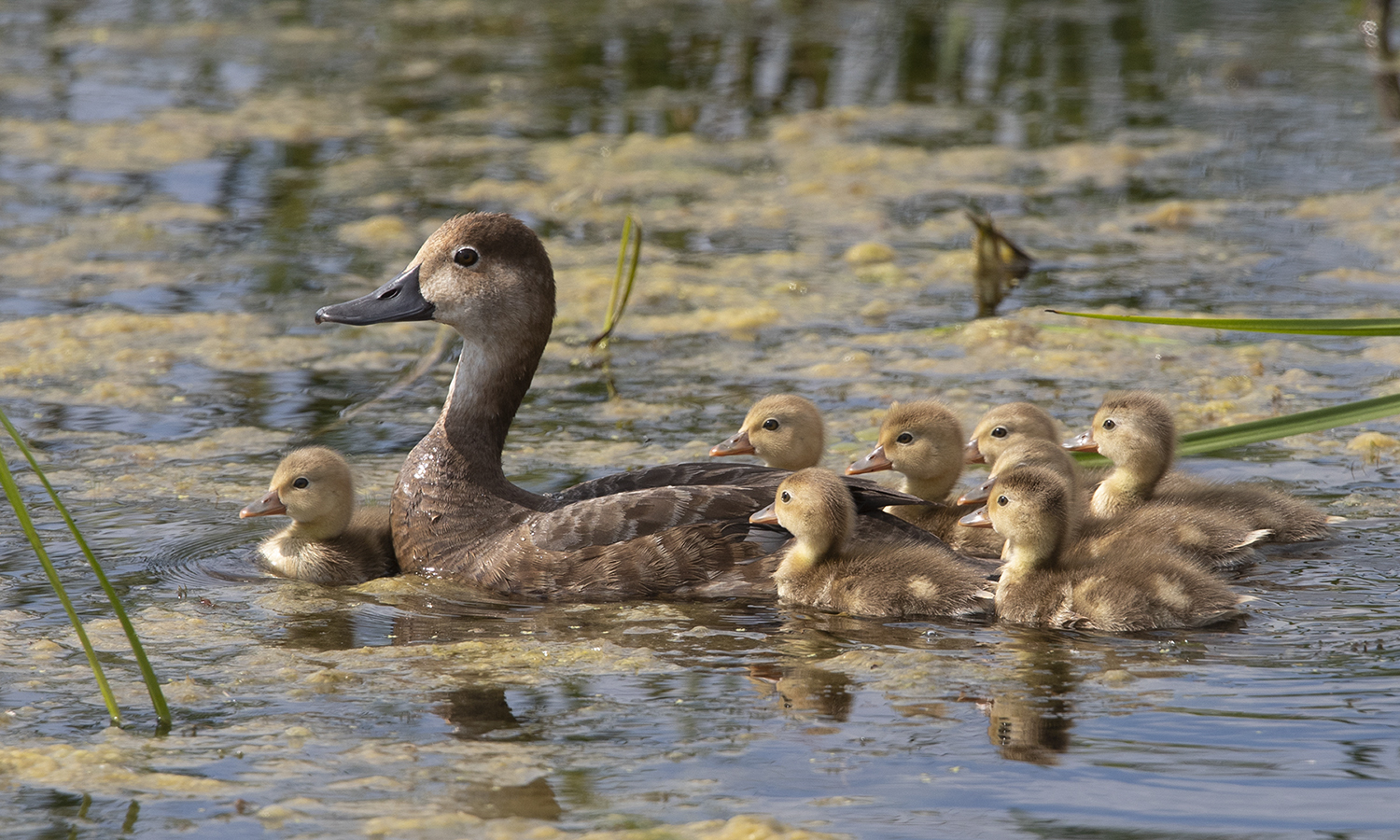 A mother Redhead swims with her ducklings in the marsh. Montezuma is the summer home to many breeding water birds including rails, soras, shorebirds, grebes, ducks and geese.
 -
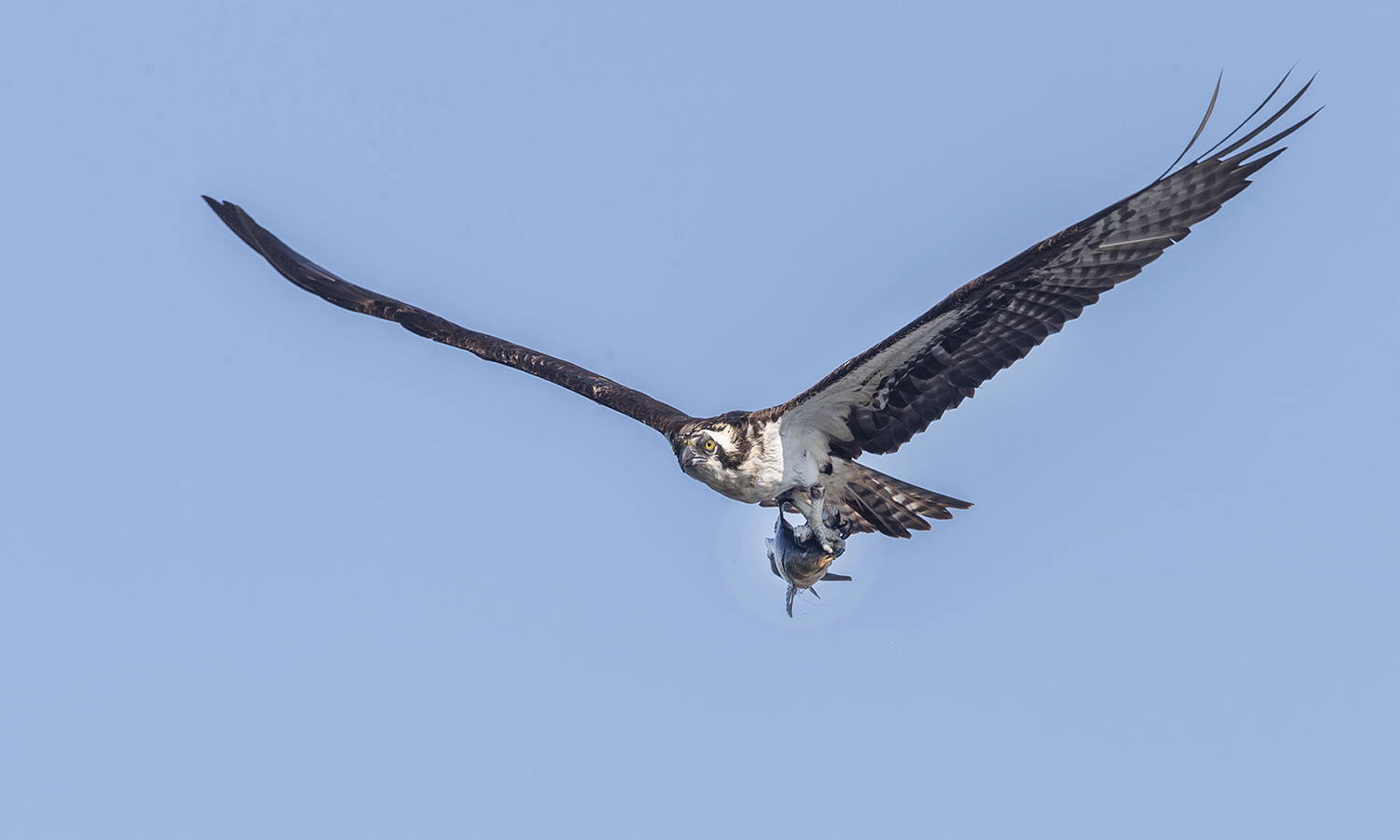 An Osprey heads back to its nest site with a meal of fish. Ospreys build nests along the electric towers in and around the refuge.
 -
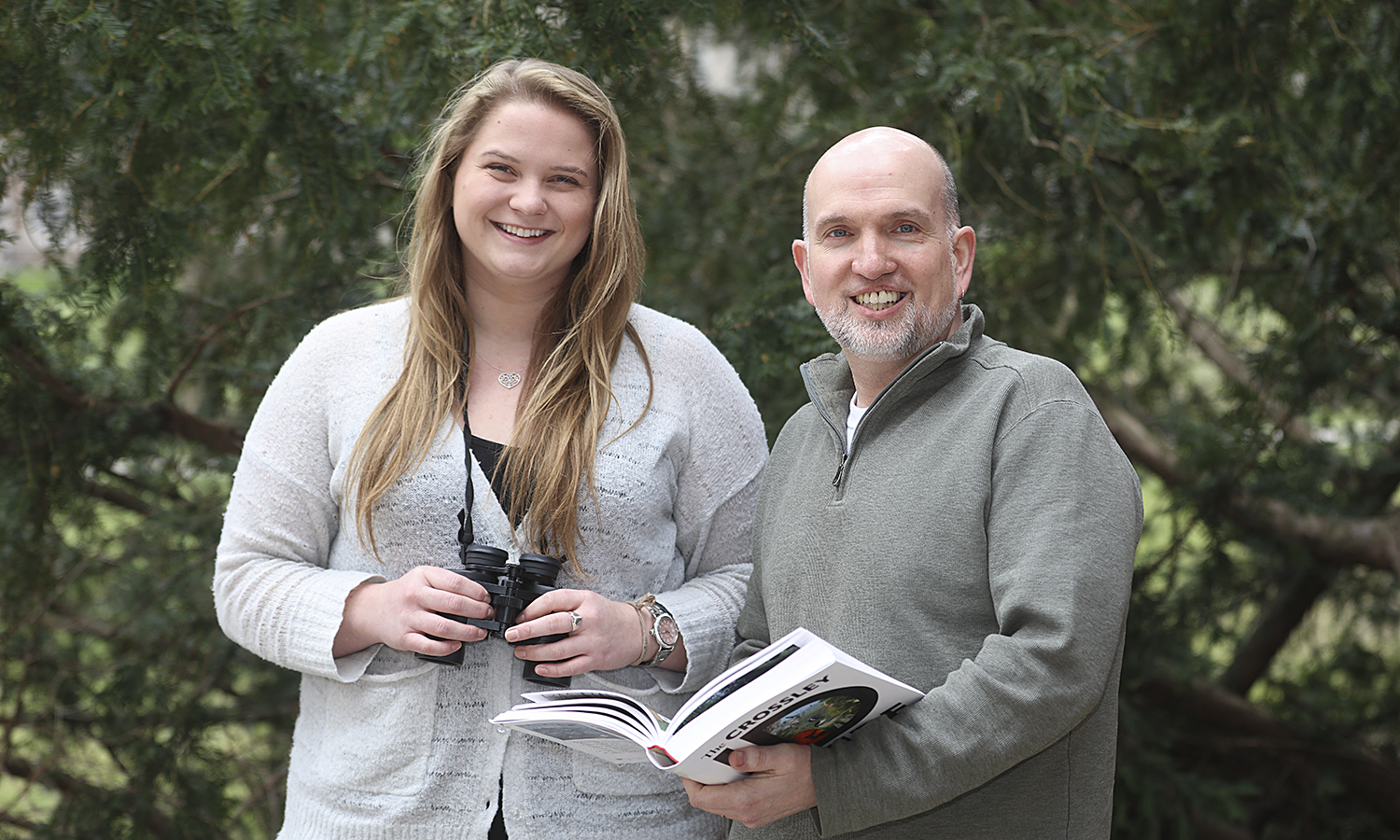 Deutschlander poses with Madison Sutton '17. In 2016, they earned the Jed Burtt Undergraduate Mentoring Grant from the Wilson Ornithological Society. Sutton is currently studying avian ecology in a Ph.D. program at Marquette University in Wisconsin.
 -
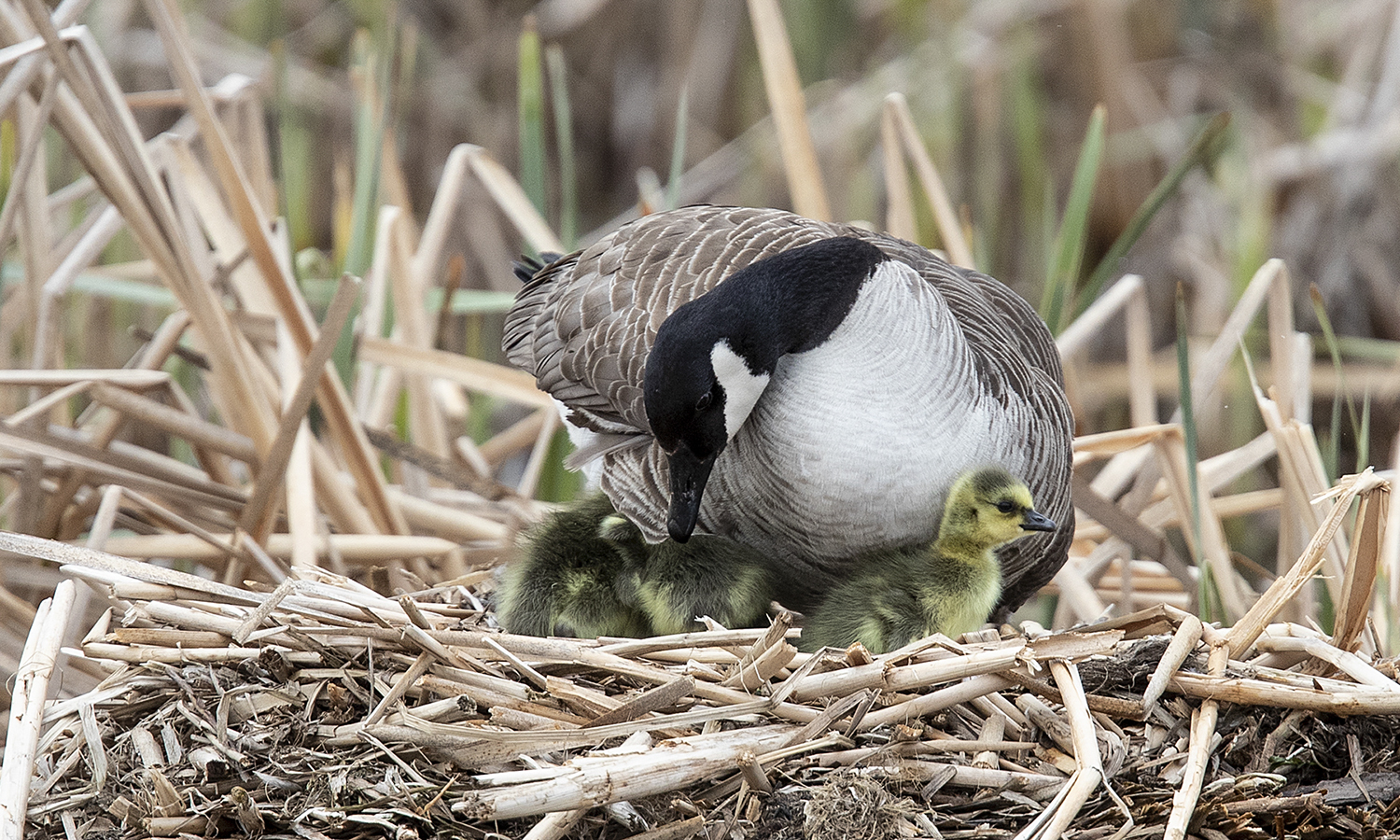 A female Canada Goose tends to her goslings atop her nest, located on a muskrat den.
 -
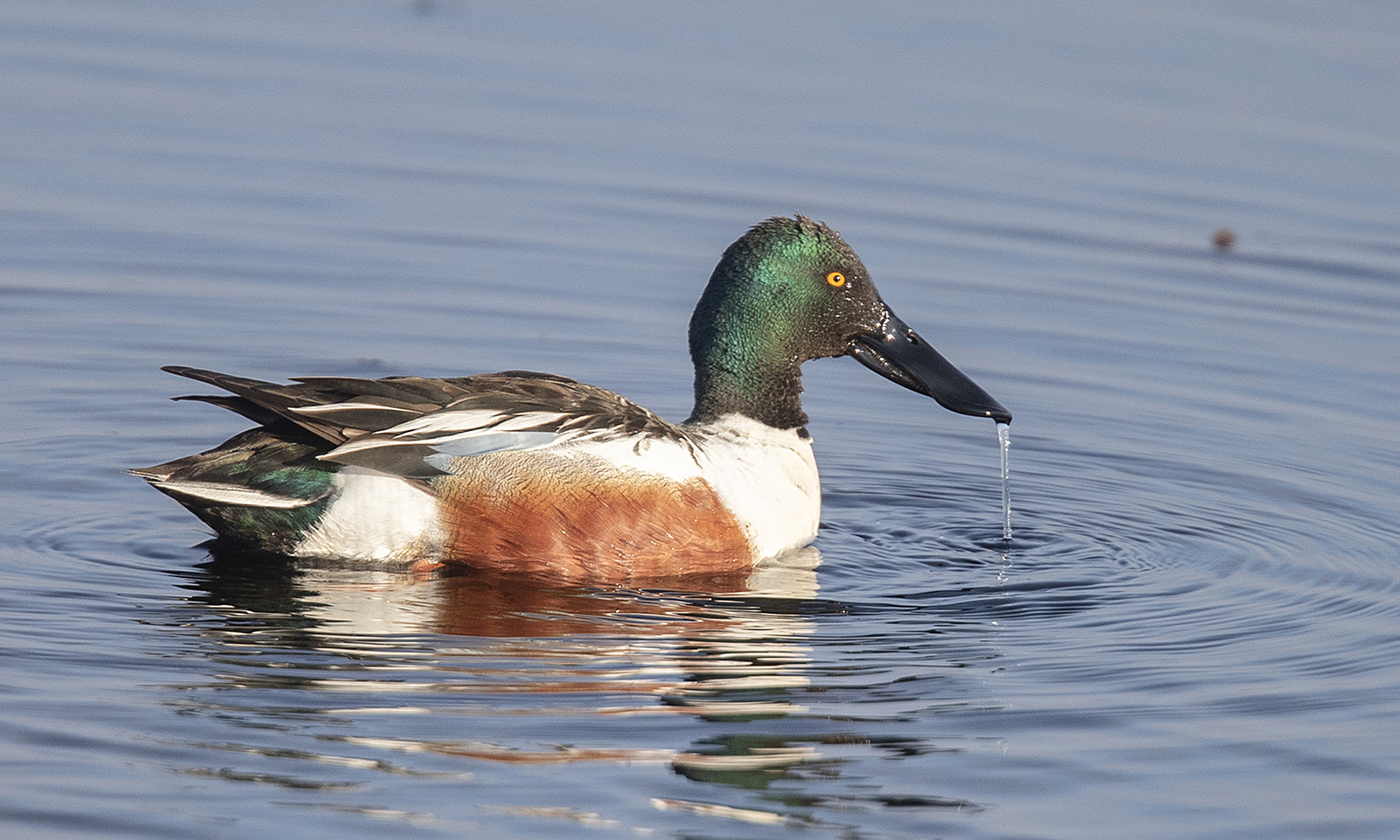 A male or drake Northern Shoveler feeds in the shallow water of the main pool. Its distinctive coloring and unique bill makes this one of the easiest waterfowl to identify. Not all species are easy to identify, especially to new birders. Students use the Merlin app from the Cornell Laboratory of Ornithology to help.
 -
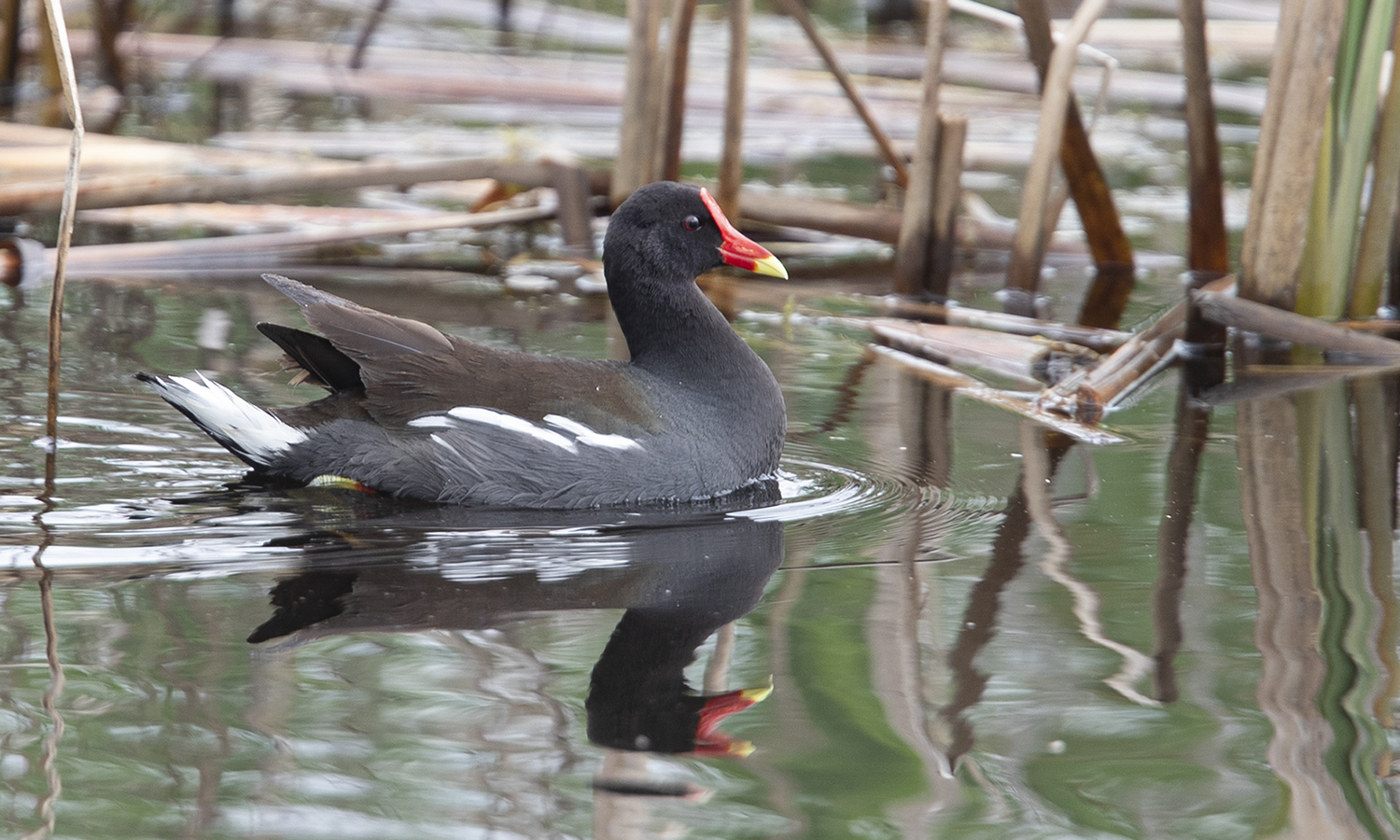 A Common Gallinule works its way through the cattails along the main wildlife drive at Montezuma. Deutschlanders students learn to identify birds by observing differences in size, shape, color, vocalizations and behavior, as well as habitat and time of year.
 -
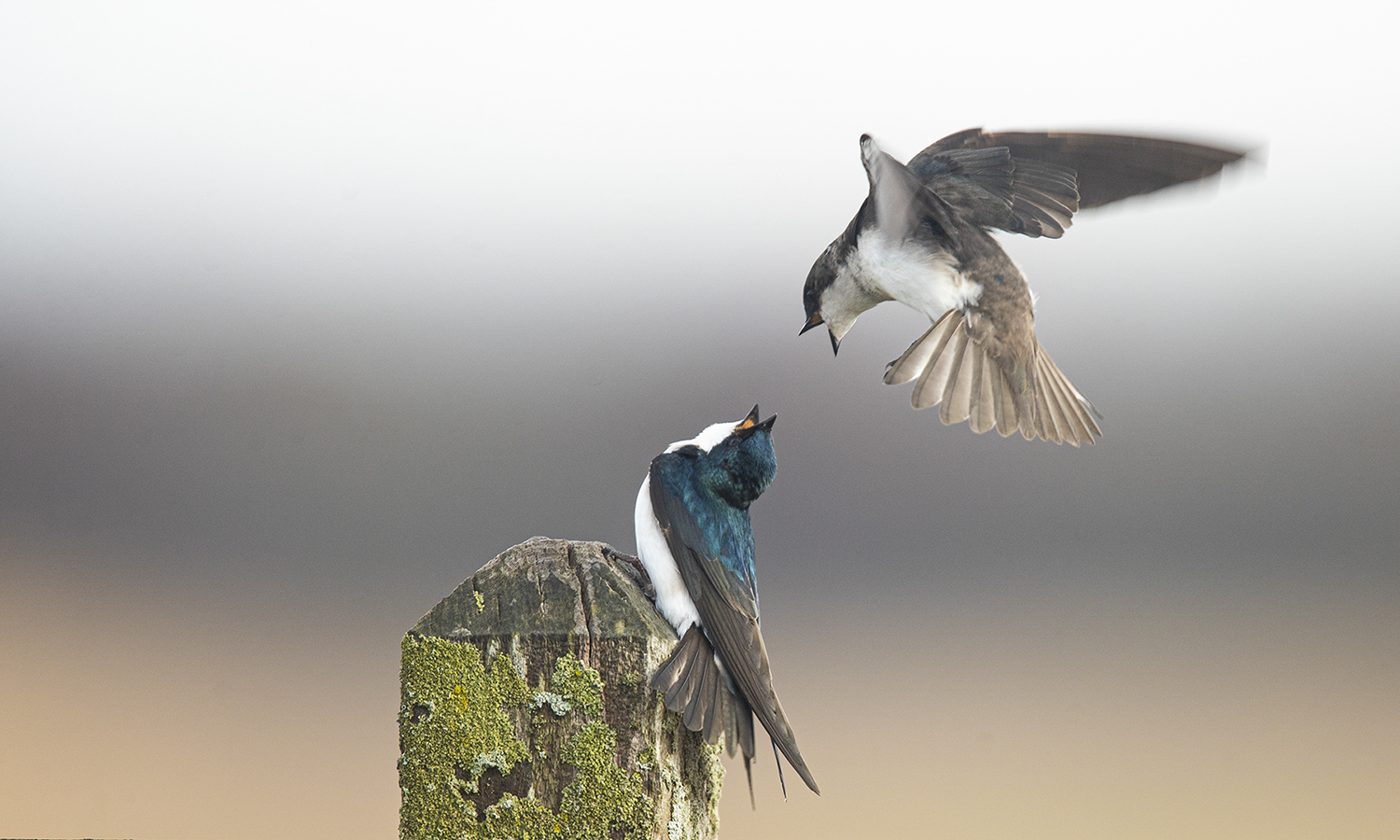 Tree Swallows begin the mating season with chattering calls and the fluttering of wings. In Deutschlanders Maymester course, students use resources from the Cornell Laboratory of Ornithology, made available in response to COVID-19.
 -
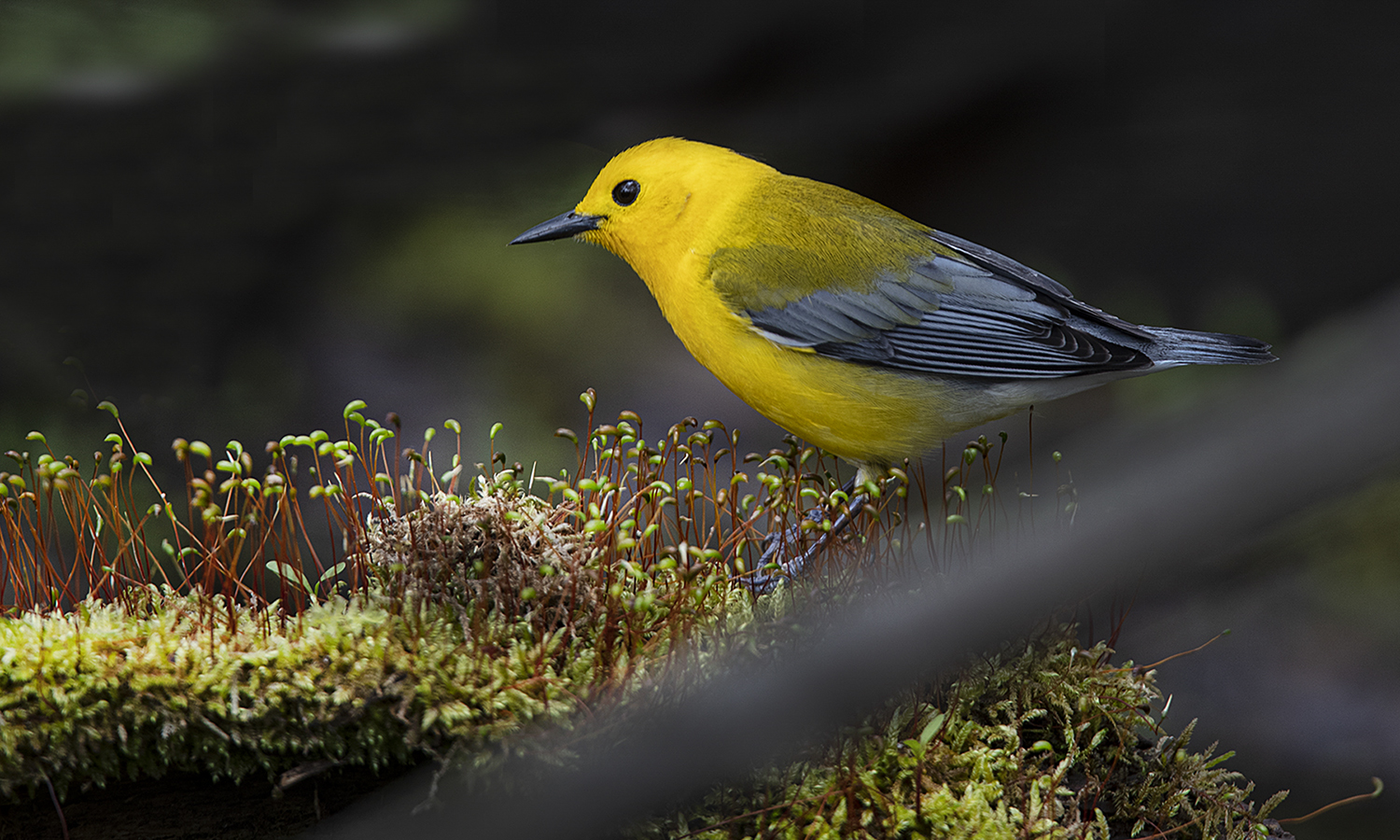 A Prothonotary Warbler is spotted along the northeastern edge of the refuge. This species draws a lot of attention, as its rarely observed in Upstate New York. During this years Maymester course, students are learning about birds in their backyards and making regional connections between landscapes, habitats and bird species by visiting birding hotspots they learn about through the online database eBird.
 -
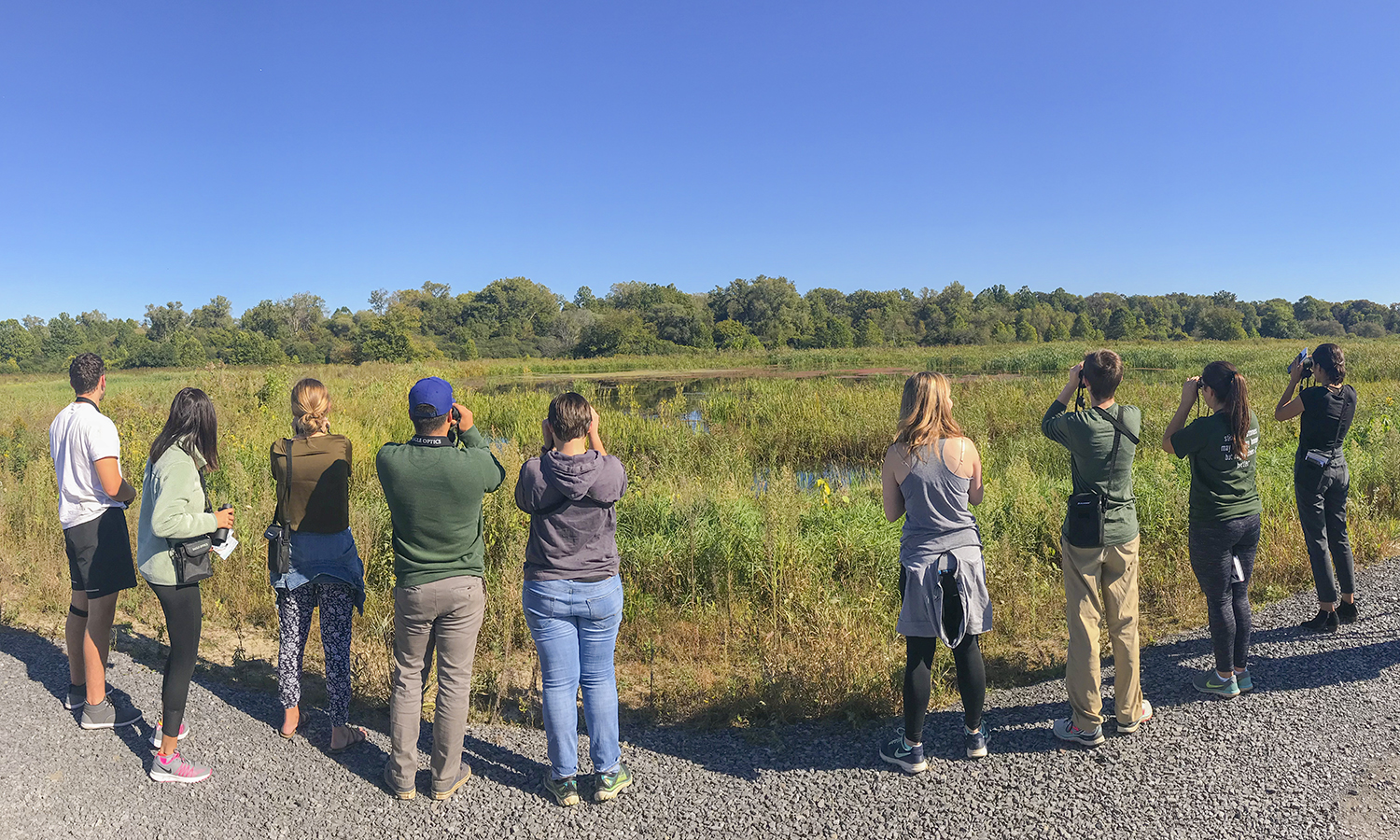 In addition to the Maymester course, Deutschlander teaches a course for biology majors about ornithology and an FSEM called Bird Obsessions about birds and bird-human interactions. Seen here are students in the ornithology class visiting Montezuma last year.
 -
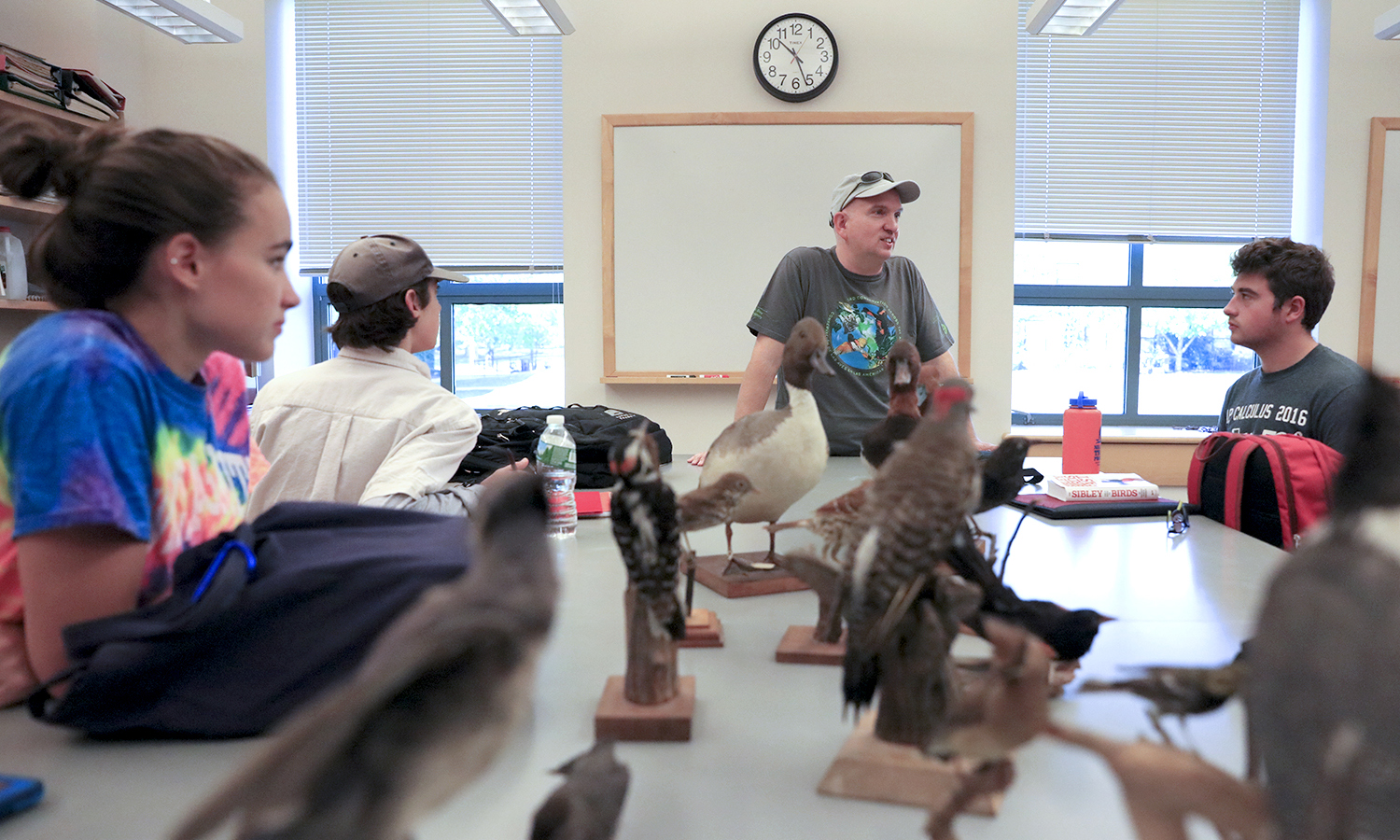 Professor of Biology Mark Deutschlander lectures during Bird Obsessions. His courses are a popular favorite among students.
 -
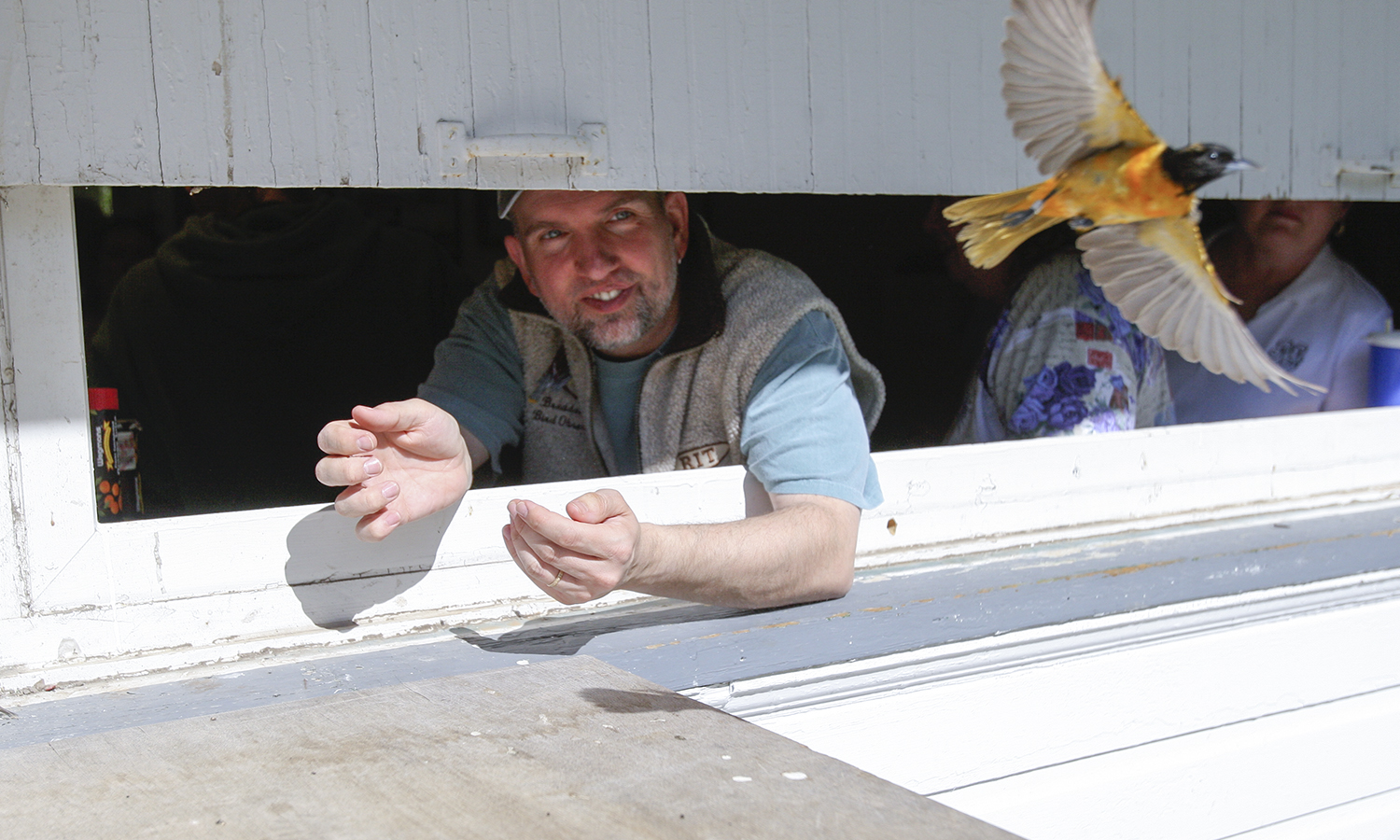 Deutschlander releases a newly banded male Baltimore Oriole at the Braddock Bay Bird Observatory on Lake Ontario. Students often accompany Deutschlander to Braddock Bay to learn about bird banding and migration, and some have conducted honors research there.
 -
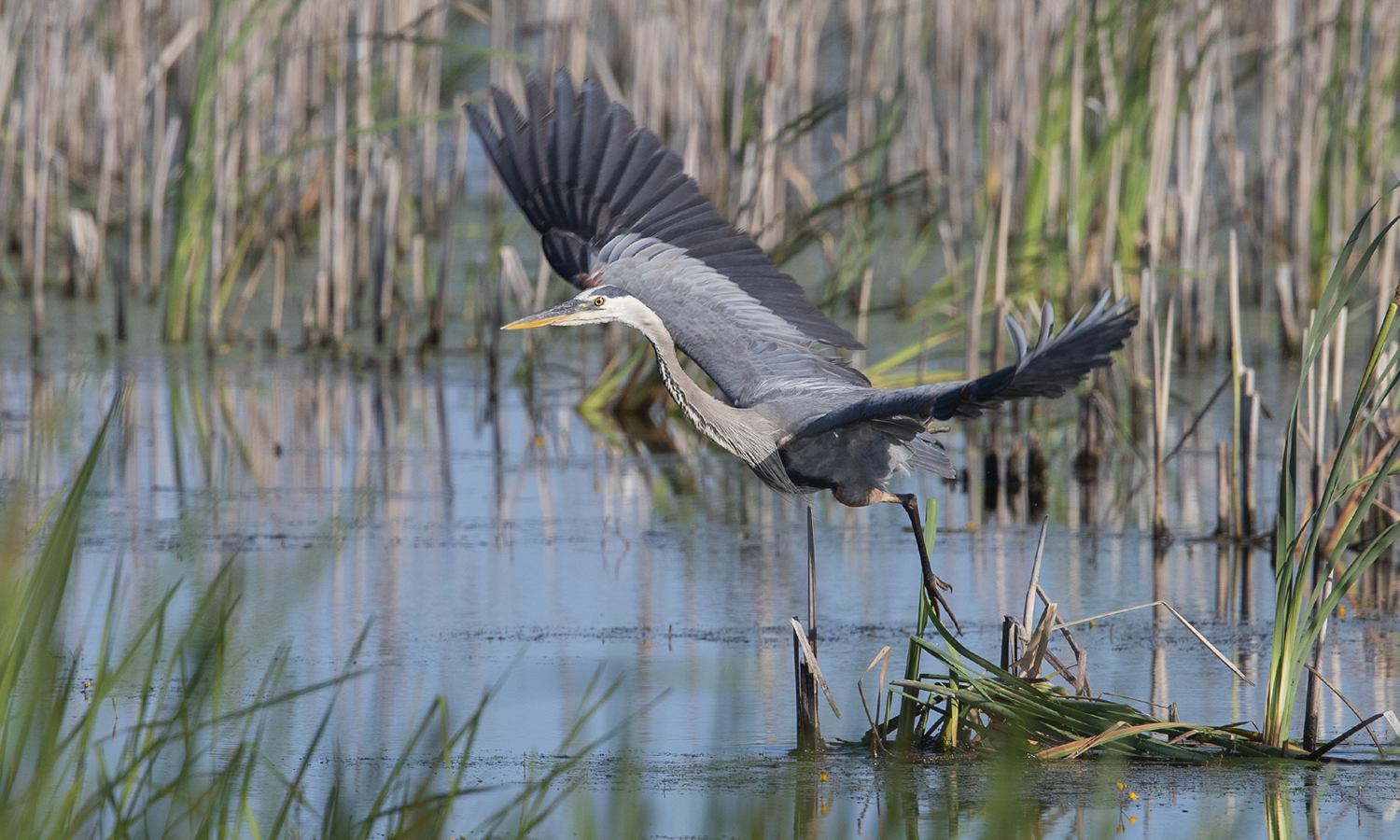 Montezuma is home to several species of wading and water birds, including the Great Blue Heron, seen here taking flight from the marsh. This species, the William Smith mascot, is abundant at the refuge and nests in treetops in large communal colonies.
 -
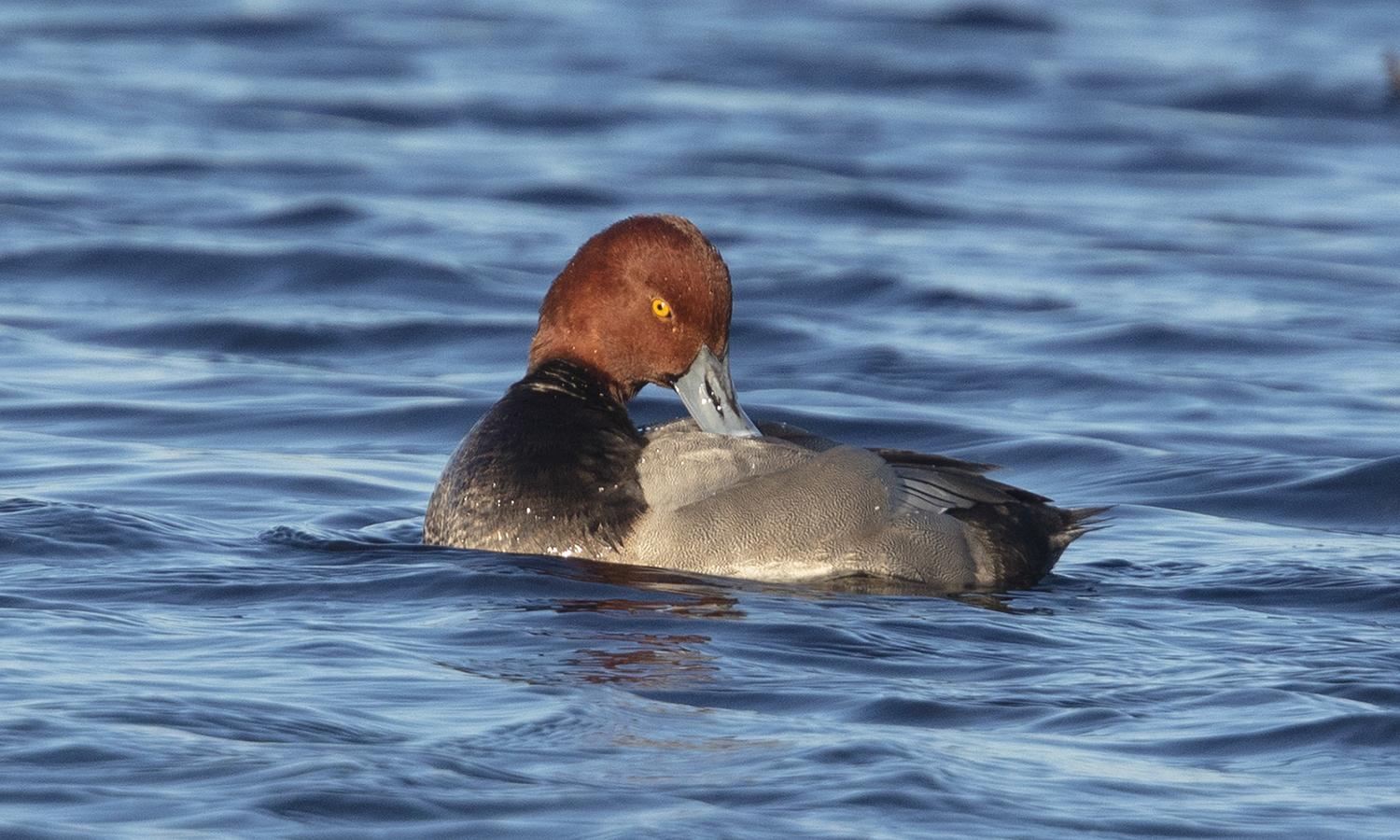 A male Redhead preens his back feathers on a calm afternoon. The preen gland produces an oil that makes a duck's feathers waterproof. Students study feather structure to learn about how they function in flight, insulation, camouflage and mating.