
Wind Conditions and Firefighter Safety in Montana
29 June 2017 Wind Conditions and Firefighter Safety in Montana
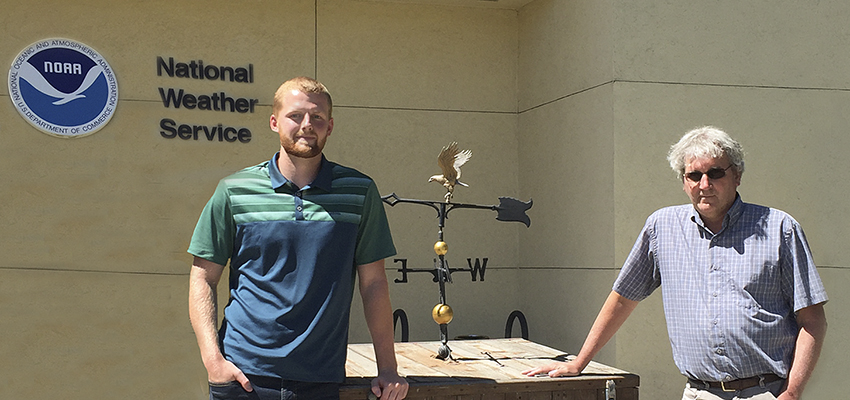
Working with the National Weather Service Office (NWS) and Missoula Fire Sciences Laboratory in Missoula, Mt., Luke Ruddy 18 will conduct wildfire research this summer as part of a project that could dramatically improve safety for firefighters. His summer internship is in association with Ruddy being a recent recipient of a National Oceanic and Atmospheric Administration (NOAA) Hollings Scholarship.
Wildland firefighting involves the process of containing and eliminating dangerous and unpredictable blazes. Wind, especially sudden shifts in strength and direction, is a critical factor in the fires volatility and in the danger posed to firefighters. Ruddy will be taking a closer look at these sudden wind shifts, which have contributed to numerous fatalities.
I am very excited to start this internship as it will introduce me to a new area of meteorology pertaining towildfires, says Ruddy.I dont think people realize how prevalent wildfires are and how influential weather is to how wildfires change, so anything that I can do to make it easier and safer to contain them will be extremelybeneficial. I am also looking forward to the opportunity ofworking with both the Fire Lab and the NWS office.They will provide important insight into meteorology-related careers.
The Missoula Fire Lab, as it is known, seeks to improve scientific understanding of wildland fire so it can bemanaged more safely and effectively in the field. As part of theFire, Fuel and Smoke Science Program at the Rocky Mountain Research Station, the Fire Labhas a wide variety of unique facilities andequipment thatenhance the programsresearch efforts.
There, and through the NWS office, Ruddy will analyze high-resolution surface observation data with the goal of pinpointing weather conditions that can be harmful to firefighters. His project, Sudden Wind Change Hazards for Wildland Fire-Fighters, considers the dangerously rapid shifts in wind against the context of how fires are fought and managed, and the usefulness of fire in the wild.
A geoscience major and mathematics and biology double minor, Ruddy was named to the prestigious Ernest F. Hollings Undergraduate Scholarship Program in 2016. Offered through the NOAA, the highly competitive program seeks to increase undergraduate training in oceanic and atmospheric science, research, technology, outreach and education. Ruddy joins several others fromthe HWS Geoscience Department who have recently earned the NOAA Hollings Scholarship, includingBrooke Adams16,Macy Howarth16 andPamela Eck15.
Previously, Ruddy has worked on summer science research at HWS with geoscience faculty, Professor Neil Laird and Associate Professor Nick Metz, focusing on lake-effect snow patterns. A member of the Hobart basketball team, Ruddy is a two-time Liberty League All-Academic selection.