HWS News
26 January 2026 • Faculty Exploring Art Through Ekphrastic Verse
A double book release and reading celebrate Professors Cowles and Babbitt.
The English and Creative Writing Department invites the community to a special evening of ekphrastic poetry on Thursday, Feb. 5, at 7 p.m. in the Blackwell Room, Demarest Hall. This event marks the release of two anticipated, prize-winning collections by Hobart and William Smith faculty members.
Associate Professor of English and Creative Writing Kathryn Cowles will present her collection, The Strange Wondrous Works of Eleanor Eleanor (Fence Books). Released in January, this is Cowles’ third book of poems.
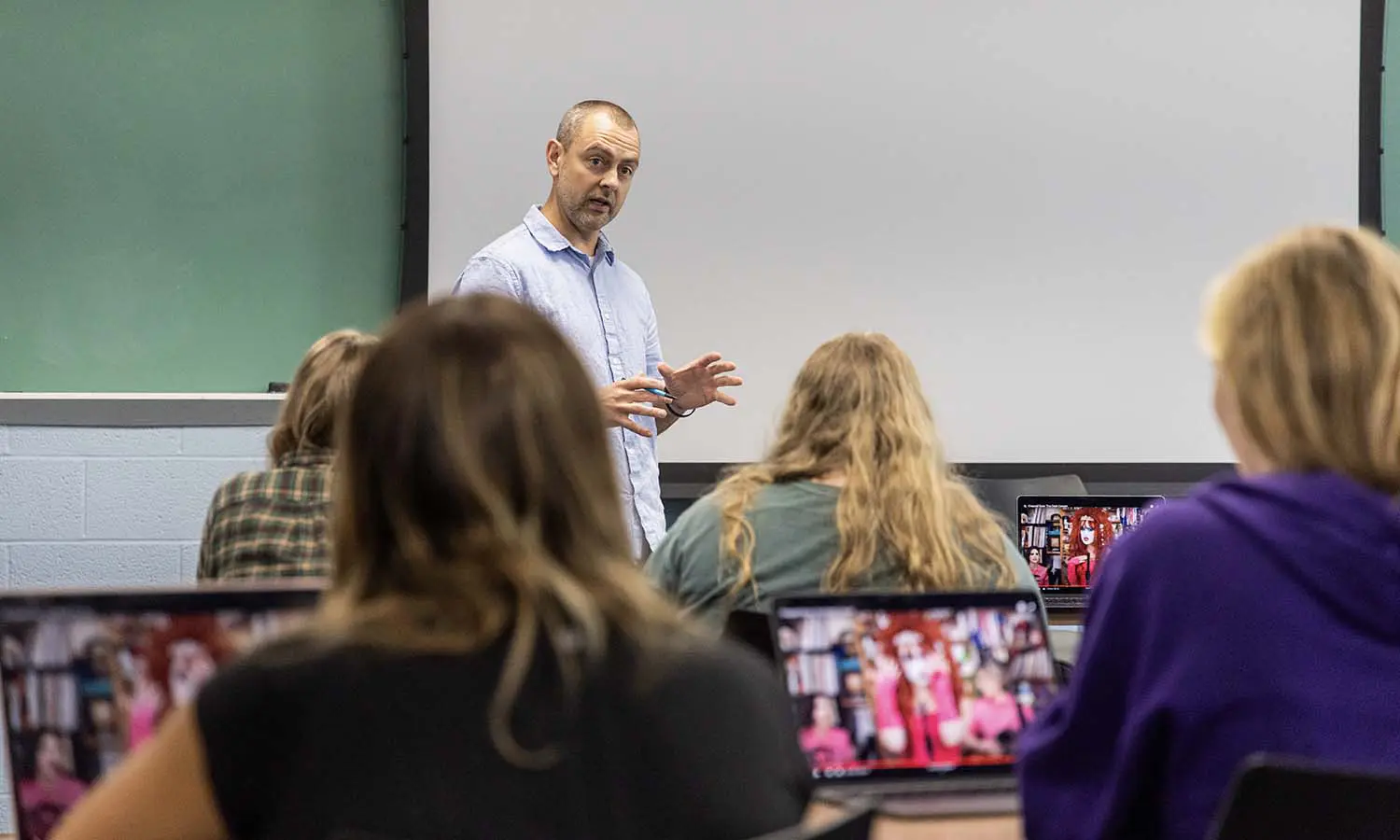
Joining her Thursday night is Associate Professor of Writing and Rhetoric, English and Creative Writing Geoffrey Babbitt with his second book A Grain of Sand in Lambeth (University of Nevada Press). Recently released Dec. 2, the collection of poetry offers readers a profound exploration of time, memory and place in the life and works of English Poet, Painter and Engraver William Blake.
Derived from the Greek word “ekphrasis,” meaning description or interpretation, the term “ekphrastic” typically applies to poems that describe or respond in detail to a visual work of art, such as a paintings, sculptures or photos. The central aim of this literary approach is to offer a new perspective on an original work of art. Both Cowles and Babbitt use ekphrastic methods in their books.
Cowles’ book contains both collage and poetry purporting to be made/written by her artist figure, Eleanor Eleanor, about her own works of art. Eleanor first appeared in Cowles’ 2008 book Eleanor, Eleanor, Not Your Real Name (Bear Star), which won the Dorothy Brunsman Book Prize. Cowles’ newest book was selected for the 2025 Fence Books Modern Poets Prize and the Poetry Society of America’s Alice Fay Di Castagnola Award for a Manuscript in Progress.
Chair of the English and Creative Writing Department, Cowles has taught at HWS since 2011 and is co-editor of Hybrid Forms for Seneca Review, HWS' internationally recognized literary journal. Her poems and multimedia work have appeared in Best American Experimental Writing, Boston Review, Colorado Review, among other publications and have been awarded the Larry Levis Academy of American Poets Prize.
Babbitt’s title A Grain of Sand in Lambeth comes from a line deep within Blake’s epic poem “Jerusalem” and reads: "There is a Grain of Sand in Lambeth that Satan cannot find.” In his book, Babbitt combines ekphrastic poetry with biography to inhabit moments from Blake’s life and offer readers a glimpse into the artist’s imagination.
Babbitt, winner of Interim Magazine’s 2023 Betsy Joiner Flanagan Poetry Prize, has taught at HWS since 2012. His poems and essays have been featured in North American Review, Pleiades, Colorado Review, DIAGRAM, Ben Johnson Journal, Notre Dame Review, Washington Square, Cincinnati Review and elsewhere. He is also the author of Appendices Pulled from a Study on Light, which draws from Babbitt’s passion for illuminated manuscripts.
Babbitt also serves as the editor in chief of Seneca Review and Seneca Review Books, for which he co-founded the Deborah Tall Lyric Essay Book Prize.
The Book Release Reading Feb. 5 gives attendees the opportunity to hear readings from both prize-winning authors and purchase signed copies of their books. The event is free and open to the public.
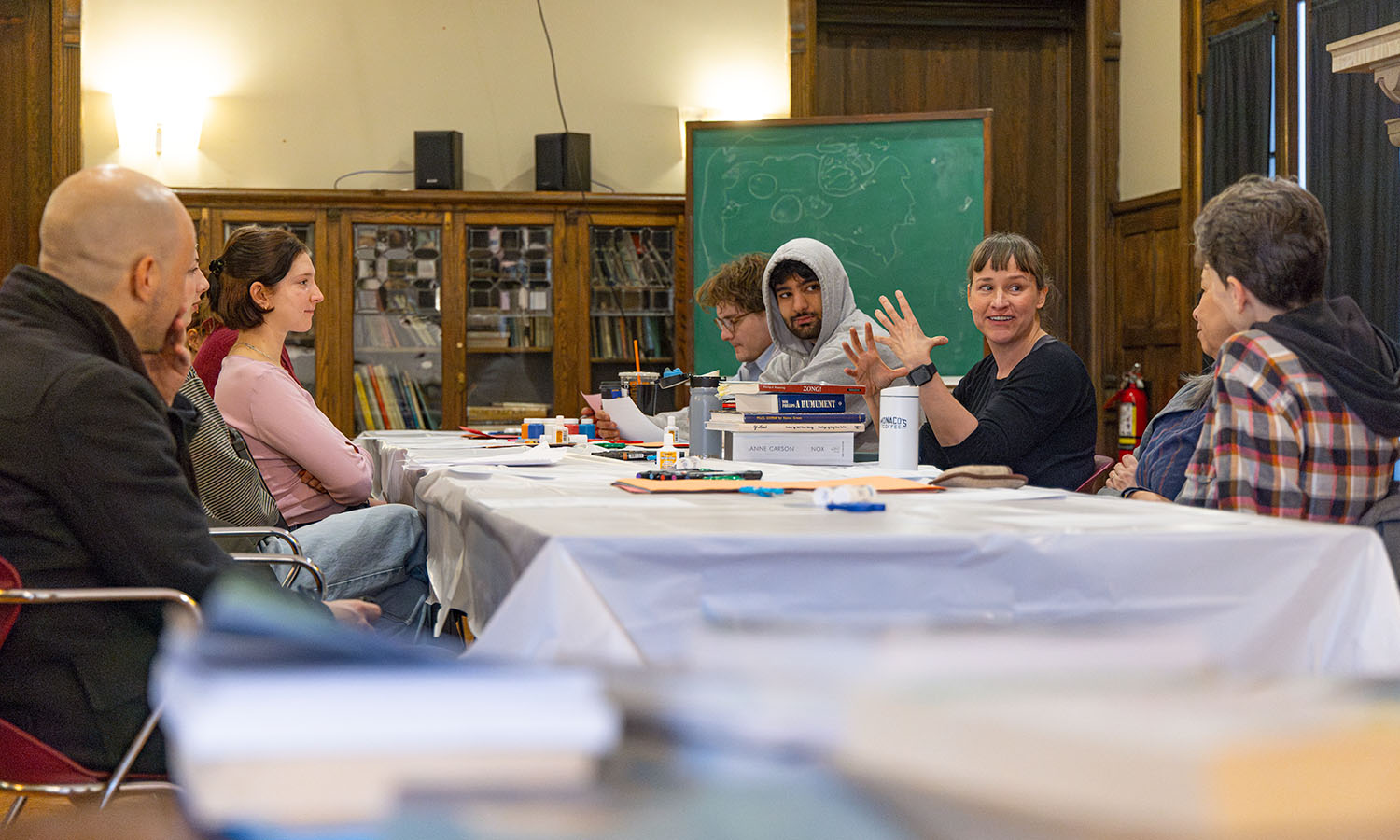
In the photo on top, Associate Professor of English and Creative Writing Kathryn Cowles leads a found-text art workshop at Houghton House.