HWS News
29 January 2026 • STEM Designing the Fish Center for the Sciences
An interdisciplinary approach to an interdisciplinary space.
Whether it’s an eyewash station, a storage cabinet for volatile substances, or a colony of frogs, the design considerations for the 15 teaching and research laboratories in the new Fish Center for the Sciences are innumerable. With 95 percent of the design specifications now complete, the four-story integrated science center has involved more than 200 meetings with key faculty from biology, chemistry, geoscience, physics, math/computer science, environmental studies and psychological science.
Nineteen months ago, they formed the Science Faculty Working Group to develop a design that allows departments to share labs, storage spaces and instrument rooms in the new building and in renovations to adjacent facilities. Faculty members met regularly with Boston-based Suffolk Construction, a design-build firm, to determine the feasibility of their plans.
The logistical considerations in combining multiple departments are extremely complex, especially in the sciences, which are traditionally separated in departmental silos.
But those disciplinary divisions can stifle discovery. Collaboration across disciplines is the philosophy behind the Fish Center’s design. To determine how that interdisciplinary approach looks and works in practice, departments had to learn about each other: their instruments, their teaching and research practices and the federal and state regulations to which they are subject, on top of countless other considerations.
“Our faculty set the tone for this work,” says Provost and Dean of Faculty Sarah Kirk, who is also a professor of chemistry. “They approached the design of the Fish Center with an eagerness to think in new ways and with a collaborative spirit that elevated the entire process.”
Psychological science, math, physics and computer science have been relocated in Gulick where they will remain permanently, Kirk says. Altogether, between 40 and 45 other science professors will be impacted as their classes, research labs, and/or offices are relocated. Approximately 25 of those professors will move to the Fish Center upon its completion in fall 2027.
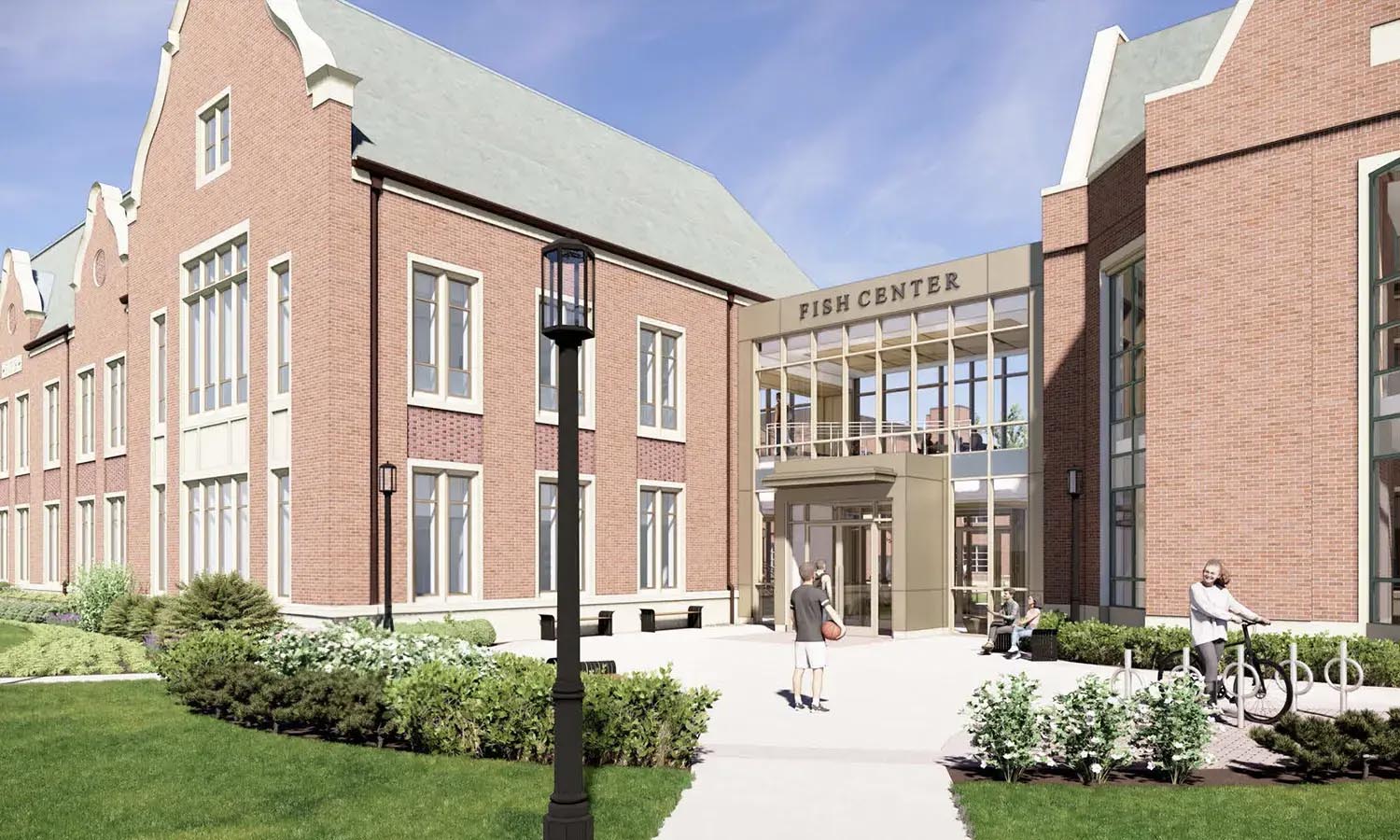
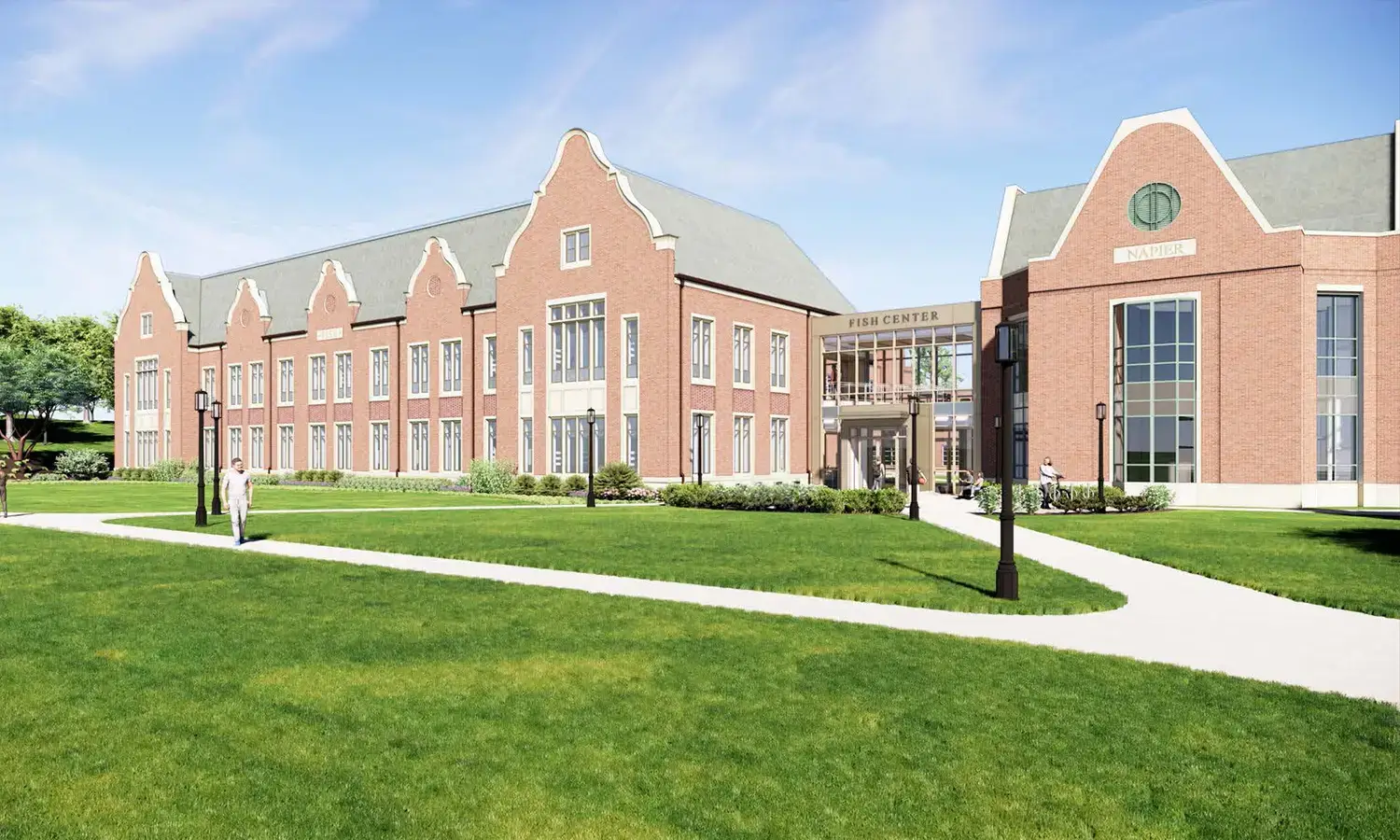
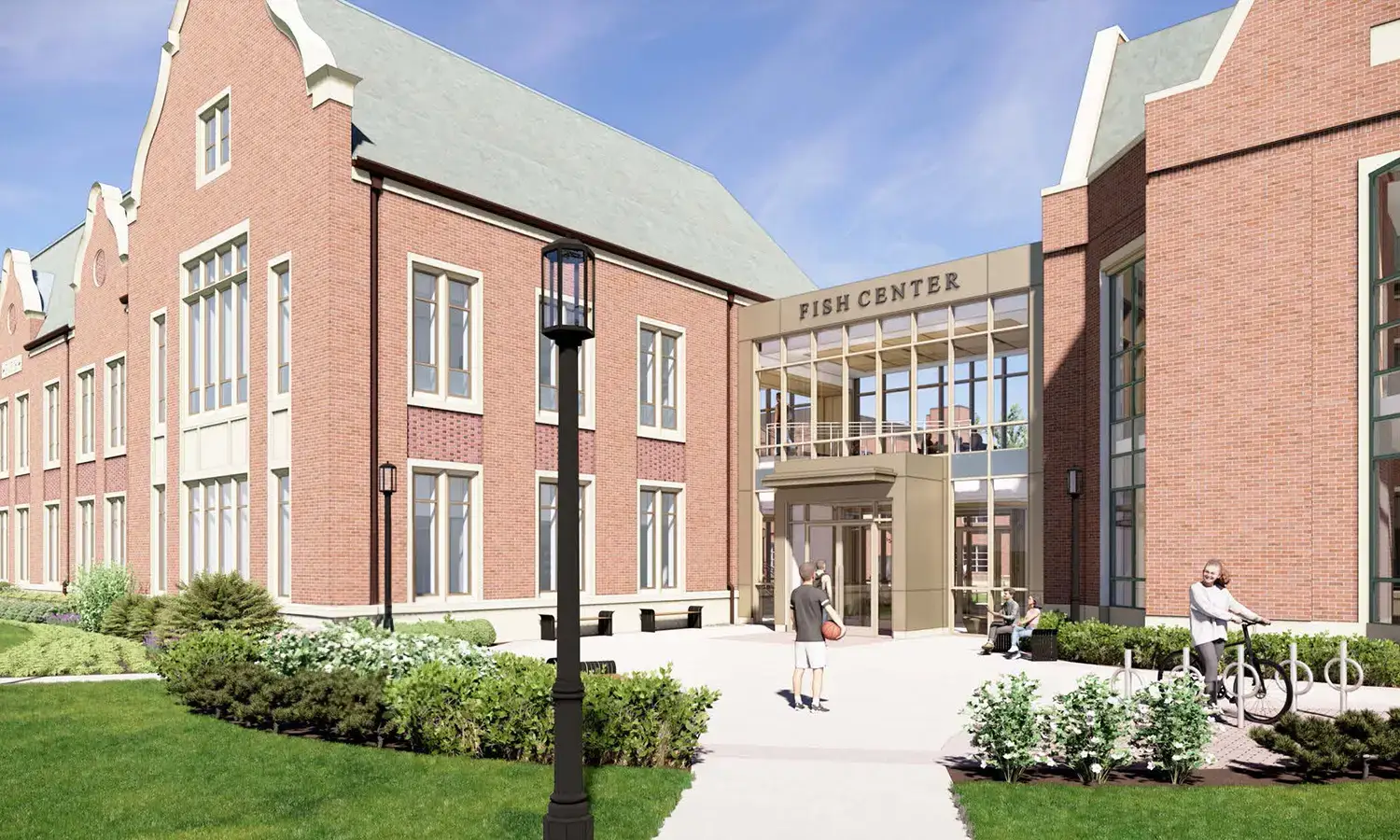
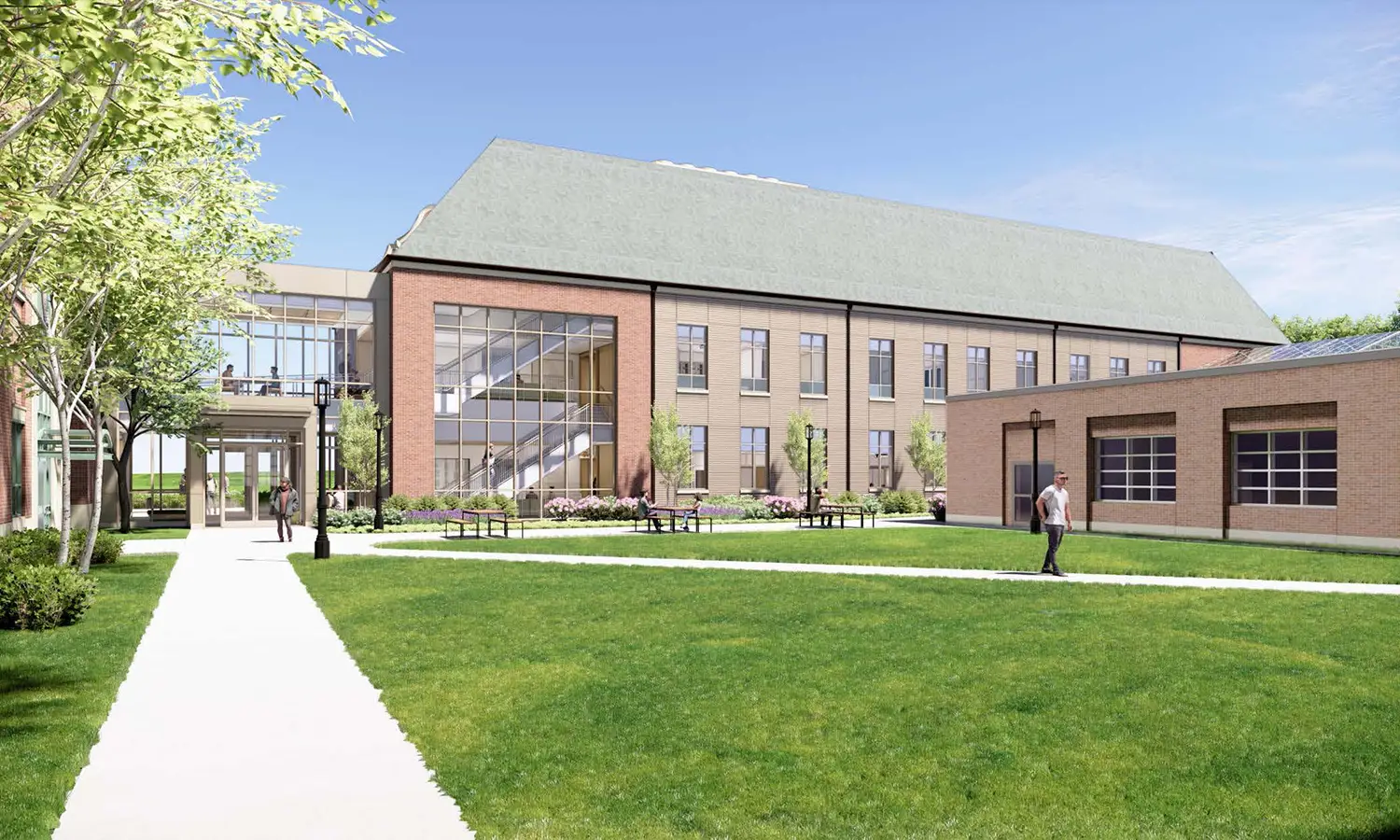
Fish Center Renderings
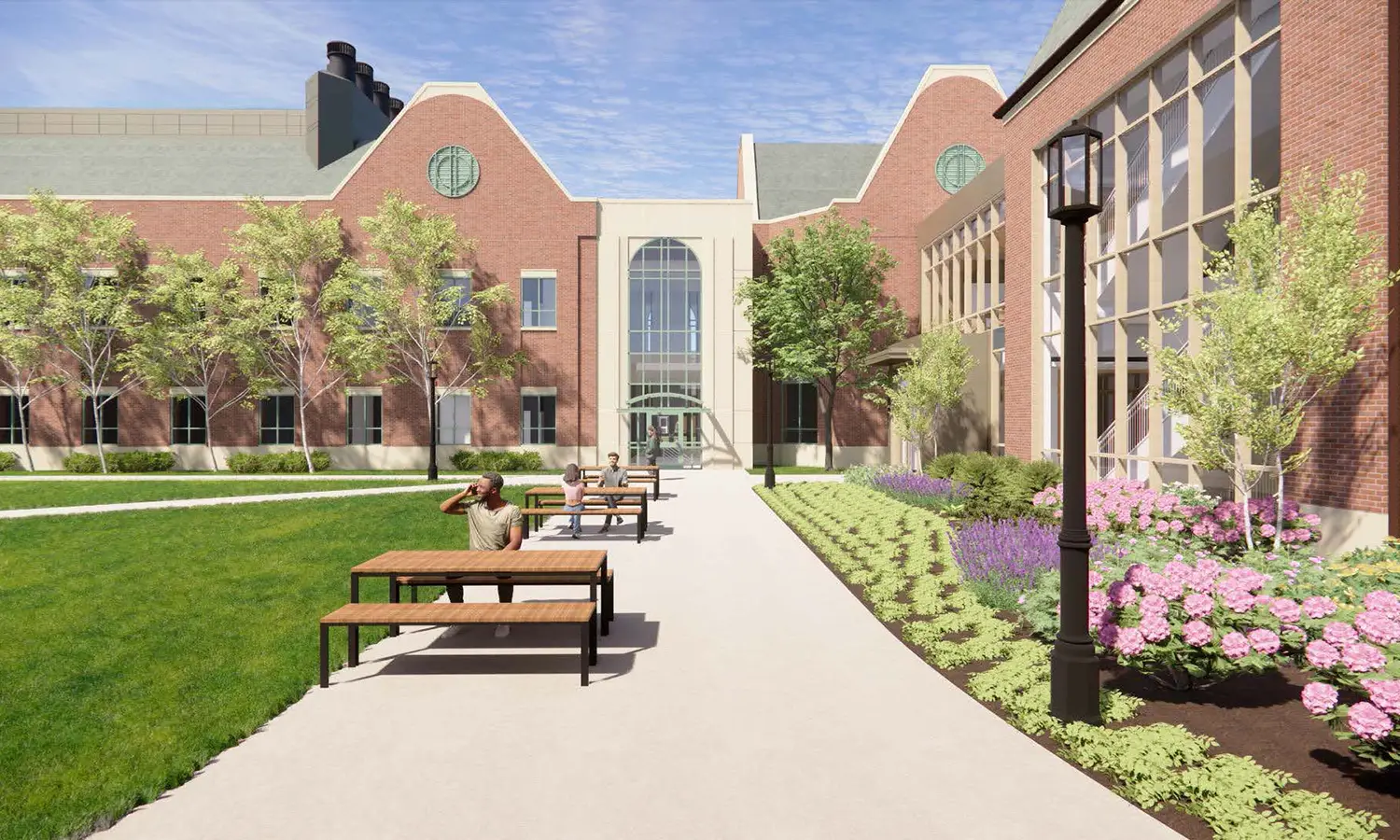
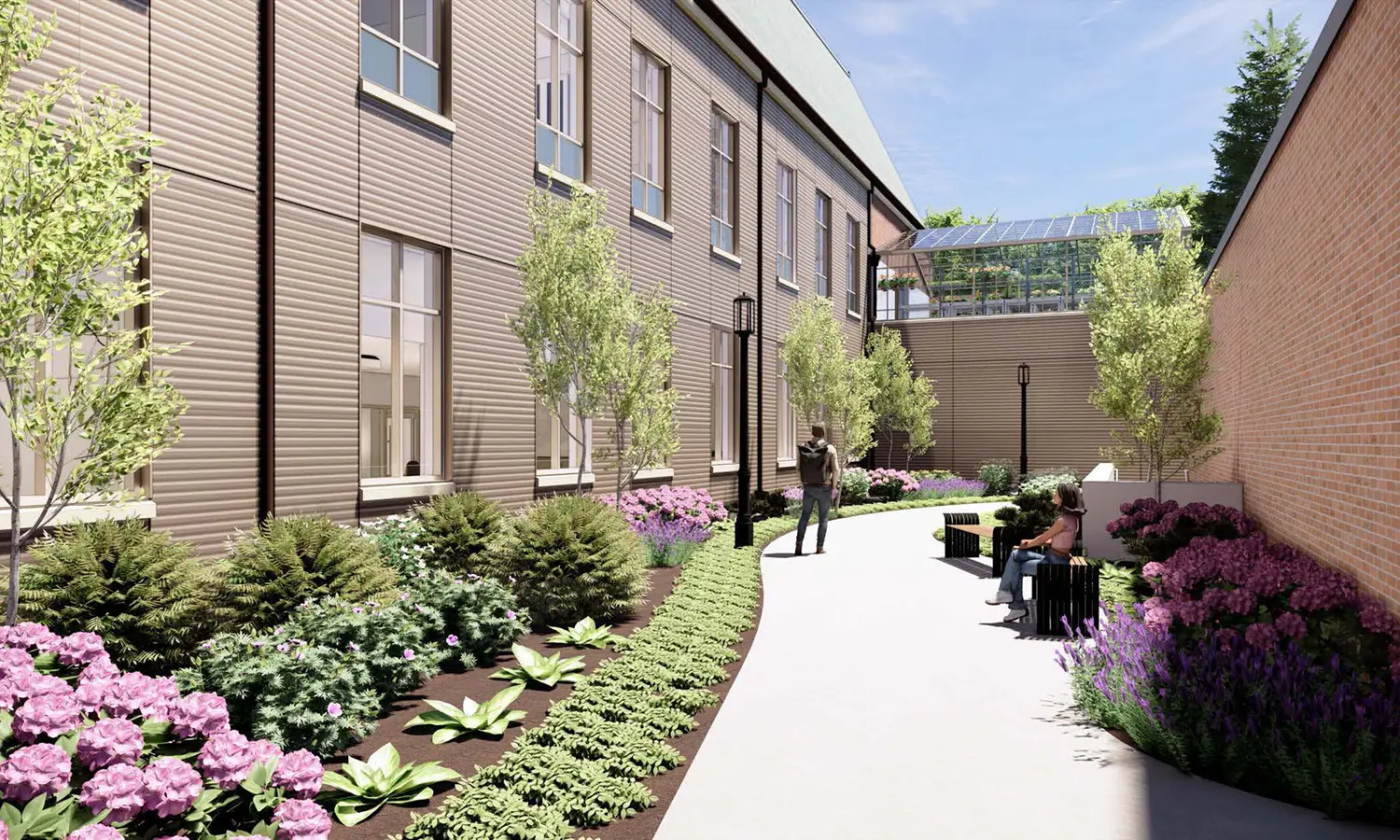
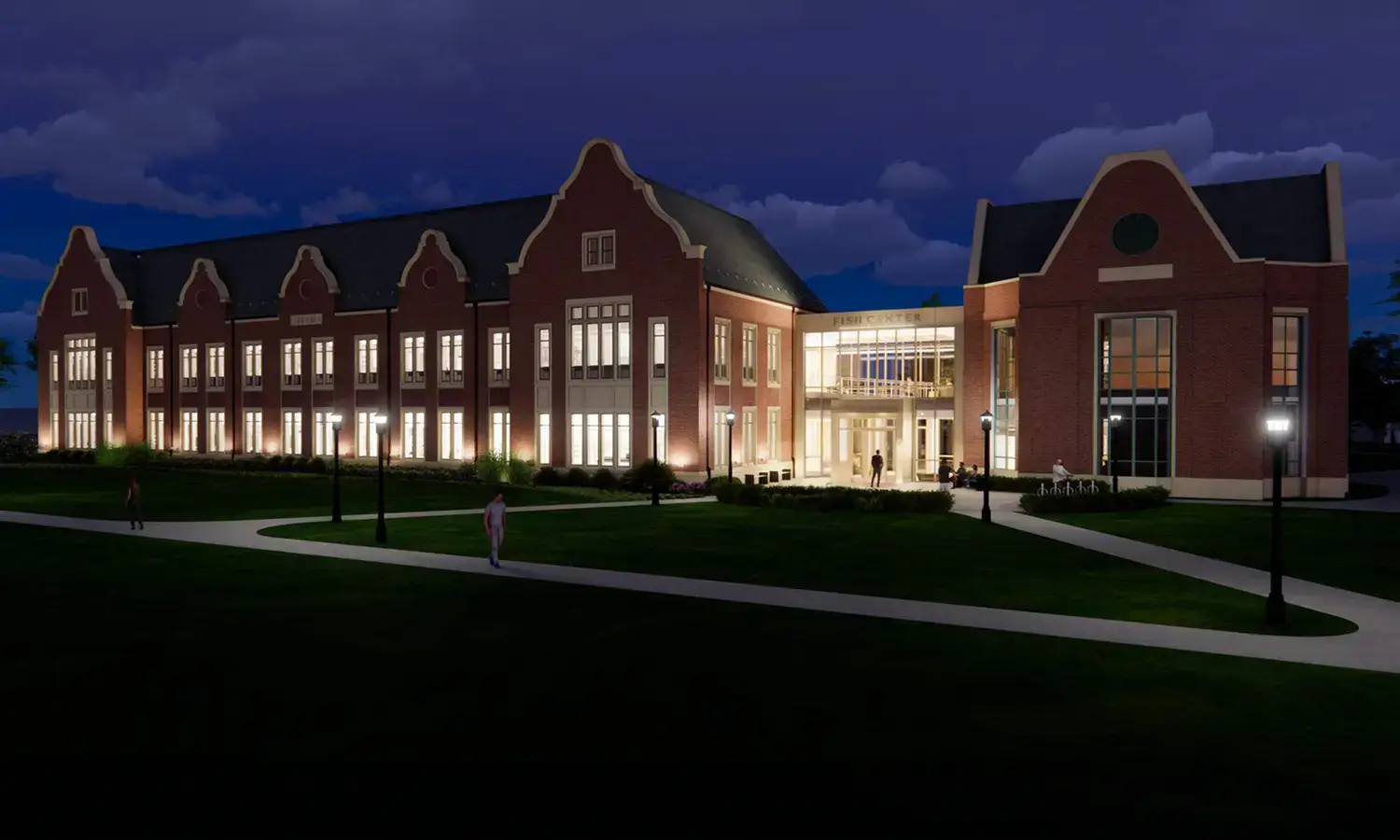
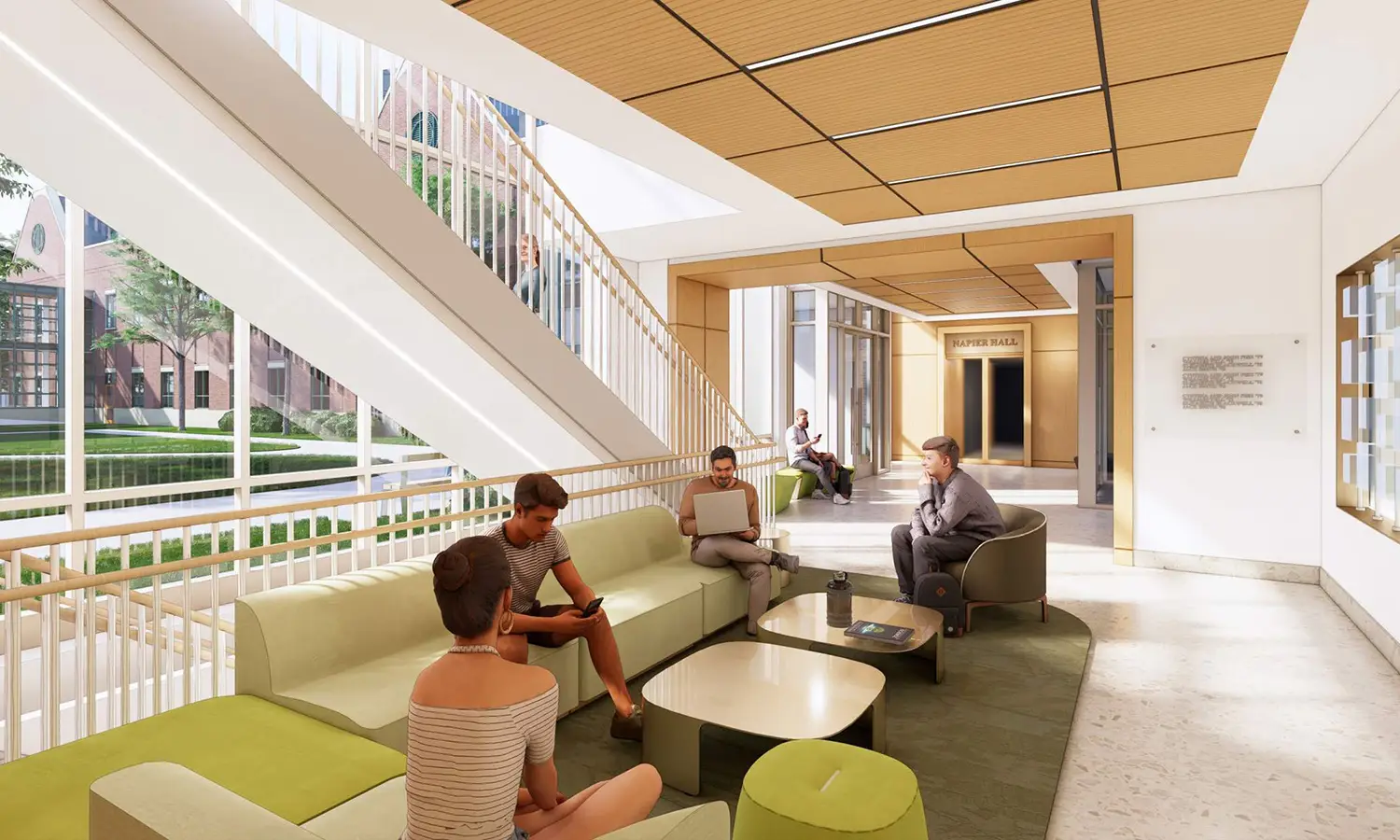
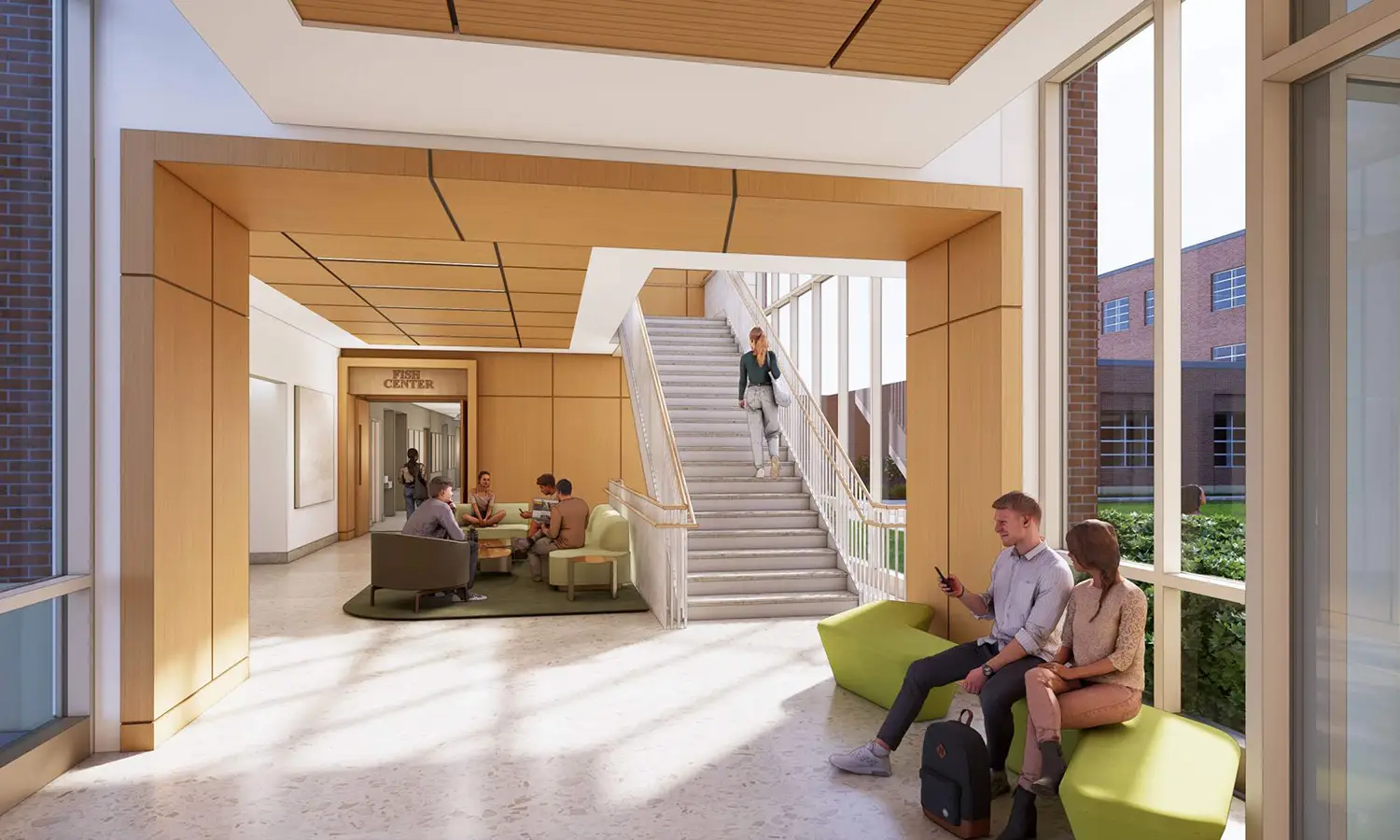
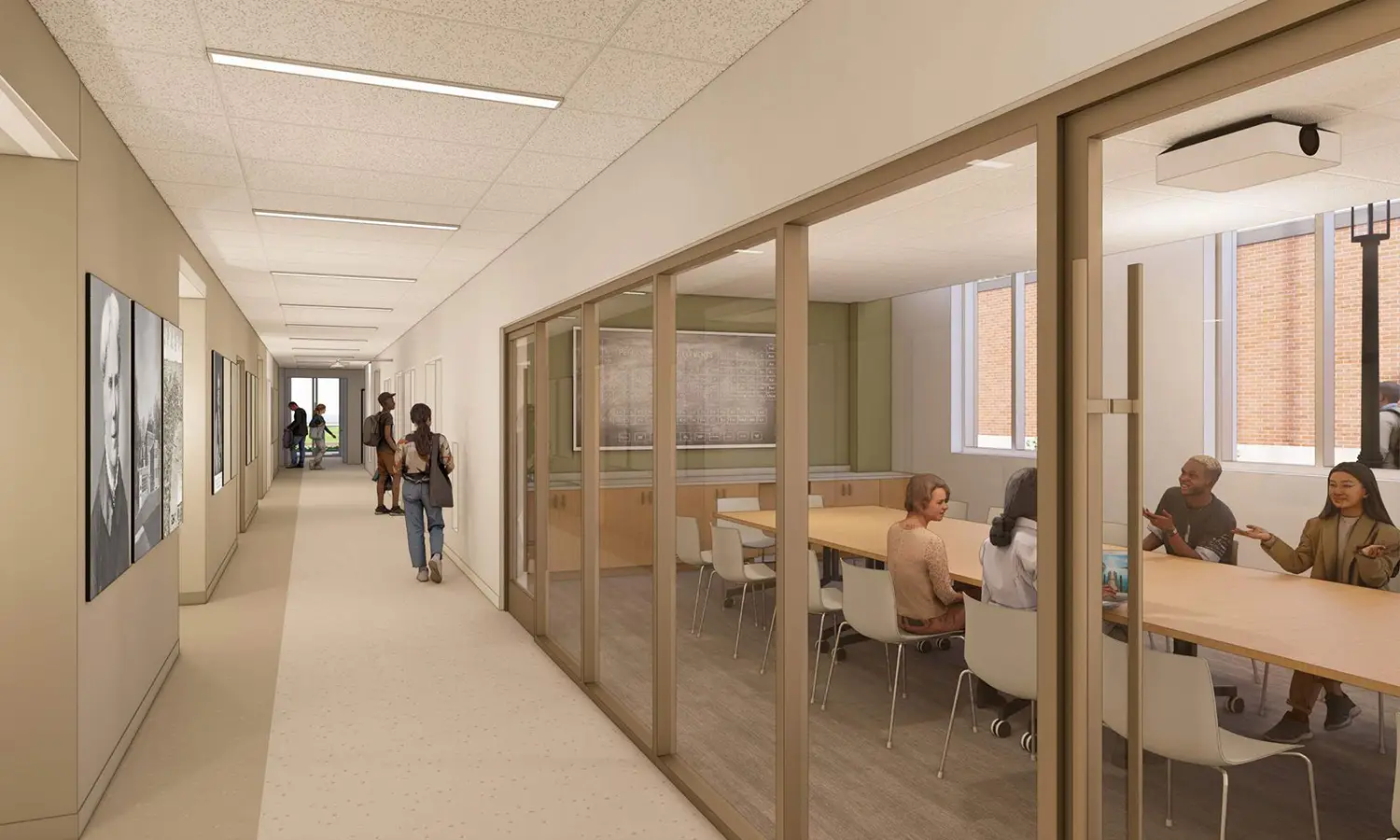
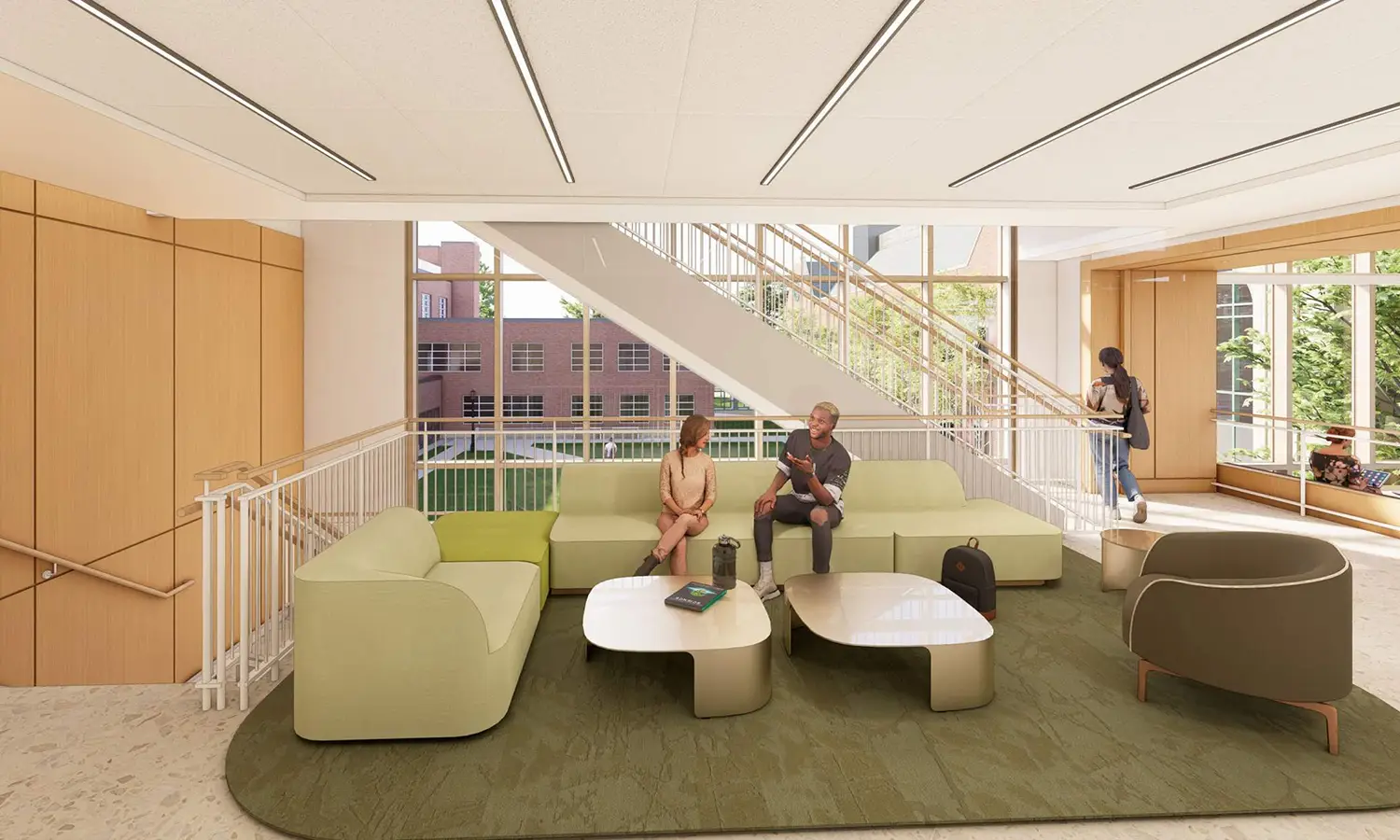
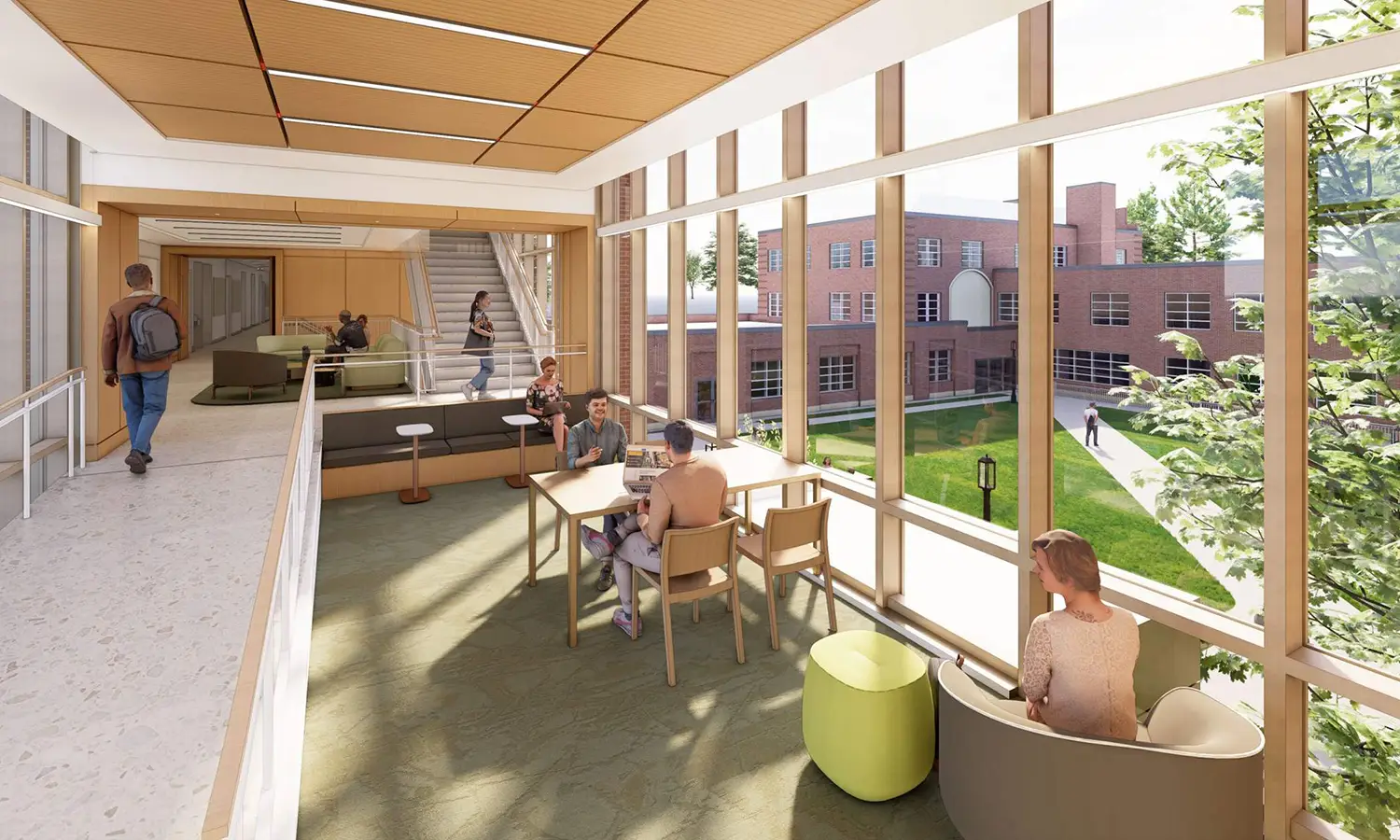
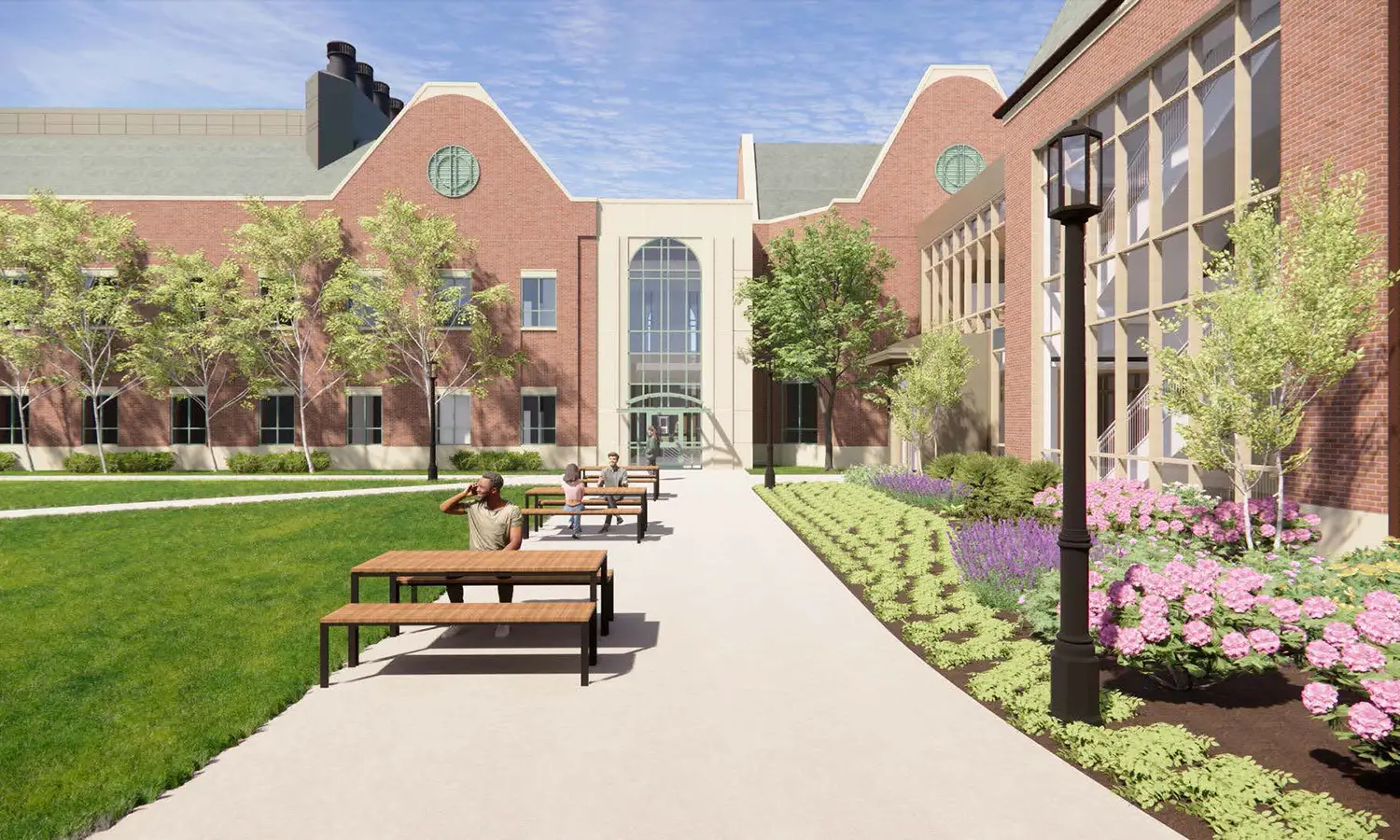
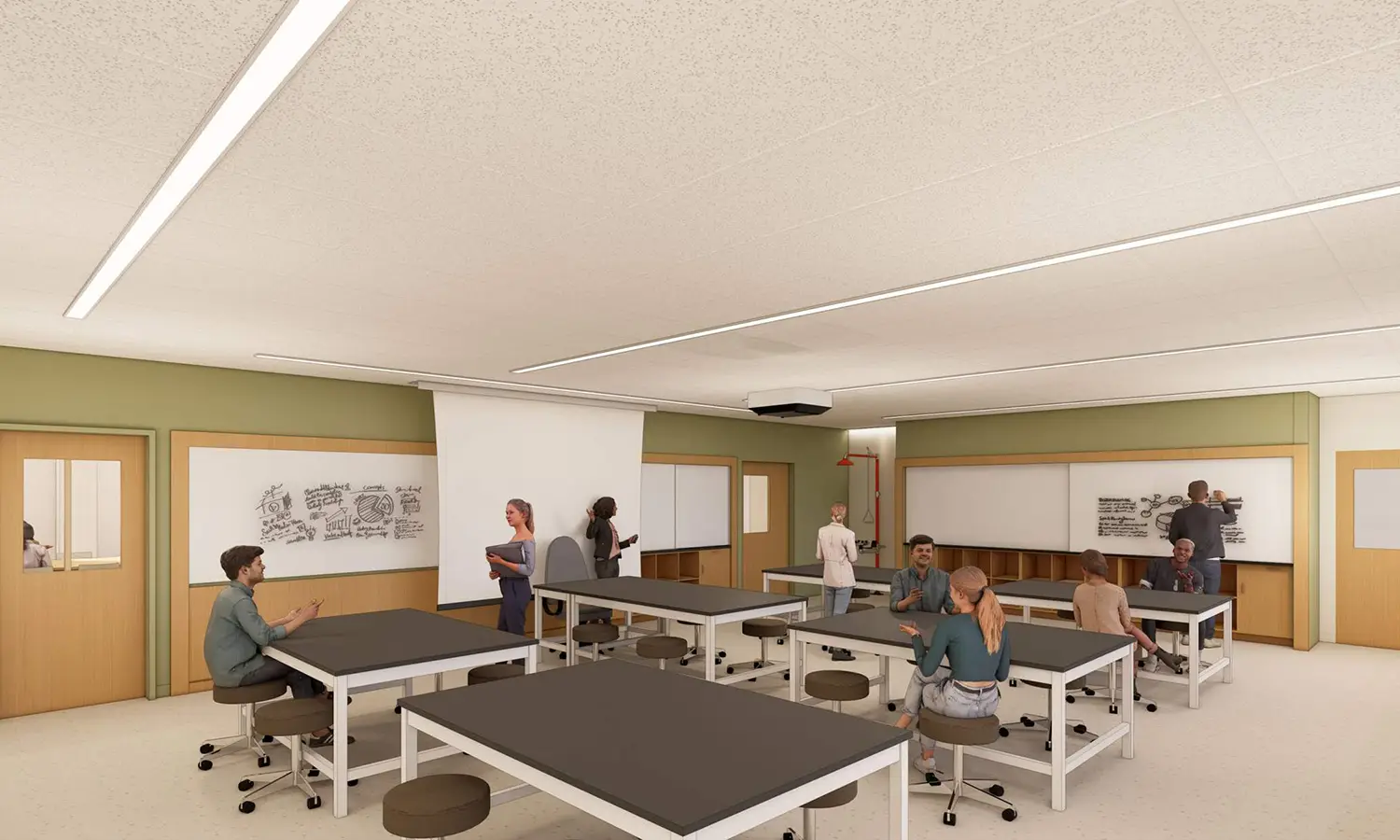
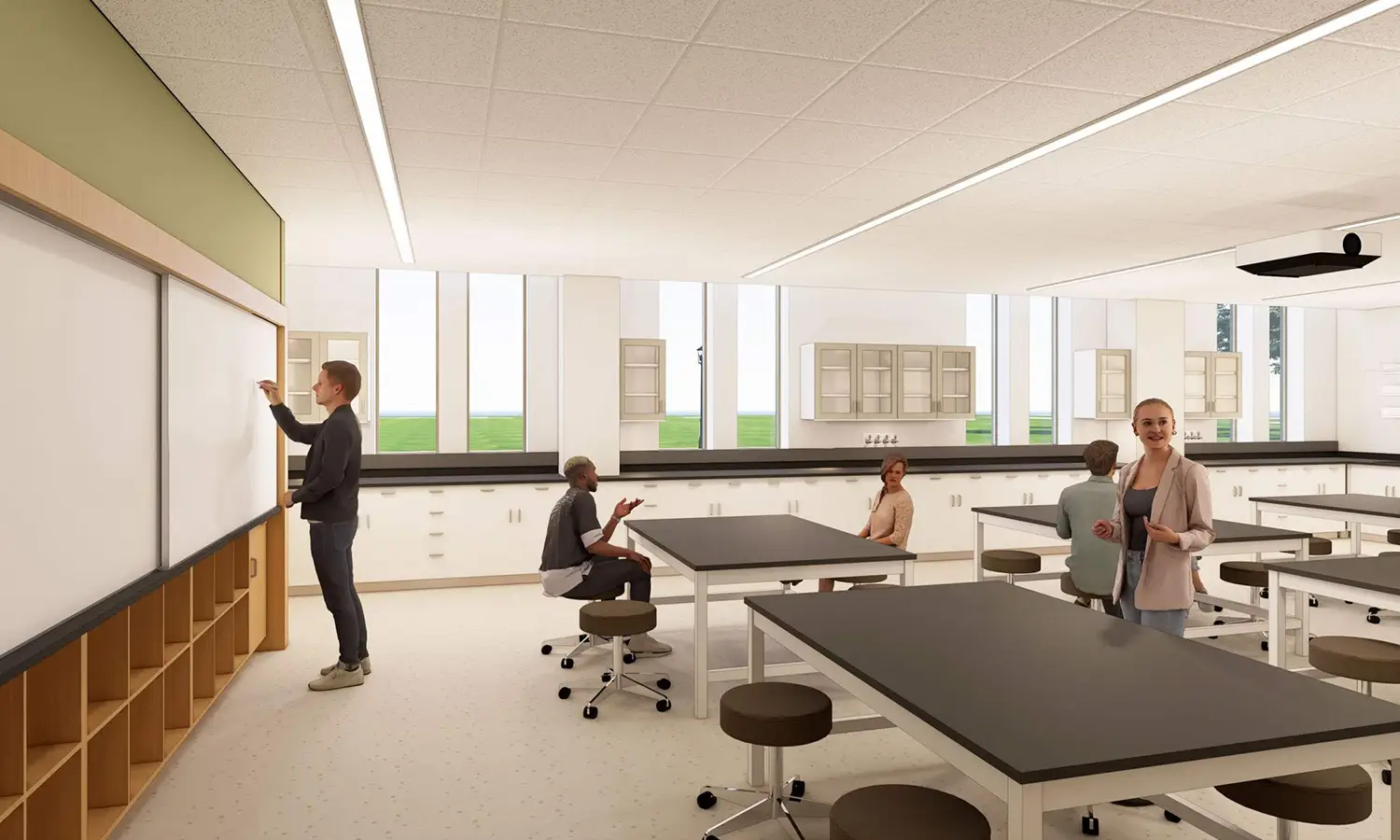
The design process was anything but linear, says Associate Provost for Faculty Affairs and Development and Professor of Geoscience Nick Metz, who led the faculty working group.
“Everyone in the group has excellent ideas,” Metz says. “Trying to package them in a way that’s realistic and suits all departments was not simple.” Members had to repeatedly return to their departmental cohorts to share ideas, gather feedback and reformulate.
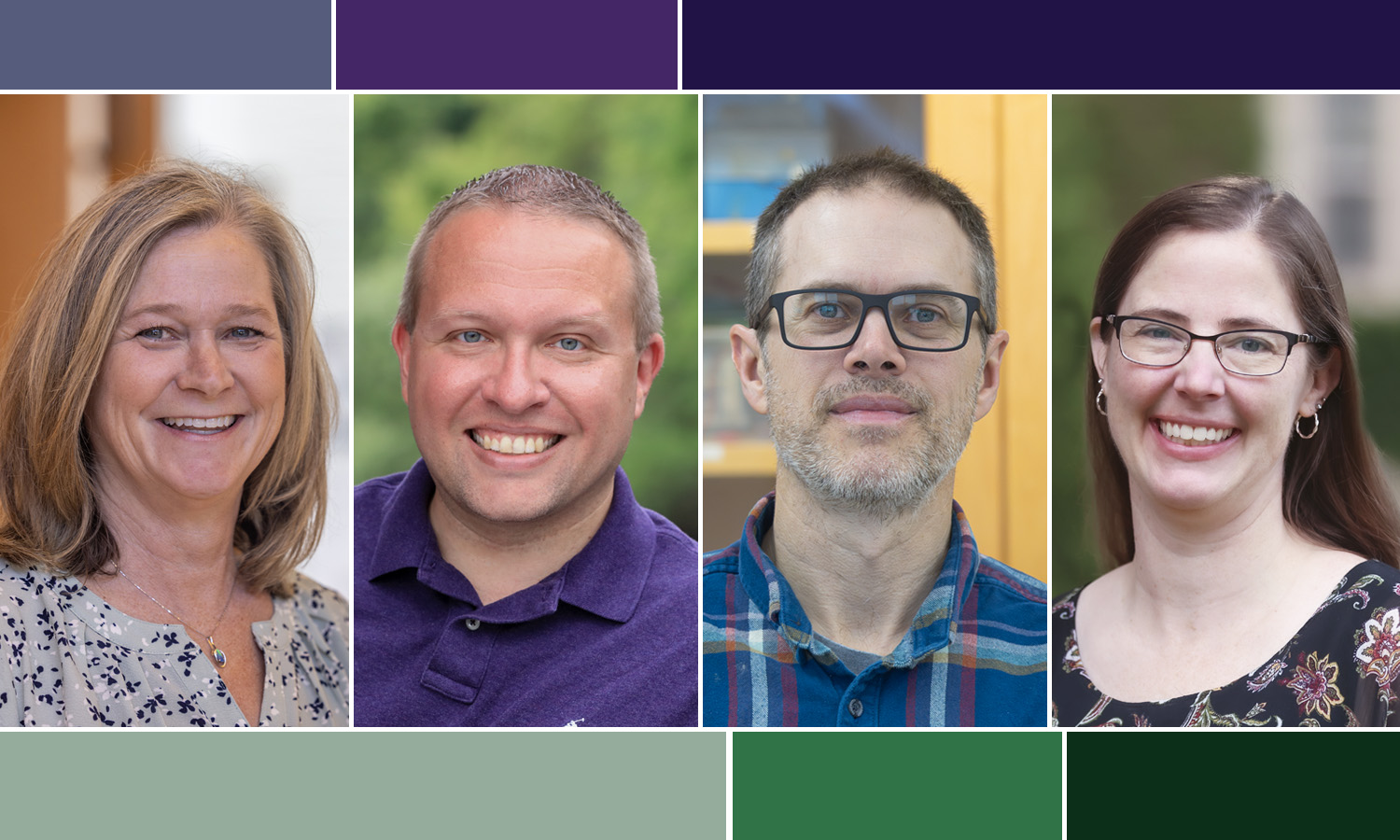
For Metz, who specializes in meteorology, the design process revealed the complexity of requirements other departments must consider in the design. By contrast, Metz says, “My lab is my computer. Discovering the rigor with which chemists need to control various chemicals in their laboratories, down to where they store them, was an eye-opener for me.”
For Professor of Chemistry Erin Pelkey, one of the big takeaways was understanding how Geoscience faculty use their labs as places to lecture. “Early on, there was a plan for Geoscience and Chemistry to share a lab space, and we realized that really did not make sense given the different uses and needs of the departments,” he says.
The department differences were surprising even to Associate Professor of Biology Shannon Straub, who as Biology Department chair and Biochemistry Department co-chair is used to straddling disciplines. “I never considered the weight and size of the rocks Geoscience uses or the logistics involved in transporting and storing them,” she says.
“I think these new spaces are going to be exciting because a lot of interesting things in science happen in what I call disciplinary cracks, the gaps between fields where knowledge doesn’t fit neatly into a single discipline." Associate Provost for Faculty Affairs and Development and Professor of Geoscience Nick Metz
Straub adds that deciding where and how to move and house the Biology Department’s live organisms has been challenging, too. In October, more than 160 plants were moved to Cornell AgriTech, where they will spend the next two and a half years. More recently, Professor of Biology Kristy Kenyon moved out of her office in Rosenberg Hall so 60 live frogs could move in. Her office was converted into a temporary vivarium, complete with new sink, timed lighting, temperature and humidity controls.
Twenty live Coturnix quail and three extinct passenger pigeons, in addition to more than 200 other mounted birds, also required special care.
Even though it hasn’t always been a straight line, Metz says, there has been incredible progress.
“I think these new spaces are going to be exciting because a lot of interesting things in science happen in what I call disciplinary cracks,” Metz says. These are the gaps between fields — areas of neglected knowledge where questions fall through because they don’t fit neatly into a single discipline.
Interdisciplinary research thrives in these areas, Kirk adds. “Research,” she says, “relies on sharing knowledge and combining information, tools and perspectives to develop solutions beyond the scope of any single area. These benefits extend to faculty and to students by fostering critical thinking, creative problem solving and the ability to synthesize and communicate ideas across disciplines.”
Top: An exterior rendering of the new Fish Center for the Sciences. On the south side of the Quad, the Fish Center for the Sciences will be built adjacent to Rosenberg Hall and approximately 25 feet north from where Eaton Hall currently stands. Demolition on Eaton is scheduled for mid-February, making way for Fish Center construction to start in March.