HWS News
20 October 2026 Connecting Psychology and Practice
With Professor of Psychological Science Jamie Bodenlos, students explored emerging treatments, cultural influences and community resources at the NAMI Syracuse annual education conference.
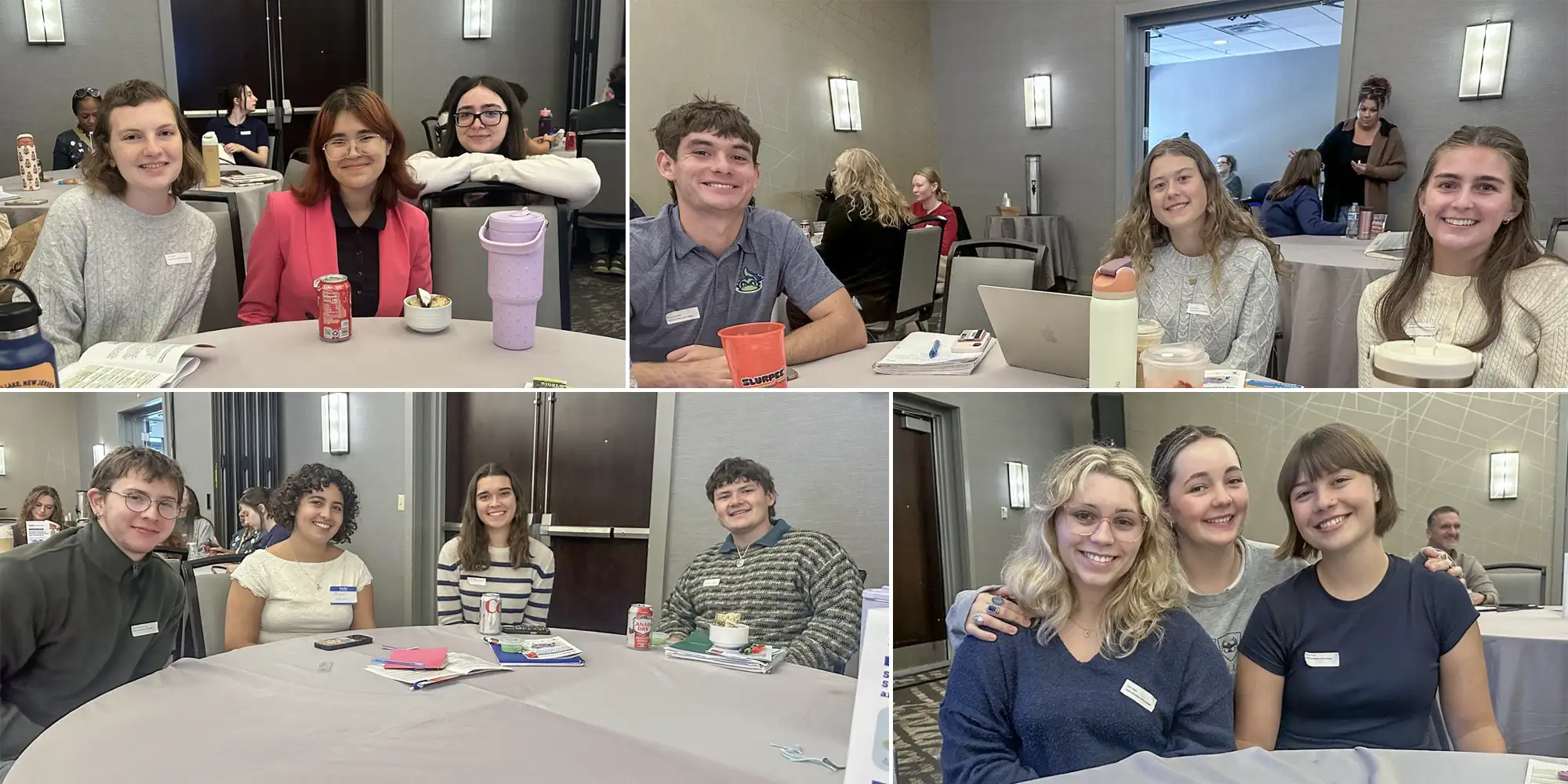
Students in “PSY 221: Introduction to Psychopathology” with Professor of Psychological Science Jamie Bodenlos recently attended the National Alliance on Mental Illness (NAMI) Syracuse 32nd Annual Education Conference, Stronger Together: Stories of Connection and Community. The event brought together mental health professionals, community organizations, individuals and families to explore new approaches to mental health care and the importance of building supportive, connected communities.
Through presentations, panel discussions and conversations with local organizations, students learned about topics ranging from emerging therapies and culturally responsive care to community-based support services.
“One of the guiding principles of my teaching is helping students bridge the gap between what they learn in the classroom and the complexities of the real world,” says Bodenlos. “This is especially important in clinical psychology, where textbook descriptions of psychological disorders and treatments can never fully capture the nuances of lived experience. Hearing directly from individuals, families and mental health professionals brings these concepts to life in ways that a textbook simply cannot.”
Conference speakers included Mantosh Dewan, president of Upstate Medical University, who discussed initiatives in psychiatry; psychiatric mental health nurse practitioner Jerena Barkins, who examined bias in health care; and mental health counselor Dave Dunn, who explored psychedelic-assisted therapy. A panel featuring local organizations also highlighted how community partners collaborate to connect individuals with mental health services.
For psychological science major Dylan Ivanchikova-Crouse ’27, the conference offered a clearer picture of career opportunities beyond academia, particularly in public and health services. Local organizations’ information tables caught his attention, highlighting the region’s mental health services and the populations they support.
“The tabling part of the event was particularly interesting, showing off a lot of the local mental health infrastructure,” he says. “Much of the real-world application of mental health services focuses on addressing specific vulnerable groups, something that isn't so emphasized in coursework.”
Planning to become a clinical social worker and practice therapy, Ivanchikova-Crouse also appreciated hearing directly from professionals about emerging treatments, including ketamine-assisted therapy. Those conversations added nuance to concepts students encounter in class and demonstrated how psychological research intersects with broader sociocultural issues.
Sofia Vesei ’28, a psychological sciences major and biology minor interested in neuroscience and nutrition, found the discussions of emerging treatments especially valuable. Hearing practitioners discuss psychedelic-assisted therapy illustrated how developing research can inform clinical practice, while personal stories underscored the value of prevention and support programs in educational, occupational and medical settings.
“Overall, hearing personal stories and learning about actionable plans strengthened my ability to make connections between theory and real-life applications,” she says.
For psychological science major Vanessa Tarpy '29, the conference offered insight into how mental health practices are implemented in local businesses and organizations, as well as the barriers that can prevent people from accessing care. Discussions about the effects of stigma on minority groups reinforced the importance of culturally responsive services and connected classroom learning to broader questions in public health.
Tarpy was particularly interested in a presentation on psychedelic-assisted therapy, which explored the treatment’s history and potential benefits for certain mental health conditions. The discussion introduced her to an evolving area of psychological science that she hopes to follow as she considers a career in forensic psychology.
For psychological science and child advocacy double major Sayeeda Saidkariev ’29, a presentation on cultural differences and inequities in mental health care was particularly meaningful. The discussion highlighted how bias and assumptions about race and culture can affect treatment, as well as the importance of ensuring that people from diverse backgrounds have equitable access to resources.
The conference also helped Saidkariev identify ways to get involved. She learned about local organizations, volunteer opportunities and internships, and has already received callbacks about potential volunteer roles. As someone interested in becoming a family therapist and relationship counselor, she valued connecting with professionals and learning more about the services that support individuals and families.