HWS News
23 April 2026 Ink, Paper and the Art of the Printed Page
The Wells Book Arts Center began its next chapter at Hobart and William Smith this spring, offering students a tactile counterpoint to the digital world.
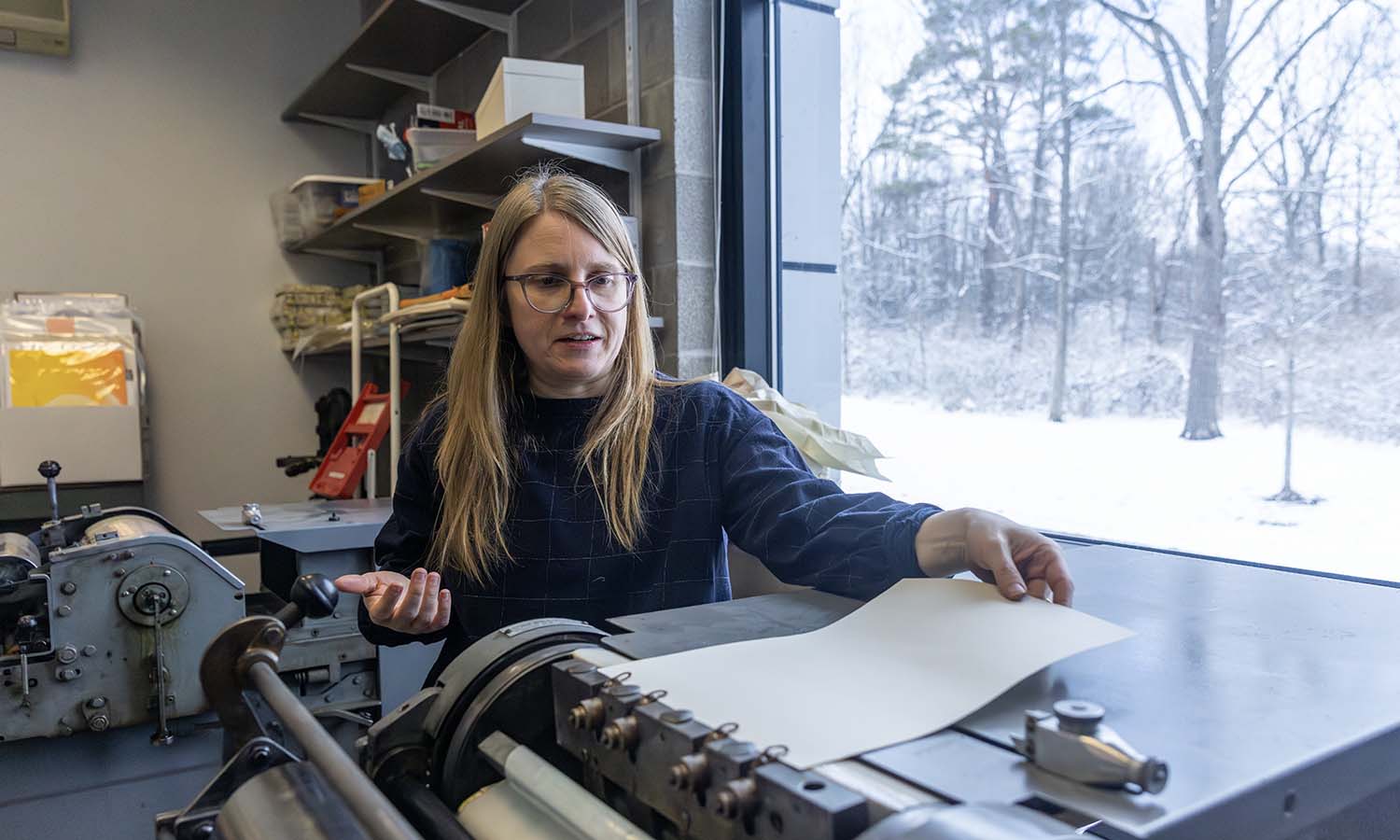
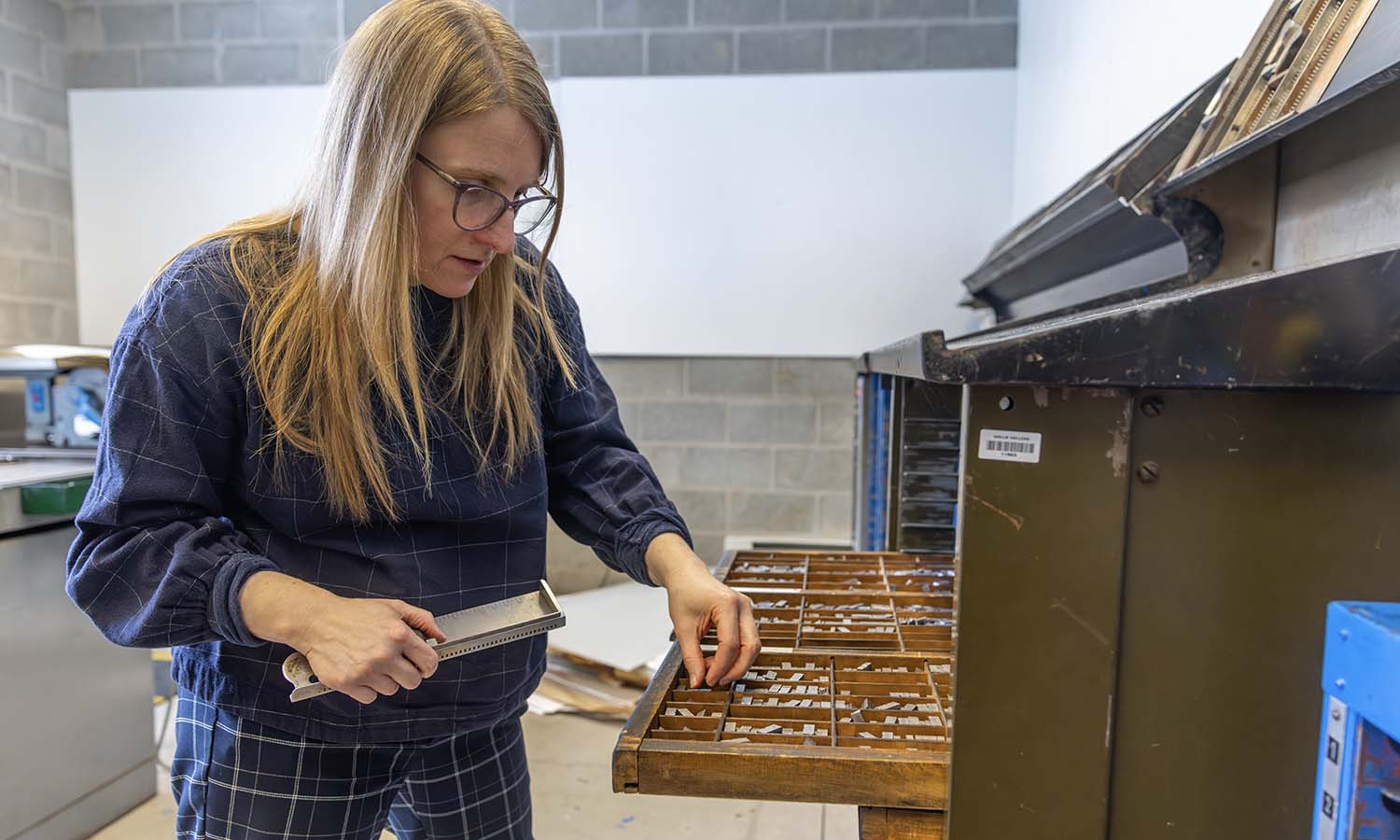
In the Wells Book Arts Center, students set text one letter at a time, roll ink across metal type and pull prints from presses that echo centuries of publishing history.
Now the nationally respected center — previously housed at Wells College since 1993 — begins a new chapter at Hobart and William Smith in the Katherine D. Elliott Studio Arts Center, where students can connect to the writing and publishing process without the glow of computer screens or the ease of the backspace key.
Known for teaching hand-bound artists’ books and traditional printing techniques, the Center ultimately will offer courses that will satisfy requirements or electives, while providing hands-on modules for classes in a range of departments.
April 13, 2026
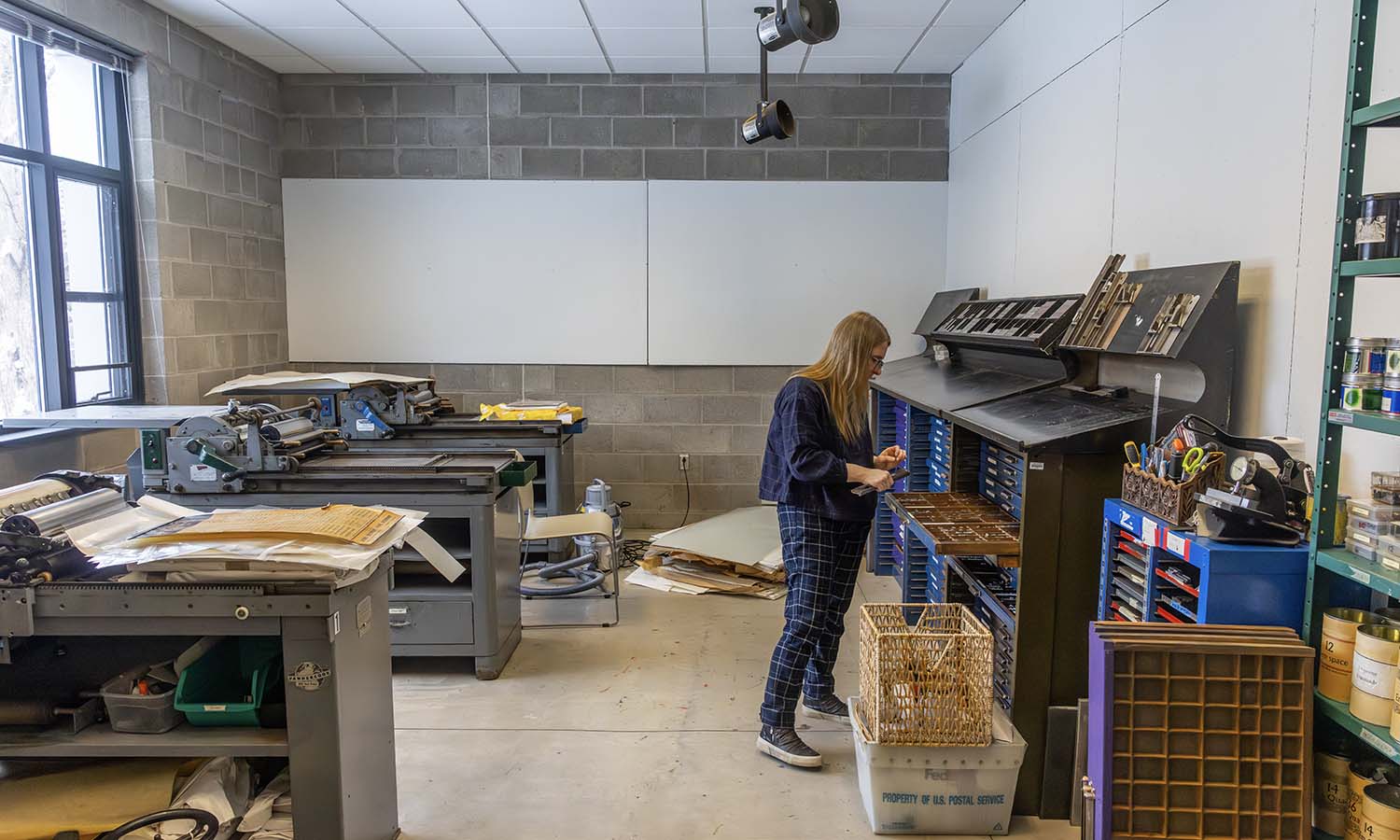
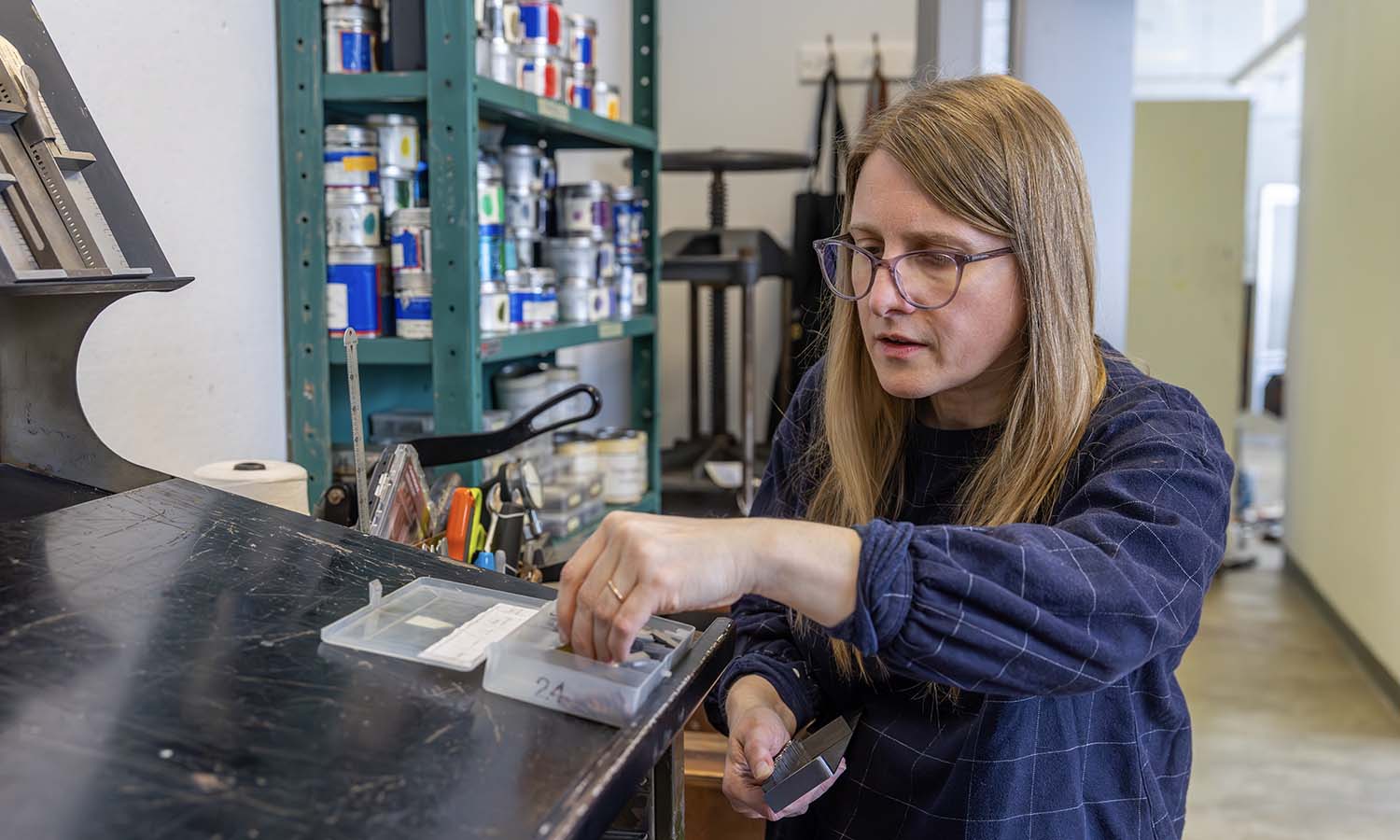
The Center includes an extraordinary collection of tools and materials:
- 19 Historic printing presses, including Vandercook and Chandler & Price models
- 700 Drawers of movable metal and wood type
- Calligraphy studio
- Historic image blocks
- Bookbinding equipment
- Book studies research library
- Risograph printer
- Full Spectrum laser cutter
Combined, the materials offer students, faculty and the public a chance to connect more deliberately with history and the process of writing. And by working with their hands, students stimulate different problem-solving processes than digital work alone allows.
“There’s something magical about pulling a print off the press for the first time. People hold it and think: ‘I made this,’” explains Book Arts Center Director Mary Tasillo. “It has a smell, a texture, the impression of type on the page.”
Tasillo arrived on campus earlier this semester to open a temporary space for the Center in Elliott, which serves as a teaching space and collaborative hub for multiple disciplines. There, Tasillo is unpacking a portion of the collection, including 4 presses and 100 drawers of type.
“It smells like ink,” she says with a laugh. “Students are going to get their hands dirty.”
The Center’s move was approved through a legacy agreement last year following the closure of Wells College in 2024. The transfer makes HWS one of a small number of colleges with book arts facilities of this scale.
When Professor of History Matthew Crow was notified of the transfer, he was taking a class through the University of Virginia’s Rare Books School in the library at the University of Pennsylvania.
“I mentioned the news to one of the rare book and special collections librarians there, and they were blown away,” Crow recalls. “They said, ‘You got what? That is a big deal!’”
“I hope the campus realizes what a resource it is,” Crow continues. “It can be transformative in the way we teach the arts and humanities, in particular, but it really applies to any discipline.”
The field blends creative expression with technical craft, touching areas as diverse as literature, art, design, media studies and the history of communication.
Tasillo looks forward to pulling out the papermaking equipment. “This is another opportunity to pack meaning into a physical object because you can make paper from many kinds of plants,” Tasillo says. “You can make paper from old blue jeans or your grandmother's linen tablecloth. Students working on invasive plant species could make paper incorporating those fibers, which is an opportunity to pull in biology, art and ecology students to the studio.”
Tasillo says she has been floored by HWS faculty interest in using the Center in their coursework, which she says reflects the inherently interdisciplinary nature of book arts.
The Center takes hands-on learning to a new level, which Crow says he has already experienced to a lesser extent through tabletop presses the History Department recently acquired through a $500,000 grant from the Mellon Foundation. Students appreciate being active participants, he says, combining the many technical, physical and artistic considerations of printing.
Writing in this environment is a collaborative instead of solitary experience. Students working in the studio set text one letter at a time. “You sweat with other people in the print shop,” Crow says. “Someone has to hold the paper, and someone has to turn the screw. Someone’s got to clean the lettering off; someone's got to ensure that the lead type is put away and the wooden type is available, that we’re washing our hands regularly,” he adds.
The Center is expected to become a public-facing resource as well. Workshops, summer institutes and conferences are expected to draw artists, writers and educators from around the country, continuing programming that has historically brought national practitioners to Wells College.
Those initiatives also position the Center, with its national reach, to attract professionals for artist- and scholar-in-residence programs. The Center will be a hub of creativity in the summer too with paid in-person and virtual program offerings. “I don’t think we have any other programs like this,” says Vice President and Director of Board Relations Kathy Killius Regan ’82, P’13. “And there is the important component of bringing people interested in Book Arts to campus for workshops, conferences and summer academic programming,” Regan adds.
For Tasillo, the Center’s arrival at HWS represents more than a relocation. At a time when many colleges are closing programs or dispersing specialized collections, the preservation of the Wells Book Arts Center ensures that its tools, traditions and creative possibilities remain accessible to students.
“It’s really special that this collection has a new home,” she says. “Programs like this don’t always survive institutional closures.”
Top: Book Arts Center Director Mary Tasillo