HWS News
11 December 2025 • Faculty From Geneva to Doha
A January workshop in Qatar, co-directed by Professor of International Relations Stacey Philbrick Yadav, explores methods and ethics for research in conflict-affected environments.
As a researcher, Chair of the International Relations Department Stacey Philbrick Yadav cares as much about how we know as what we know. One of her goals as an educator and scholar is to develop a sustained ethos of equitable collaboration between researchers and members of the communities where they work.
To that end, the Joseph P. DiGangi Professor of International Relations spent much of this summer and fall preparing to co-direct a four-day training workshop in January at the Doha Institute for Graduate Study in Qatar. The training is designed to broaden scholars’ understanding of how (and with whom) political scientists produce knowledge and shift the traditional academic-centered research approach to one that not only meaningfully incorporates the voices of research subjects but encourages research partnership from the design-phase forward.
The workshop is a part of the American Political Science Association’s MENA Workshops series, a multi-year initiative designed to strengthen academic collaboration between the association’s members and researchers in the Middle East and North Africa. An APSA MENA Politics section chair from 2021 to 2023, Philbrick Yadav specializes in comparative politics of the region, with a focus on how civil actors pursue justice during and after conflict, especially in Yemen. She also publishes widely on fieldwork and on the ethical complexities of collaborative research in conflict-affected settings.
The theme of this workshop focuses on “participatory and engaged research,” and explores the way academic research can support community needs outside of the academy. The organizers will draw on their collective experiences to model pathways for engaged scholarship and equip participants with strategies for making community-engaged work recognizable, citable and valuable in university settings.
“This workshop is, in a way, ‘reading the room.’ Lots of people are already doing engaged research. But they have to draw a line and put ‘my academic work’ over here and ‘my engaged work’ over there. We think there are ways – and good reasons – to narrow that gap, even if that’s not for everyone.” With this in mind, there will be two open sessions on the role of academic research in supporting diplomatic negotiations and research for the public eye.
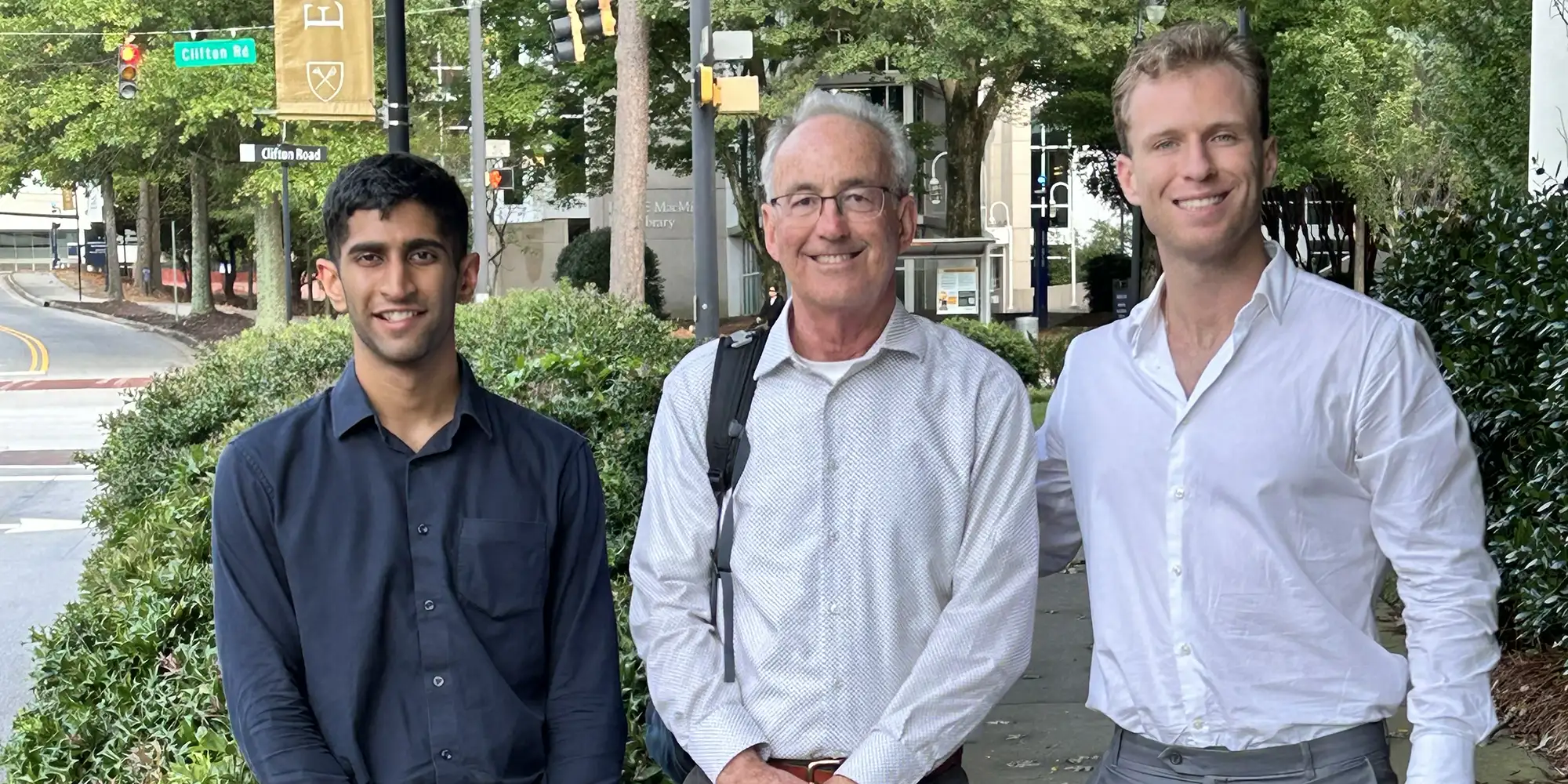
Philbrick Yadav will co-lead the program with three colleagues from the APSA MENA Politics section. Lara Khattab and Ammar Shameileh, are both based in the region at the Doha Institute for Graduate Study, and they will be joined by Sarah Parkinson from Johns Hopkins University’s School of Advanced International Study in Washington, D.C. Parkinson visited Geneva over the summer to meet with Philbrick Yadav and International Relations major Meredith Montgomery ’27, who did summer research helping to prepare material for the January workshop. Montgomery, who is also a French and Francophone studies major, spent the fall semester studying in Aix-en-Provence. After HWS, she plans to attend graduate school for international relations. Learning about ethical social science research practices, Montgomery says, has shaped how she thinks about her future work.
“Professor Philbrick Yadav has a deep commitment to empowering the communities she studies,” Montgomery says. “She constantly thinks about how to make her research more inclusive, and I hope to carry that same mindset into my own work.”
The workshop in Doha enables Philbrick Yadav to share her understanding with Ph.D. students working in and on the MENA region, as part of APSA’s multiyear effort to strengthen research networks across regions.
To participate, 20 Ph.D. students and early-career researchers were selected from close to 200 applicants. “Reading the application files was a humbling experience,” Philbrick Yadav notes. “Many of our participants seem to be amazing scholar-practitioners already, doing terrific work in their communities. I’m looking forward to meeting them and learning more about the work they’re doing. My hope is this will be a generative environment for all of us.”
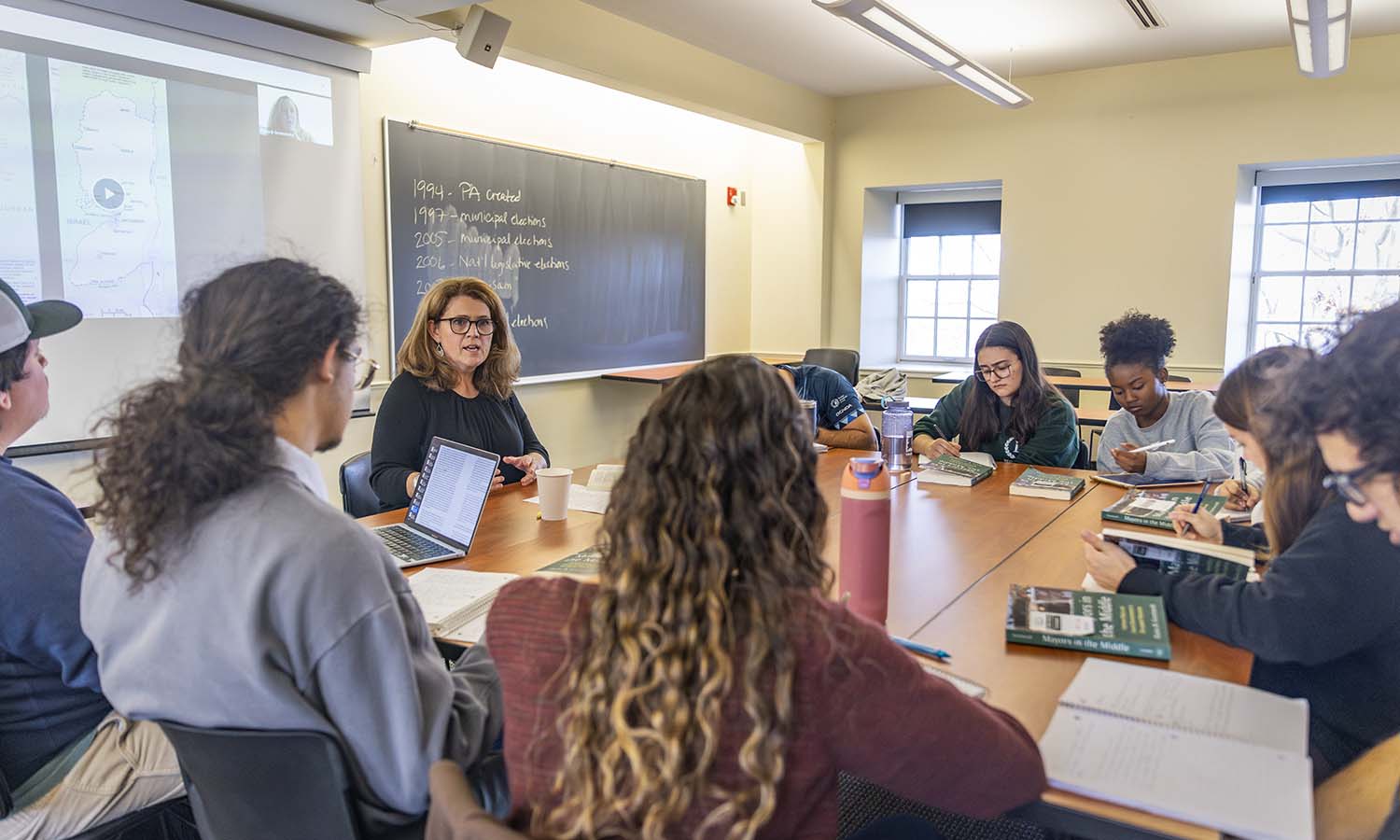
Top: The Joseph P. DiGangi Professor of International Relations Stacey Philbrick-Yadav leads a group discussion in “Borders, Belongings and Rights.”