HWS News
12 October 2022 • Faculty The Environmental Impacts of Crypto Assets
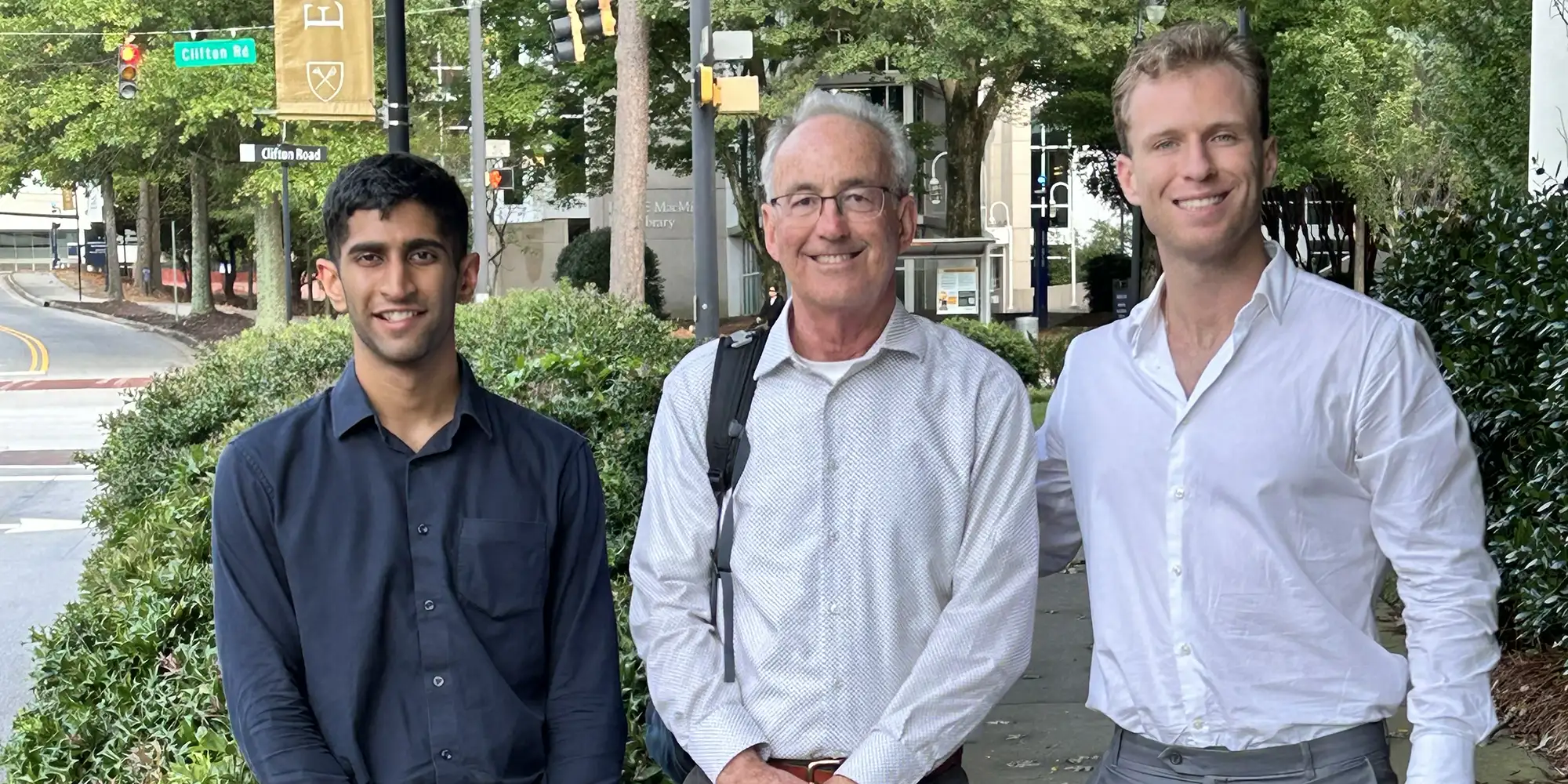
A research paper on Bitcoin mining by Professor of Economics Thomas Drennen and Martin Roeck ’20 was cited in a recent report published by the White House Office of Science and Technology Policy.
A report published by the White House Office of Science and Technology Policy examines the climate and energy implications of crypto-asset activity in the United States. Included in the report is a citation to the paper written by Professor of Economics Thomas Drennen and Martin Roeck ’20 that quantifies the greenhouse gas emissions and other environmental impacts associated with crypto-assets.
Their paper, “Life cycle assessment of behind-the-meter Bitcoin mining at U.S. power plant,” was published earlier this year in The International Journal of Life Cycle Assessment. As a case study, Drennen and Roeck analyzed the operations of Greenidge Generation LLC, a natural gas power plant in Torrey, N,Y.
“This research sprang out of an independent study Martin was doing with me in his senior year. The paper highlights the environmental impact of repurposing older, inefficient fossil fuel power plants in the U.S. for mining Bitcoin, rather than for supplying power to the grid,” says Drennen.
“We wrote the paper because we were concerned that they would take an older, hugely inefficient power plant on Seneca Lake and use the electricity to mine Bitcoin,” he adds. “The process of mining Bitcoin requires large quantities of energy and using an old power plant for this purpose is really counter to current efforts to decarbonize our electricity sector.”
Roeck, who received a B.A. in economics with a minor in biology, is currently at Dartmouth College enrolled in the Master of Engineering Management program. He continued to work on the paper with Drennen after graduating and says having their work cited by the White House showed the influence of the research on real-world matters. “Overall, it is fulfilling and drives me to write more impactful research in the future.”
In June, the New York State Department of Environmental Conservation (DEC) denied Greenidge’s application to renew an air permit, saying the plant’s continued operations would be inconsistent with the statewide greenhouse gas emission limits set in New York’s Climate Leadership and Community Protection Act.
In their paper, the pair noted that “At the time of this submission, behind-the-meter Bitcoin mining has gained significant traction; however, not a single environmental impact assessment has been conducted on this type of operation. This study seeks to fill the gap.”
Drennen explained behind-the-meter mining is this way: “Rather than producing electricity and putting it onto the grid, where it flows to local residents and companies, [the Greenidge plant is] using the electricity to power huge banks of powerful computers on site to mine Bitcoin.”
He notes that the blockchain, a digital database used to record virtual currency transactions, is updated every few minutes. “Think of this as adding another chain link to the existing chain. This is where mining comes in. In order to close this new link, a complex algorithm must be solved. Basically, it’s a very long number sequence and the only way to come up with the number is through trial and error. … Whoever guesses the number first is rewarded with 6.25 Bitcoins (currently worth about $20,000 each!) and the link is closed.”
“Anyone can try to guess the number, but the trend has been for companies to buy faster and faster computers to crank through the combinations and solve the puzzle. And this takes lots of power.”
The Greenidge facility produces an estimated 88,440 metric tons of carbon dioxide-equivalents annually to mine Bitcoin behind-the-meter, according to Drennen and Roeck’s research. If the plant devoted 100 percent of its generation to Bitcoin mining, they said, its annual emissions would rise to 656,983 metric tons of carbon dioxide-equivalents—a level comparable to the annual emissions of 140,000 passenger vehicles, or the amount produced by burning 600 million pounds of coal.
Drennen and Roeck concluded that behind-the-meter Bitcoin mining makes the plant “a significant contributor to global warming at a time when New York State is attempting to radically reduce its greenhouse gas emissions by 85% by 2050 and to have 100% carbon-free electricity by 2040.”
Moreover, they said, the environmental impact of this particular facility has wider implications. “We see that behind-the-meter Bitcoin mining not only goes against local climate initiatives but also poses a significant danger to national initiatives due to feasible scalability, caused by an availability of existing infrastructure and favorable financials.”