
Technology and Innovation Conference
21 February 2017 Technology and Innovation Conference
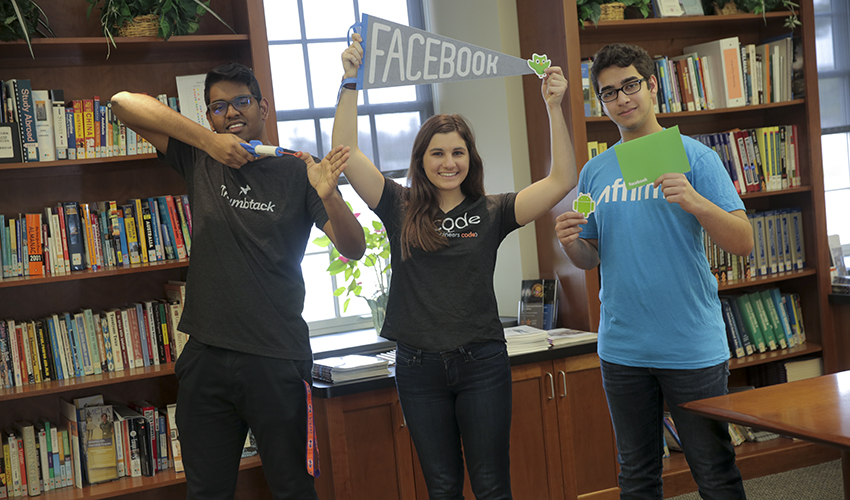
Dominique DeRubeis 18, Arsalan Haider 18 and Richie Ramrati 18 all computer science majors recentlyattended WECode, the largest student-run conference focused on women in computer science, to hear from four keynote speakers and learn from more than 50 workshops and panels. They also had the opportunity to meet students from computer science departments across the nation. Now in its fourth year, the conference is focused on technology in innovation and civic service.
As a conference targeting women in computer science, WECode attracts a variety of sponsors who hope to interact with attendees through panel conversations and skills-training workshops to help attendees prepare for recruitment. This years gold sponsors included Microsoft, D.E. Shaw & Co., Bloomberg and Jane Street. Additional participation was marked by Bridgewater, Square, Thumbtack, Goldman Sachs and startup sponsors.
Keynote speaker Lili Cheng, general manager of FUSE Labs, Microsoft Research, discussed working in an environment that allows you to make mistakes and learn from them. In her presentation, she spoke about Tay, Microsofts artificial intelligence robot that tweeted based on its interactions with other users on the social network.
WECode showed how people could use their technological knowledge to bring changes to the community and that is powerful, says DeRubeis, who notes her favorite tech talk was led by Professor of Computer Science Practice and Chief Technology Officer of Harvards Paulson School of Engineering James Waldo, who spoke about technology in government, politics and legislation.
In light of their experience, DeRubeis, Haider and Ramrati will give a presentation about careers in technology at 7:30 p.m. on Monday, March 6 in Trinity 305. They will integrate some of the concepts learned in the conference, such as investing with algorithms, design thinking and working at a startup.
For Hobart students Haider and Ramrati, attending the conference was an eye-opening experience about the gender imbalance in technical fields. One of the largest takeaways from this weekend was a new perspective on how to do my part to reconcile the disconnect between the technology industry and the message that women are given about their ability to succeed in the computer science industry, Haider says.
Ramrati reflects: The uplifting narratives about staying persistent when working in tech put the female experience into perspective for me and instilled a sense of how together, tech can be a more inclusive environment.
Haider and Ramrati add that the workshop on building and deploying an app and server using Heroku was particularly useful. Led by a software engineer at Square, the students thought about how they could revise their final projects for their Software Development class.
In addition to listening to the inspiring keynote speakers, I attended a host of workshops and small group sessions that gave me invaluable hands-on experience and insight from professionals in the industry, Haider says. Being in the presence of so many students with the same passions, it was hard not to be engulfed with the infectious energy. I left Boston with even more confidence that the tech world is where I want to be.
On the second day of the conference, the HWS students examined Jibo, the worlds first social robot. One of the companys employees interacted with Jibo for his responses and movements, and talked about Jibos expected ability to form meaningful relationships.
At the conclusion of the workshops and panels, the students participated in an opportunities fair where they spoke with representatives from Google, Facebook and Lucid about starting their careers in computer science.