
The Next Phase of Sustainability at HWS
25 January 2019 The Next Phase of Sustainability at HWS
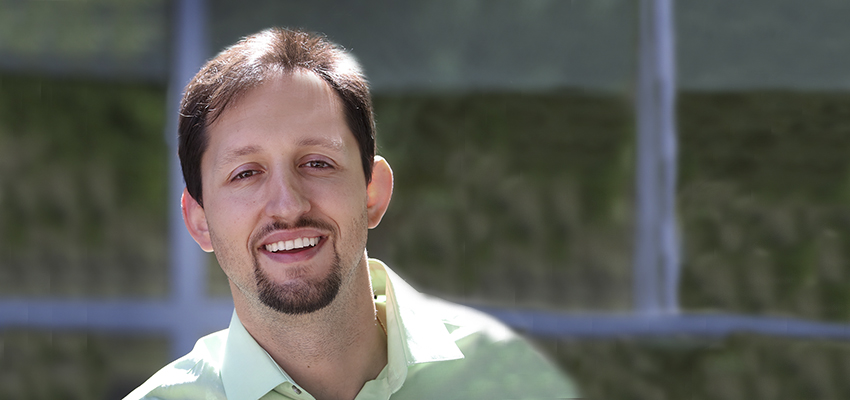
Hobart and William Smiths sustainability goals are threefold environmental, economic and social says Sustainability Manager Michael Amadori, and he wants to work with students on issues that impact all three aspects.
You can learn about food deserts and poverty but its not as powerful as planting gardens with members from an economically stressed neighborhood, he says. You can learn about energy efficiency, but by actually replacing old light bulbs with new efficient LEDs, we are helping reduce energy usage and save people money.
Amadori joined the Colleges in 2018 after several years at the helm of Full Circle Feed, an organics recycling company he founded, while teaching courses at area colleges and universities focused on the environment, engineering, and energy markets and regulation.
His role at HWS spans long-term strategy, analysis and education, working with students, faculty, offices across campus and in the local community to promote both sustainable practices and an understanding of sustainability challenges.
Currently, Amadori is in the midst of calculating the Colleges emission reductions an important task now that HWS two solar farms are fully operational.
Combining our solar generation with wind purchasing allows 100 percent of our electricity to be carbon free, he says.I am working with the Climate Task Force to explore different offset opportunities from our emissions due to natural gas for heating buildings, from study abroad air travel, sport teams traveling, traveling to conferences and workers commuting to campus each day.All of those must be offset to achieve carbon neutrality.
In 2007, when then-President Mark D. Gearan L.H.D. 17, P21 entered the Colleges into the American College and University Presidents Climate Commitment, HWS pledged to reach climate neutrality by 2025, but sustainability, even before President Gearan signed the climate commitment, has been a long-term goal at HWS, says Professor of Economics and Chair of the Environmental Studies Department and Entrepreneurial Studies Program Thomas Drennen, who also serves as co-chair of the Presidents Climate Task Force. The climate commitment is the main thing that pushes us forward.
Building the Colleges ethos of sustainability and those concrete steps that support it, Amadori wants to develop more opportunities that encourage student leaders, including EcoReps and Campus Greens members, to take on the role of educators themselves, to share their knowledge with the campus and the community, and develop hands-on experience at the same time.
Through campus education campaigns including When in Doubt Throw It Out! he hopes to galvanize a nuanced conversation on campus about the environmental, economic and social aspects of sustainability and the places they intersect.
We have to reduce the amount of contamination in our recycling on campus.If nine out of 10 people recycle correctly and just one person throws garage in a recycling bag, then the entire bag is sometimes thrown away. So while it might seem odd coming from the Sustainability Office, Amadori says, sometimes discarding rather than recycling is actually the greenest option.
Learn more about what can and cant be recycled across campus.
Amadori previously worked as a sustainability analyst with Energy Training Solutions in Syracuse and was an environmental outreach and education staffer in Nevada through AmeriCorps. He holds a B.S. in biological studies from the University of Rochester and an M.S. in ecological engineering from SUNY College of Environmental Science and Forestry.