
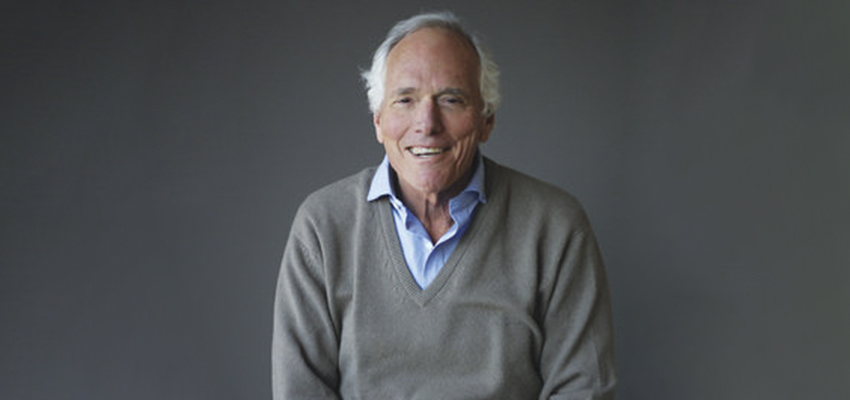
Lax ΓÇÖ66 on Development of Penicillin vs. Coronavirus Vaccine
5 June 2020 Lax 66 on Development of Penicillin vs. Coronavirus Vaccine
Author Eric Lax 66, L.H.D. 93 was interviewed in theBulletin of the Atomic Scientistsabout what parallels and differences exist between the development of penicillin during World War II and the rush to find a vaccine for COVID-19.
Lax is the author ofThe Mold in Dr. Floreys Coat, which tells the story of how Alexander Fleming discovered penicillin in a London laboratory in 1928 and the subsequent development of the antibiotic at Oxford University.
In speaking withBulletindeputy editor Dan Drollette Jr., Lax noted that like the scientists who developed penicillin, COVID-19 researchers have to make big conceptual leaps the fundamental nature of science is still the same; youre still problem-solving.
He goes on to discuss a potential timeframe for a coronavirus vaccine as well as distribution concerns. To read the complete interview, clickhere, or continue reading below.
Lax has written 11 books several of them best sellers in the U.S. and abroad on subjects as diverse as the discovery and development of penicillin, his own faith, and the life and work of Woody Allen. His bookLife and Death on 10 West about the bone marrow transplantation ward at the UCLA Medical Center, which was headed at the time by classmate Dr. Robert Peter Gale 66, L.H.D. 87 was recognized byTheNew York TimesBook Review as one of the Notable Books of the Year and received an award from the American Leukemia Society.
To read about Laxs Life of Consequence, clickhere.
________________________________________________________
What the development of penicillin tells us about developing a coronavirus vaccine
ByDan Drollette Jr, May 18, 2020
In 2004,Eric Laxwrote a well-regarded book about the development of penicillin, the worlds first so-called miracle drug. TitledThe Mold in Dr. Floreys Coat, it made a complicated scientific topic accessible to a lay audienceand helped set the record straight about penicillins development. It also illuminated how much labor, time, money, technology, inspiration, and sheer luck went into the creation of penicillin. And it delved into the complicated interplay ofpersonalitiesinvolved, or whatThe Guardiancalled good fortune and squabbling in its review of the book. In this interview, theBulletins Dan Drollette Jr finds out what parallelsand differencesexist between the pressure to develop penicillin during World War II and the demand by public figures today for a vaccine to take out the coronavirus. And if we may be banking too much on a magic bullet to end the coronavirus pandemic in a few months.
(Editors note: This interview has been condensed and edited for length and clarity.)
Drollette:I was wondering what we all could learn about developing a coronavirus vaccine from the penicillin experienceif there are any parallels so far as science, government, philanthropy, and private enterprise go. But I realize the comparison isnt be perfectpenicillin is an antibiotic, not a vaccine. Can you explain, in laypersons terms, the difference between an antibiotic and a coronavirus vaccine?
Lax:With any antibiotic, such as penicillin, youre talking about something being used toattack the bacteriathat arein you right at this moment. And you generally use penicillin, or any antibiotic,once or over a course of several days perinfection. This means that every time you get a streptococcal bacteria infection, for example, youve got to take the penicillin again.
Buta virus is a whole different kind of thingto go after. Its much tinier than a bacteria, cannot survive long on its own, and can only reproduce by attaching itself to a host. It is really more of a chunk of genetic materiala blueprintthat reprograms the cells of its host to make new viruses.
And while antibiotics can kill bacteria, they dont work against viruses.
Consequently, we treat a virus differently, typically through the use of a vaccine. Youessentially try to train your bodys immune system to develop the ability to recognize and attack a particular viral invader, so your body knows to bring out its defenses andprevent the virus from replicating.
Once your body is able to identify the virus as a threat, it will always recognize that virus when it comes back. So youre set for life for that one particular virus, although there areinstances where you may need twoinnoculationsand occasionally times when you need a booster shot later.
The problem being that there are many different virusesand theres always a newvariantmutatingso its an arms race between the viruses and your immune system.
So what a vaccine is doing is really a matter of getting the body to recognize the virus for what it is: an invader, a pathogen, the bad guy. And your body does the fighting against itby stopping itsability toreplicate.
While an antibiotic like penicillin fights the thing directly itself .
But there are similaritiesand dissimilaritiesin how we go about developing something that fights against bacteria, and something that helps us fight viruses.
Drollette:How did you wind up doing a book about penicillins development?
Lax:I was readingThe New York Timesone morning and saw a lengthyobituary of a New Haven woman named Anne Miller. TheTimeshad given her death two entire columns and a picture, because she was the first American to be treated with penicillin, and restored by it.
The more I read the obit, the stranger it became. Because I, like so many people, had always associated penicillinthe first so-called miracle drugwith Alexander Fleming.
But the more I read Millers obituary, the more I realized that Fleming didnt really make it into the useful drug we know. Instead, that came about because of this small group of people at Oxford University, headed by someone named Howard Florey, about a dozen years later. But the obit didnt go into much morejust enough to whet my appetite about penicillins origins. And there was that phrase: First American saved by penicillin.
But what really made this the book happen was that one of the main folks on the Oxford University research team, Norman Heatley, was still alivethough in his late 80s.
And I was able to get an interview with him for an hour, which became lunch, and then dinner. I wound up spending the next three days with him. In fact, for the next year, while I was deep into book researchI spent about a week per month in LondonI always wentto see him; his stories were so good. But hes the guy who figured out the whole process that allows us to get production of this drug in large volumeswhich actually solved the penicillin problem.
About two-thirds of the way through, I discovered that Heatley was a great diarist. His diaries tell about everything going on in the lab, and about a secret wartime trip to America on the Pan Am Clipperthe Concorde of its time. The diary gave the full range of experience; for example, it describes how he fell in love with somebody in America and then had to leave her. It had all of these elements that make it real and human, as opposed to We did this experiment.
Drollette:It must have been something to pick his brains. Which gets to my next question: How long did it take to do this book?
Lax:A couple of years for research alone. But Ive never had more fun researching a book.
Luckily, a large majority of the letters, lab notes, and other relevant papers were in one place, at the Royal Society in London, on the Mall oppositeBuckingham Palace.
So, I would go to the Royal Society every morning at 10 oclock when they opened. And theyd bring up these boxes of papers they had about the development of penicillin, and every one was like opening a package at Christmas. I mean, each one had an abstract of what was supposed to be inside, but you never really knew what to expect when you opened it.
And later each morning, you would hear clip, clop, clip, clop and realize that was the sound of the Horse Guards riding by, on their way to the Changing of the Guard.
Drollette:The book gave the impression that there were many twists, turns, and blind alleys in developing penicillin; there was no obvious series of sequential steps, where A led to B which led to C. Is that a fair summary?
Lax:I think so, yes. And you have to consider the technology they had in the 1930s and 1940s. Any first-rate middle school today has a better-equipped lab than they did. So they basically often had to make what they needed from scratch.
But I think that Heatley is the guy who stood out in this regard, for his ability to come up with novel solutions.
For example, he had a notion of how they could scale up from their original process of extracting penicillin from moldwhich involved doing a lot of things by hand with dozens of dishes of various sizes and shapes. So he came up with a sort of Rube Goldberg device, with bottles, glass tubes, and old clock parts, which he gathered from the town dump.
To modern eyes, the end result really was high-school science fair type stuffglass tubing in the stairwells, running all the way from the roof to the ground level.
Drollette:Any similarities between finding penicillin then and finding a coronavirus vaccine today?
Lax:Researchers still have to make big conceptual leaps. And we need that kind of thinking once again; this is such a peculiar virus in so many ways, with all thestrange side effectsits having: children showing signs of heart attacks, or otherwise healthy 39-year-olds getting blood clots.
So, the fundamental nature of science is still the same; youre still problem-solving.
Drollette:How long did it take, from the time that people first thought about using penicillin as an antibiotic to it actually being given to patients?
Lax:Over 20 years, and even that was sort of by accident. I mean, in the 1920s Alexander Fleming noticed a certain strain of mold seemed to kill organisms, but he didnt know what to do with it; he thought penicillin might be a great tool for cleaning glassware.
It took a team of scientists at OxfordHoward Florey, Norman Heatley, and Ernst Chainto read about this laboratory curiosity, realize the potential it had to kill the organisms that cause bacterial infections, and do the research to make it into a great antibiotic.
Which was sorely needed, because in those days peopleused to die from minor infectionscaused by something as simple as getting a blister or a splinter. Literally, a scratch from a rose thorn could start a staphylococcus infection that would lead to death. Before antibiotics arrived, we were subject to any number of diseases that could just lay you out in a second: diphtheria, typhus, typhoid, tuberculosis.
And then it turned out thatPenicillium notatumthis extract from moldhad within it the wonderful capability to attack deadly bacteria.
But even after discovering its potential, this team of British scientists still had to get it to grow in quantities large enough to be studied, identify the active ingredient, purify it, test itsafelyon people to make sure it had no unwanted side effects, then figure out how to make it on an industrial scale and distribute it. All under wartime conditions, with Hitler poised to invade England at any moment.
And a key item was producing large enough quantities to be useful.
Drollette:Quantity is that important?
Lax:Oh, yes. The war was such a needy time for an antibiotic, and lots of it; people still remembered the impact ofsepsisin World War I. And for centuries before that, the diseases and infections associated with war were more deadly than the actual fighting. (In the American Civil War,twice as many soldiers died of diseaseas from battle). There was a point, in 1942 or 43, when the number two item on the US War Departments wishlist wasmass production of an antibiotic like penicillin. Number one was the atomic bomb.
And remember, there was no guarantee theyd be successful in getting penicillin to work; antibiotics had proved so elusive before. The most promising onessulfa drugshad turned out to be such a disappointment.
Drollette:So it took 20-odd years for penicillin to go from laboratory curiosity to something that could be used to cure patients?
Lax:Its hard to pinpoint, because penicillin languished in obscurity for a good 10 years, before Ernst Chain read about it and brought it up before his colleagues. They then started working on it in the lab in 1939, so it was maybe five or six years from then to something widely used.
Drollette:If penicillin took that long, do you think its a bit rushed to expect well have a coronavirus vaccine in a few months?
Lax:At a minimum, Id say its the height of optimism, or even magical thinking. Its morea matter of years than a few months.
Although I have heard that some folks at the Jenner Institute [Oxford Universitys nonprofit vaccine research unit] may haveclinical trials of a coronavirus vaccinerelatively soon, based on work theyd already been doing on a similar coronavirus from last year. Theyre starting preliminary trials now. So something may be available by sometime in 2021, which would just be extraordinary.
But I think a key point to remember is that the reason why Jenners having some luck is because theyve been working on coronaviruses over the last 10 or 12 years. And so they can build off it.
Drollette:But even that timescale is not as short as what the Trump administration is pitching, for a coronavirus vaccinebefore November or December?
Lax:Yes. This is not my field of expertise, but if you based this on history, thats never happened beforeto get something up and working to counter a disease within the same year of the outbreak. Its one thing to get the DNA code on the disease, but then youve got to test your cure, and test it, and test it. And then ramp up production and make sure that youre meeting a standard where one dose really is the same as the other dose, and all on a massive scale.
Drollette:So getting large volumes of the drug or vaccine is not cut-and-dried?
Lax:Not if were going by the history of penicillin. What the English folks at Oxford came up with for penicillin in the 1940s was a basically two-dimensional process: You have a couple inches of liquid and grow a mold on top of it, which you then harvest and purify. It was terribly slow.
And then they showed their work to American pharmaceutical companies, who came up with the great idea of getting the mold to grow all throughout the depth of the entire column of liquid in a vat, rather than just at the very surfacewhat are called brewing techniques, and still used today. It was like strapping an aqualung onto the back of all of the penicillin spores in the liquid, because they were suddenly getting fed everywhere. Each penicillin spore could get bigger and reproduce much more easily because it was getting the oxygen it needed. So far as ramping up goes, that discovery was really major.
The other thing that shouldnt be overlooked in how this happened so fast and so welland so fortuitously for the waris the simple, wonderful good luck of the relationship between the head of the Oxford team, Howard Florey, and a key person on the American side, physiologist John Fulton from Yale.
Fulton had been a Rhodes scholar with Florey at Oxford and they had hit it off very well; later, Fulton and his wife would look after the Florey children during the war, when kids wereevacuatedso as to be out of harms way during the Battle of Britain.
Fulton was incredibly well-connected to everybody in science and well-regarded. So when Heatley and Florey wanted to fly over to the States with their small sample of penicillin, the RockefellerFoundation arranged for them to go on the fastest transportation available at the time. By chance, they arrive on a July 4 weekend, and Fulton is able to invite a whos who of scientists to his place for a July 4th party.
So Heatley and Florey can go around and spread the word about this thing called penicillin at this party. And then, a few days later, Fulton arranges for them to go down to Washington and see everybodymeaning that every door in science and government is open.
Plus, they have the RockefellerFoundation on their side.
Just think of it: These guys get off the plane in New York. The next day, theyre up in New Haven, where Fultons put together this huge thing. The next week, theyre doing Washington. Within 10 days, theyve seen everybody, and theres a plan for what to do. Theyre seeing all of the drug companies. Theyve got people in the highest positions in government behind them.
Suddenly, this is fast-tracked.
If it had been two people from Cambridge coming over without these connections, the creation of penicillin probably wouldve been much more difficult and much slower. Who knows how long it would have taken?
So because of these personal relationships, from the moment they hit the ground, theyre off and running. And theyve got Vannevar Bushhead of all wartime military research and development, including the early phases of theManhattan Projecton their side. I mean, Florey and Heatley really have the entire US government establishment behind them.
There really was a coordinated effort, between the federal government, science, industry, and nonprofits like the RockefellerFoundation. They were all headed in the same direction, pulling together.
Drollette:It seems so different from today. There was an article in theNew York Timesjust a few days ago; the title tells you everything: Trumps Response to Virus Reflects Long Disregard for Science.
Lax:I simply dont understand the decisions hes made; he seems so cavalier about the value of science. I mean, whycut back on scienceat a time that we need it more than ever? There was all of the prep work that we had at the ready for this, so why do you close that office? Where is the federal response for testing and masks and materials and helping to get vital supplies? Why is this the states problems?
This event is why you have a federal government, for organizing responses to a crisis like this. Nothing makes any sense to me.
You cant rely on private enterprise alone to tackle this, it takes about $2 billion for a pharmaceutical company to bring something to market.
Drollette:And yet Ive seen headlines like DOW surges more than 400 points as positive Gilead news lifts hope for coronavirus treatment and Administration describes a dash for a coronavirus vaccine. It seems theyre overemphasizing how quickly things can happen.
Lax:Id love to see them break the record and have a vaccine out in a year. I hope they have it tomorrow.
But there were so many happy accidents involved in bringing penicillin to market: getting the federal government to back the effort to research and develop it, and then getting the pharmaceutical companies on board, to name just a few.
I just hope that all the good fortune and serendipity that happened around penicillin can happen again, because we need it to look for a vaccine against coronavirus. We need every good thing, every bit of cooperation, every entity pulling together, every person seeing the importance of this. Our lives really depend on this.