HWS News
27 August 2026 Tapper ’64 Gifts $4.5 Million to Expand Summer Science Research at HWS
Planned gift will endow summer research opportunities for HWS students and honor Tapper’s legacy in the new Fish Center for the Sciences.
The legacy of Dr. Edward J. Tapper ’64 will continue to shape scientific discovery at Hobart and William Smith for generations to come.
Tapper, who recently passed away, has left the majority of his estate, over $4.5M, to Hobart and William Smith to endow summer science research opportunities.
The gift builds on Tapper’s longstanding support for hands-on scientific research at HWS and deepens a commitment that began during his own undergraduate career.
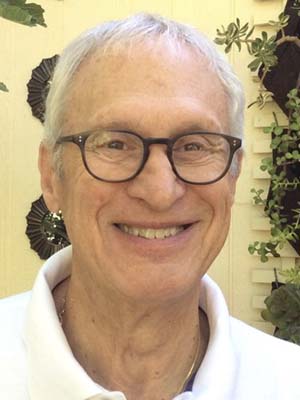
“Ed Tapper was a gifted physician, scientist and medical pioneer who understood from his own experience that some of the most formative moments in a scientist’s education happen when a student has the opportunity to work directly with a faculty mentor on a sustained research project,” says President Mark D. Gearan. “His extraordinary generosity will ensure that HWS students have that opportunity. We are deeply grateful to Ed for his remarkable generosity, his belief in our students and faculty, and his enduring commitment to the sciences.”
Tapper, a clinical practitioner and researcher, helped to shape new ideas about how the gut and brain function together, significantly advancing the field of neurogastroenterology.
Tapper established the Edward J. Tapper M.D. ’64 Science Research Fund in 2018 to support hands-on research opportunities for HWS students. The fund has since supported dozens of students working alongside faculty on projects spanning disciplines including biology, chemistry, geoscience and physics.
In 2022, Tapper reaffirmed his commitment by documenting an anticipated planned gift of more than $1 million to support the fund, explaining that his own research experiences had helped shape his approach to science and his career. The newly realized estate gift will provide a permanent source of support for HWS summer science research, allowing students to engage in intensive research experiences.
For Tapper, the importance of that kind of experience was deeply personal.
As a high school student, he spent a summer working in a research laboratory at Case Western Reserve University, which helped spark his interest in science and ultimately influenced his decision to pursue a career in medicine and research. At HWS, Tapper found additional encouragement from faculty mentors, including Professor Emeritus of Chemistry Kenneth R. Carle P’82, P’84, P’90.
“I had fabulous friends and teachers at HWS, not only in the sciences but also in the liberal arts,” Tapper said in 2018. “The individual, close contact with the faculty, great mentoring and the high-quality student body were extremely important to my development.”
After graduating from Hobart in 1964, Tapper attended medical school and pursued research at Ohio State University, the University of North Carolina at Chapel Hill and the Medical College of Wisconsin. While at UNC completing post-doctoral research, a chance hallway conversation with a National Institute of Health-trained neuropharmacologist led Tapper to a eureka moment that resulted in a paradigm shift in the scientific understanding of how the nerves, the mini-brain of the GI tract, function. Tapper's passion for research and improved patient care led him to develop multiple drugs in the pharmaceutical industry, and the hands-on experience he got early in his career provided the foundation for those breakthroughs.
His experiences reinforced his belief that scientific education should extend beyond the classroom.
“Science is constantly being renewed,” Tapper said. “It is much more than just memorizing a lot of information. It’s a discipline in understanding how new knowledge can be used to improve the world we live in.”
That philosophy has been reflected in the work supported by the Tapper Fund, which has assisted student researchers in a variety of ways, including funding housing, stipends and supplies. Students have pursued projects examining plant evolution and genomics, aquatic ecosystems, urban ecology, habitat fragmentation, algal blooms and microplastics, among other areas. The fund also supports research collaborations with Cornell University faculty at Cornell AgriTech in Geneva.
Professor of Geoscience and Associate Provost Nicholas Metz says Tapper’s generosity will profoundly impact the culture of scientific inquiry at HWS.
“Ed’s gift is an incredible investment in the kind of science education that defines the HWS experience,” says Metz. “Summer research gives students the time and space to become immersed in a question, work closely with a faculty mentor and experience the process of discovery firsthand. That can change the trajectory of a student’s education and career, and Ed understood that better than most. This gift will make those opportunities possible for generations of students.”
The timing of the gift also connects Tapper’s legacy to a transformative new chapter for science at HWS. The Fish Center for the Sciences, currently under construction, will create a state-of-the-art home for scientific teaching, research and collaboration. The facility is designed around interdisciplinary work, with collaborative laboratory spaces that will bring together students and faculty from across the sciences.
“Ed Tapper believed deeply in the power of curiosity, mentorship and opportunity,” says Provost and Dean of Faculty Sarah Kirk. “The Fish Center for the Sciences will be a place where those values come to life every day. His generosity will not simply support students; it will help create the environment in which their curiosity can flourish.”
His planned gift ensures that vision will continue well into the future, providing students with the resources, mentorship and time to pursue questions at the frontiers of science, while carrying Tapper’s legacy forward in the new Fish Center for the Sciences.
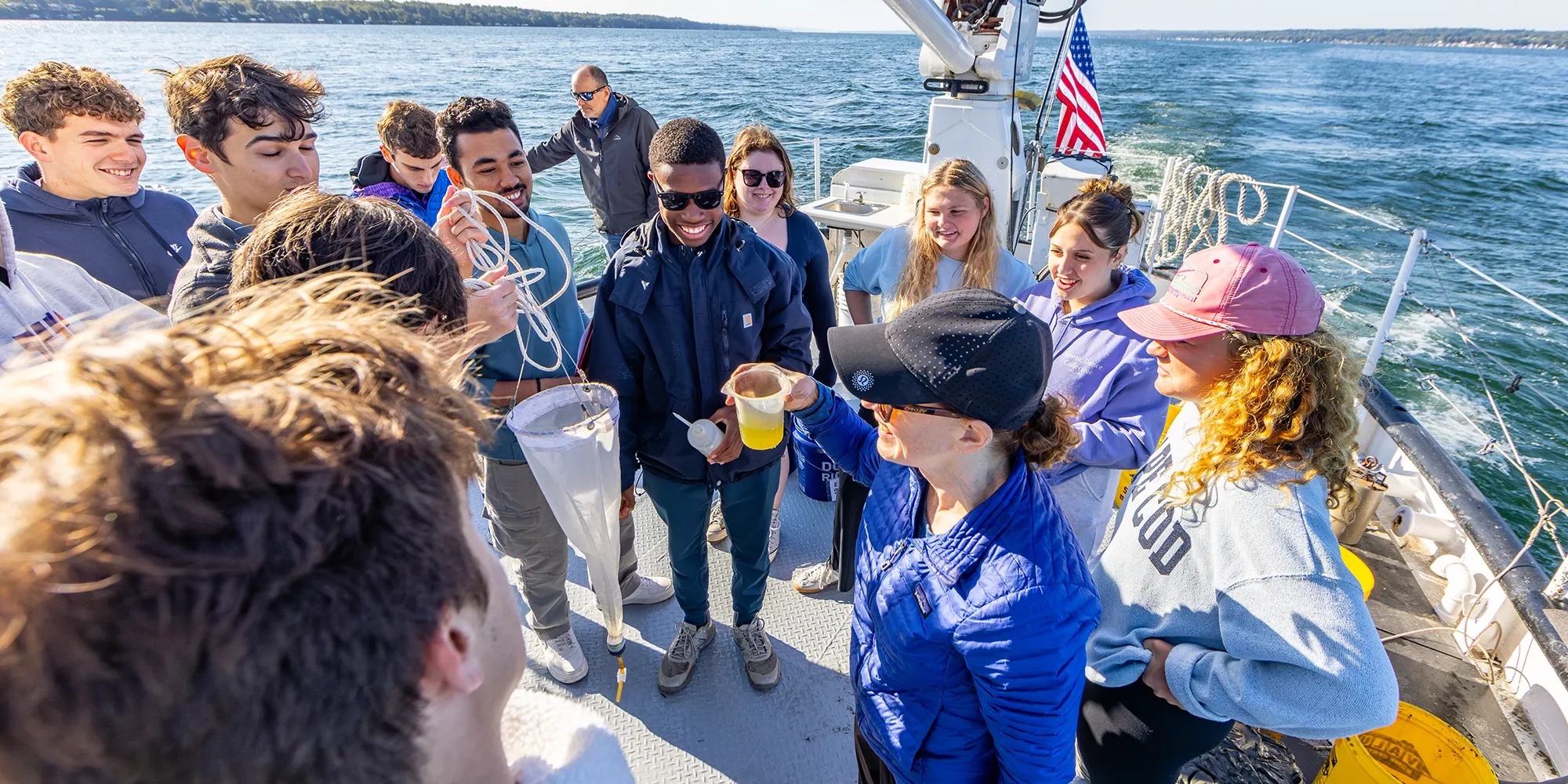
In the photo above, students join Associate Professor of Geoscience Tara Curtin for a lab aboard the William Scandling Research Vessel.