HWS News
22 October 2026 A Summer in the Field
Connor Visingard '27 explored fisheries, wildlife and environmental stewardship through a hands-on internship with the New York State Department of Environmental Conservation.
A summer internship gave Connor Visingard ’27 a peek into his dream job at the New York State Department of Environmental Conservation.
From quarry inspections to wildlife rescues, Visingard rarely knew how his workday would unfold. On a typical day, Visingard might sit in the office analyzing a specimen under a microscope or travel across the state to use electrofishing to sample fish.
“First day in the office, as I was being introduced to other departments, they received a call about a mother duck and her babies stuck in the middle of a nearby high school courtyard.”
That first day, Visingard says, was emblematic of the vast and very interconnected work the DEC does.
“My biggest takeaway was how crucial cooperation is between the public and the state to ensure the DEC can do their job that ensures a balance between anthropogenic needs and those of the environment,” the environmental studies major and aquatic science minor explains.
“For example, data collection from anglers on catches ensures we stock enough king salmon for next year's season.”
The internship confirmed Visingard’s desire to pursue a career in fisheries, a personal passion he developed through his membership in the HWS Fishing Club. Field-based coursework at HWS helped prepare him for the aquatic and wildlife work he performed alongside DEC staff at the agency’s Region 8 Headquarters in Avon, N.Y.
The experience, he says, was made possible with support from Career Services and guaranteed internship funding through HWS.
“This internship wouldn't be possible without Career Services,” he says. “They guided me every step of the way and were even a part of my interview for the position.”
Night Shocking Survey with NYS DEC
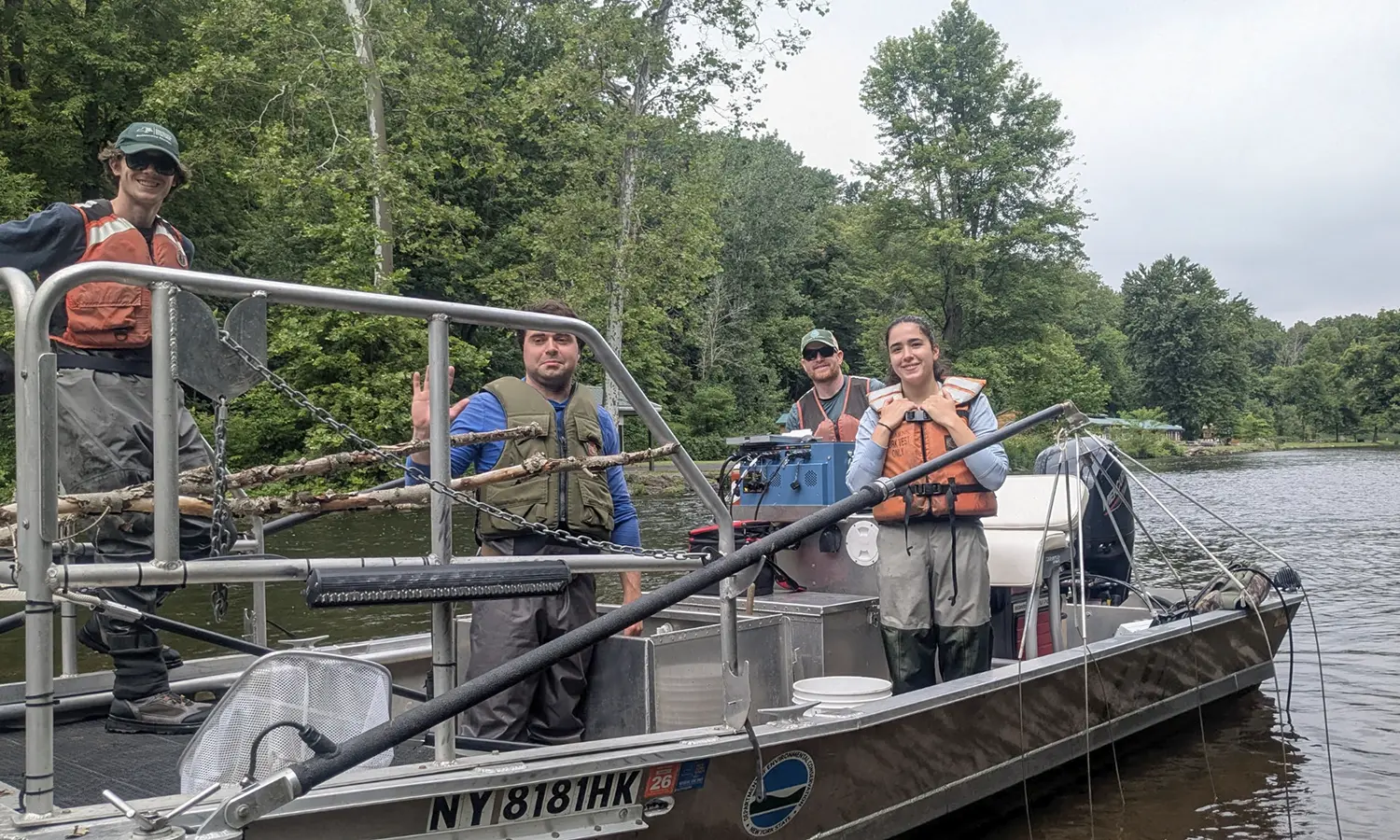
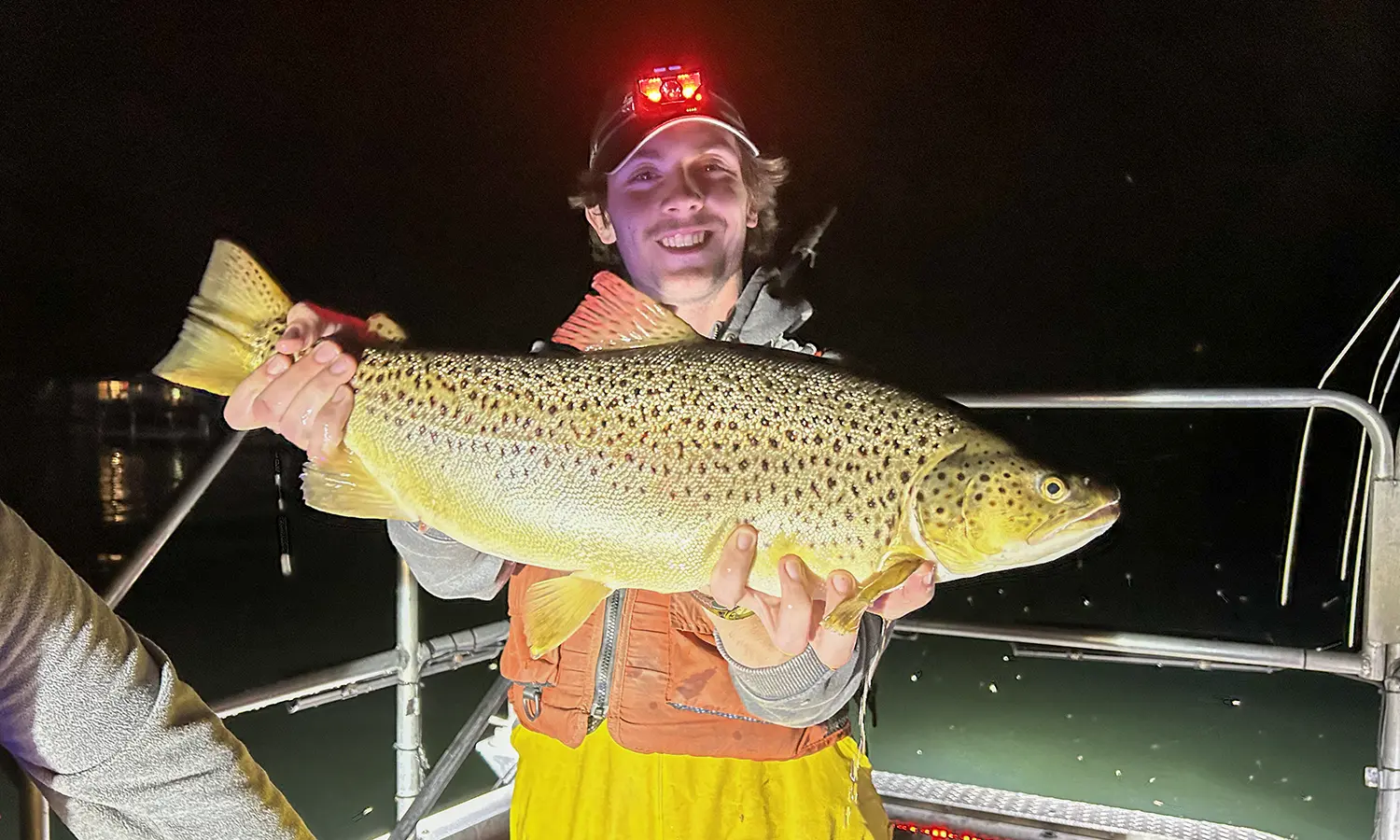
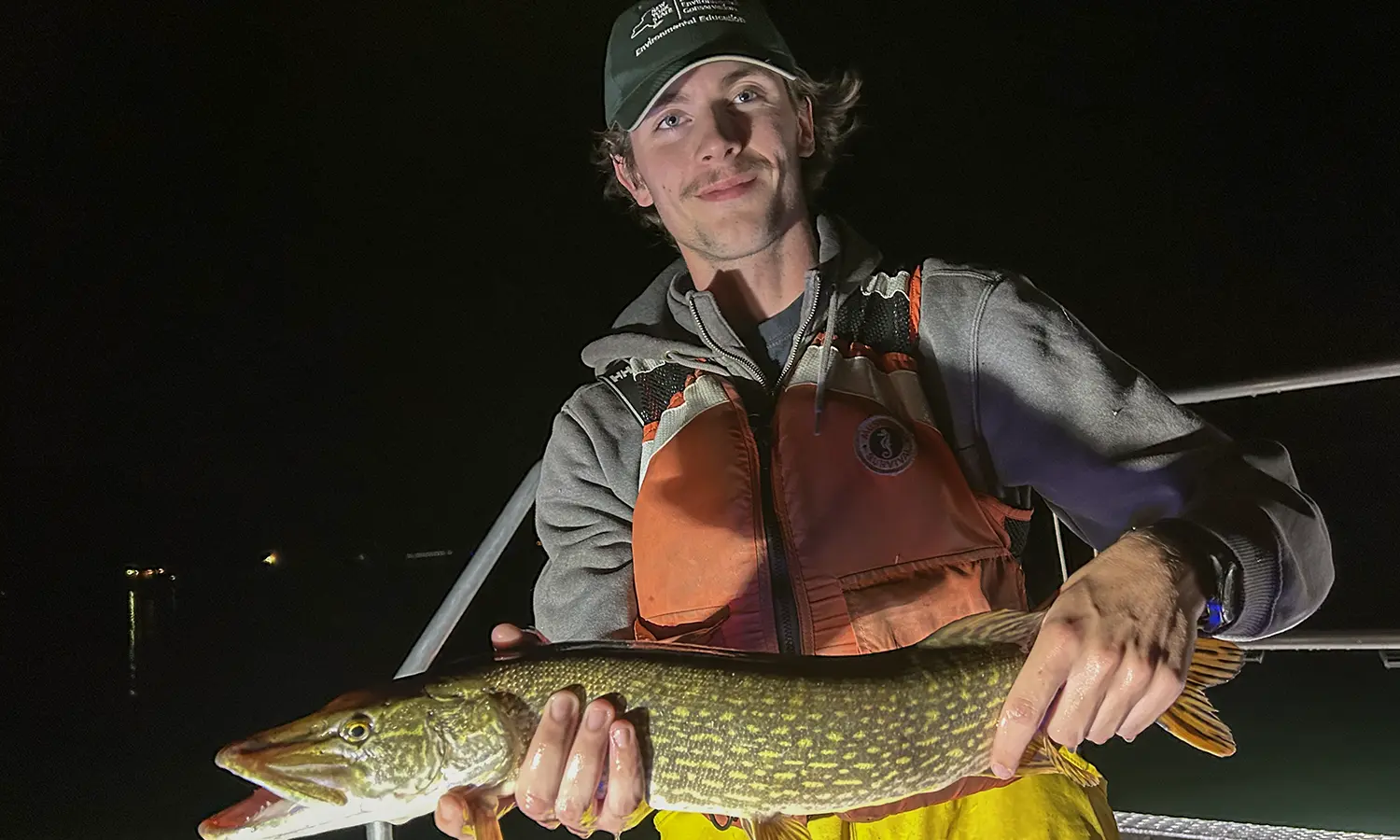
Top: New York State Department of Environmental Conservation intern Connor Visingard ’27 during a night shocking survey on Seneca Lake. In shock surveys, or electrofishing, surveyors use a specialized boat to send safe electrical current into shallow waters, temporarily stunning fish so they can be netted, measured and safely released to assess population health.