HWS News
16 July 2026 • Research Beneath the Surface
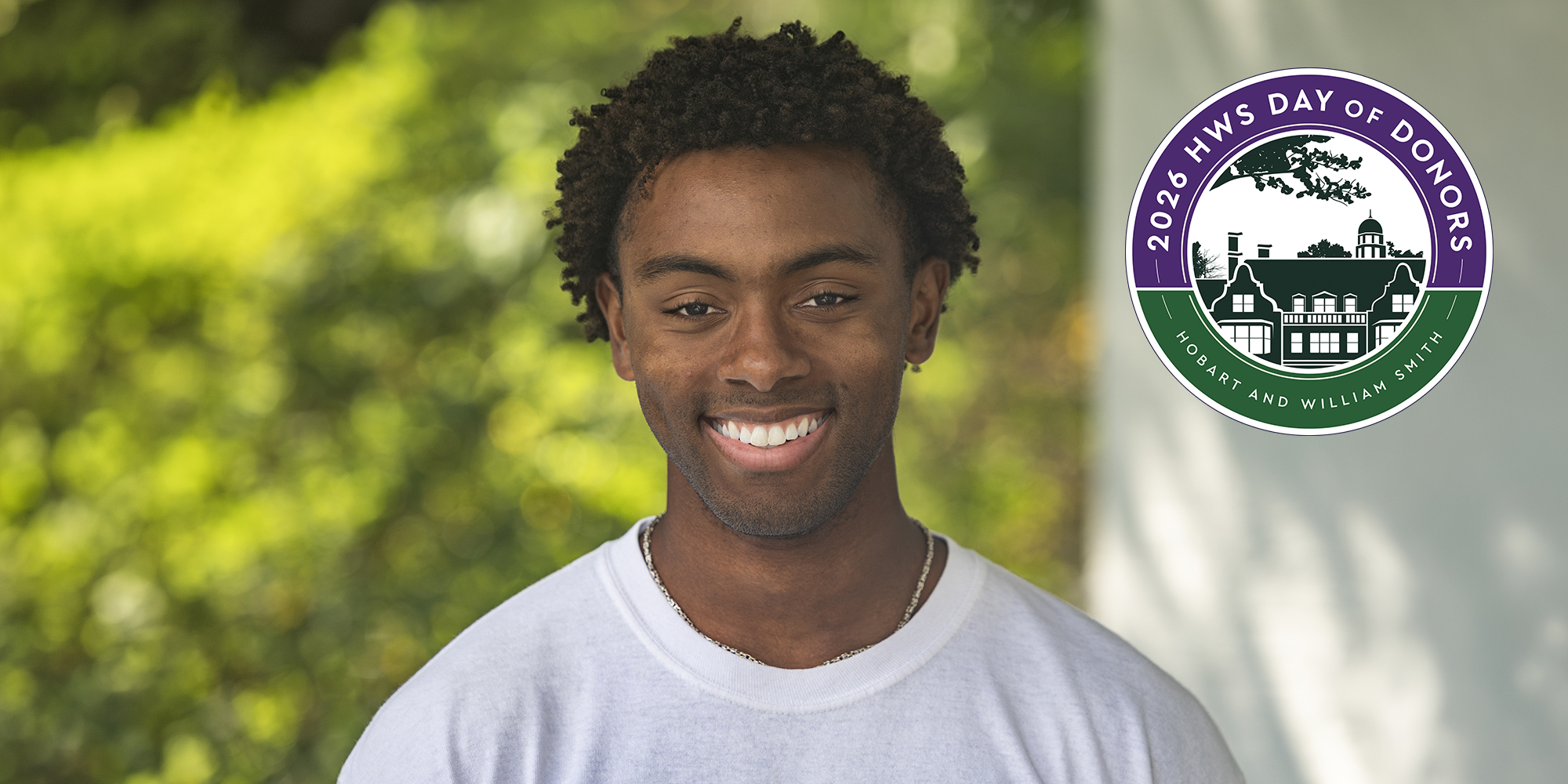
Environmental Science major Ryan Agans '28 is helping study one of the Great Lakes' oldest fish while preparing for a future in environmental research.
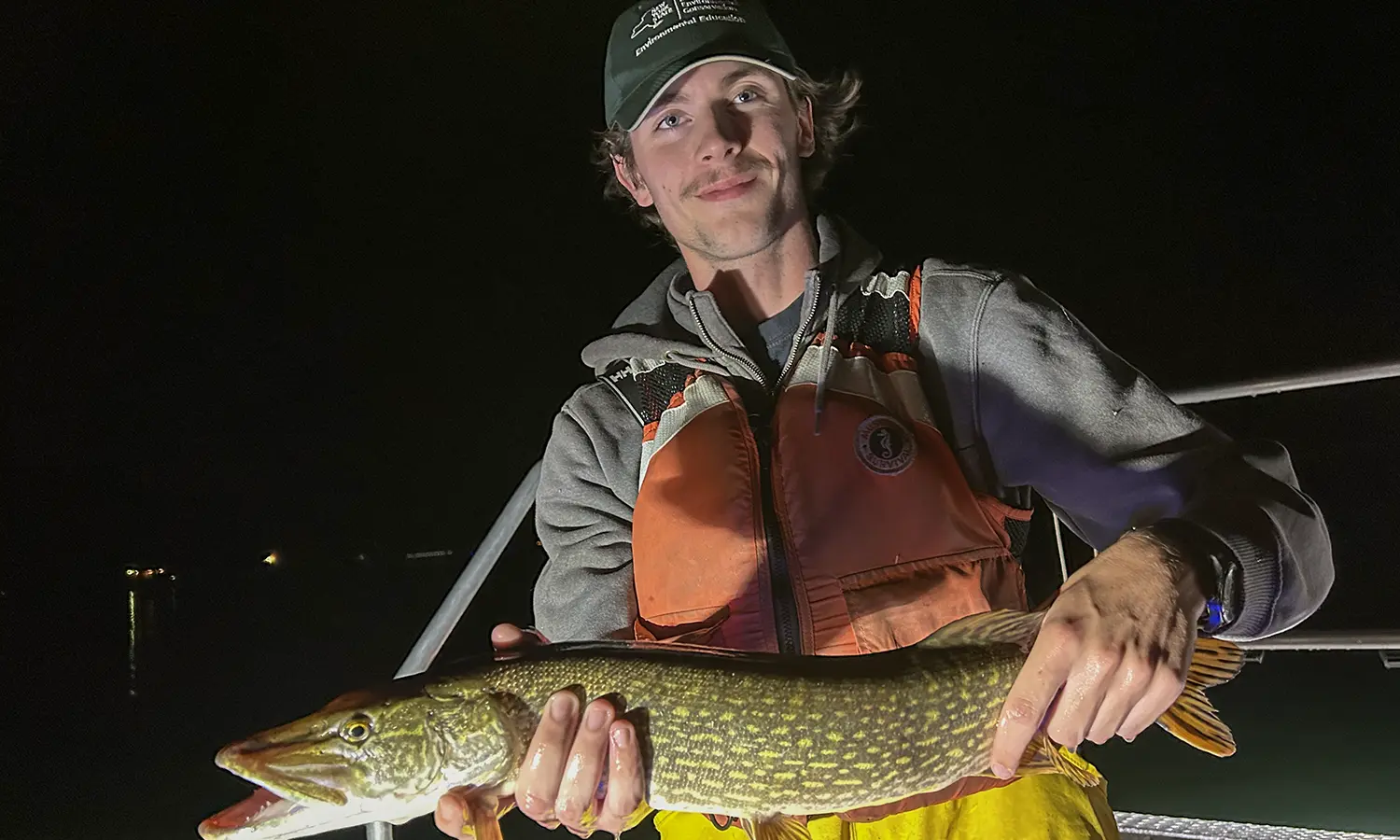
Pulling nets from a Wisconsin lake this summer, Ryan Agans '28 has caught some of the biggest, most beautiful fish he has ever seen.
"It was so wonderful to be able to hold and observe them so closely and learn about their anatomy hands-on," he says.
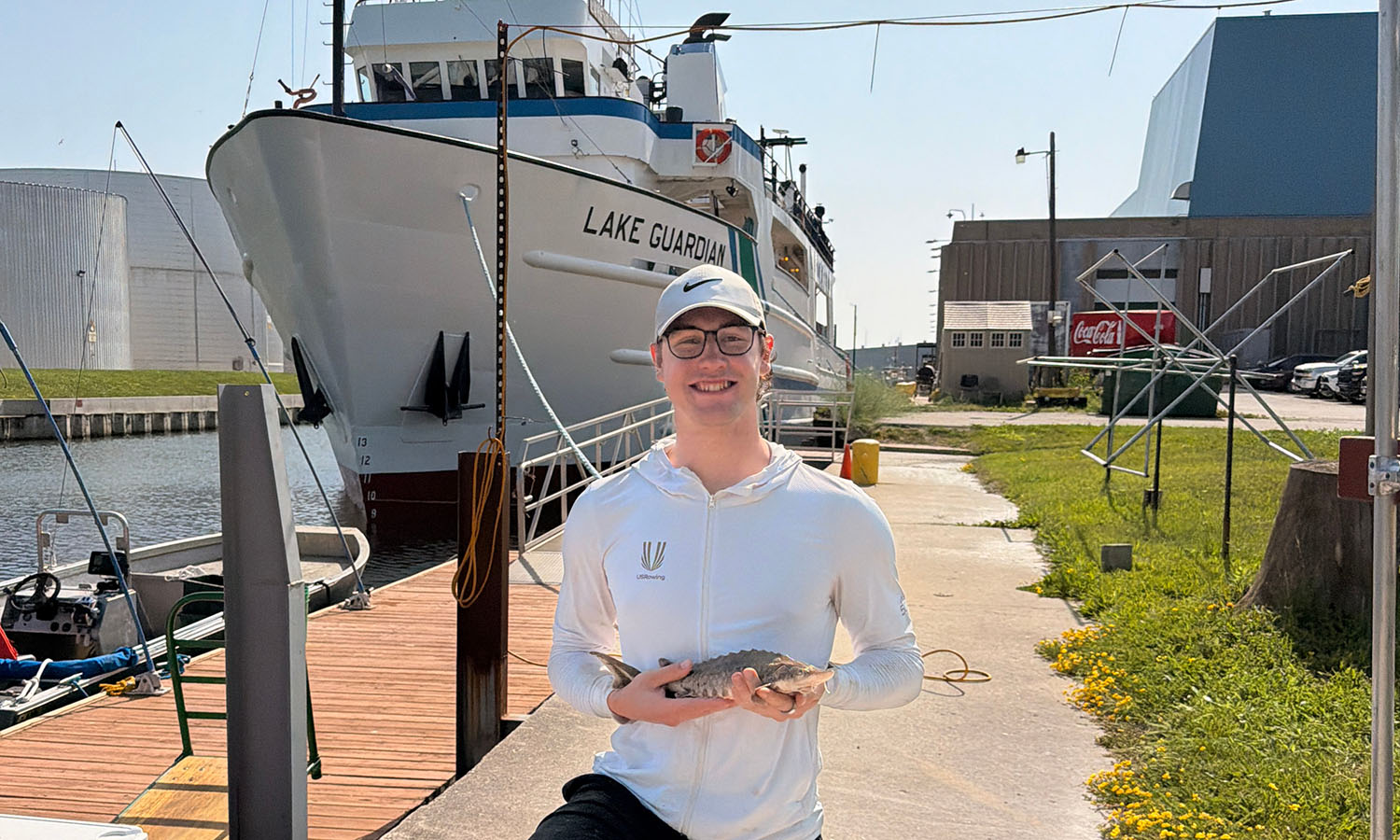
Since May, the environmental science major and biology minor has been working as a research assistant at the University of Wisconsin–Madison and the University of Wisconsin–Milwaukee, contributing to research on lake sturgeon in the Milwaukee River Estuary while building field and laboratory skills that are shaping his future career.
For his internship, Agans receives a summer stipend and funding that covers his housing and research expenses from the Freshwater Collaborative of Wisconsin, Wisconsin Sea Grant, the UW Water Resources Institute and Water@UW–Madison.
The opportunity combines everything Agans hoped to find in a summer internship: ecological research, hands-on work with wildlife and the chance to lead an independent research project while contributing to a larger scientific effort.
Agans found out about the opportunity while searching for programs whose goals and research aligned with his, Agans says. He was encouraged to apply by former fellow Statesman rower Brogan Dietsche’25, a Druid and friend, who is a graduate researcher and teaching assistant there. He is grateful to Professors of Biology Meghan Brown and Bradley Cosentino who served as references for his application. Last summer, he researched Eastern Gray Squirrels with Cosentino and previously took Brown's “Ecology” course.
The research team is working to better understand the "missing years" of juvenile lake sturgeon, using techniques including acoustic telemetry and stable isotope analysis to learn how young fish use harbor habitats. The findings will help inform restoration efforts in the Milwaukee River Estuary and contribute to long-term management goals for Lake Michigan fisheries.
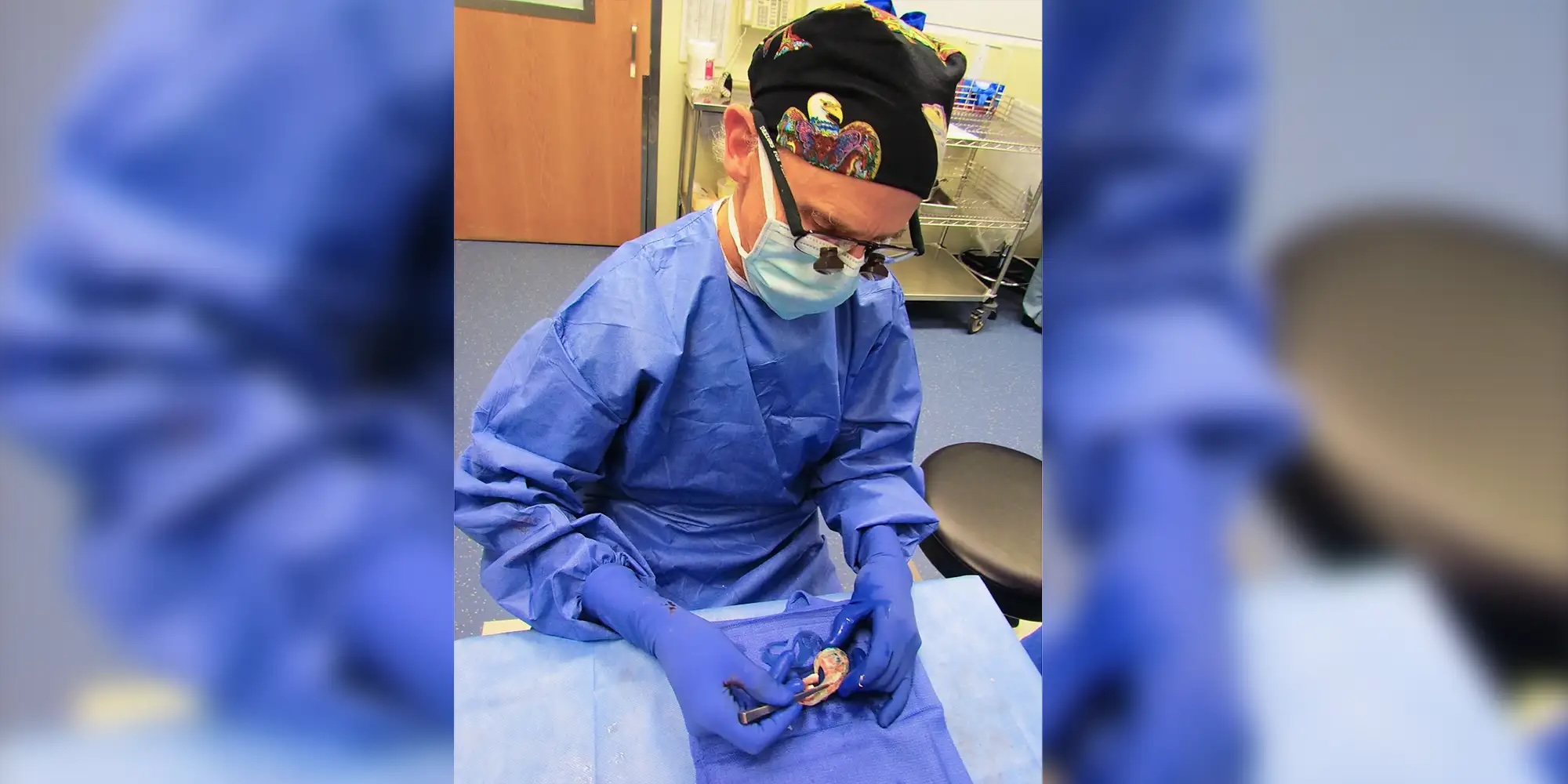
Since arriving in Wisconsin, Agans has gained experience driving remotely operated vehicles, collecting tissue samples, conducting stable isotope analysis and participating in fish sampling in the field.
Just as memorable have been the opportunities to interact with people outside the laboratory.
One afternoon, Agans waited with fellow researchers beside a marina fish-cleaning station, asking anglers if he could collect small tissue samples from their catch.
"I was expecting some of them to be opposed," he says, "but all of them were very kind to us and allowed us to do what we needed, and I feel like it helped me connect with the community so much better."
The internship also helped clarify his career goals. Agans says he sees himself pursuing federal environmental research with organizations such as the U.S. Geological Survey or the National Oceanic and Atmospheric Administration.
At HWS, Agans is a member of the Chimera and Orange Key honor societies and an intern for the Office of Sustainability, where he is working on a project to increase biodiversity on campus. Last summer, he researched Eastern Gray Squirrels with Professor Cosentino.
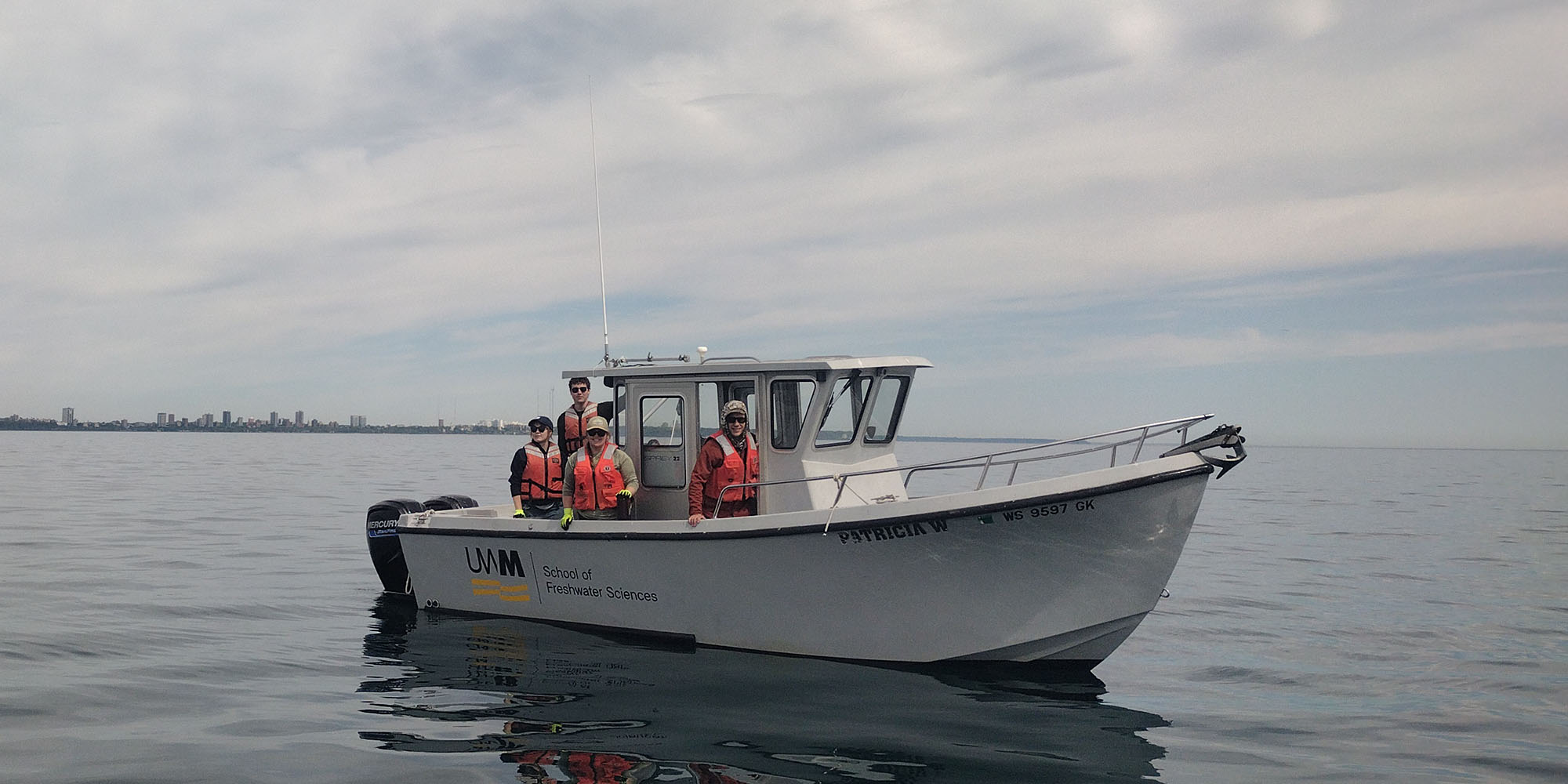
Top: Ryan Agans '28 joins members of the Gerig Lab, an aquatic ecology research laboratory at the School of Freshwater Sciences, sampling Lake Michigan larval fish aboard the UWM Osprey.