HWS News
13 May 2026 • Research Dimensions of Mindfulness
At one of the nation’s longest-standing academic conferences, HWS students explore mindfulness strategies for communities under chronic strain.
Housing instability, financial uncertainty, food insecurity and exposure to crime and violence contribute to major mental and physical health disparities in low-income communities compared to wealthier populations.
Living in survival mode creates a state of chronic stress, which makes even daily tasks such as socializing, exhausting and mentally draining. Yet, connecting with others reduces stress. Avoiding human interactions student researchers say, doesn’t help the problem. It exacerbates it.
May 11, 2026
Under the direction of Professor of Psychological Science Jamie S. Bodenlos, three Hobart and William Smith students examined underserved populations who experience disproportionately higher levels of strain.
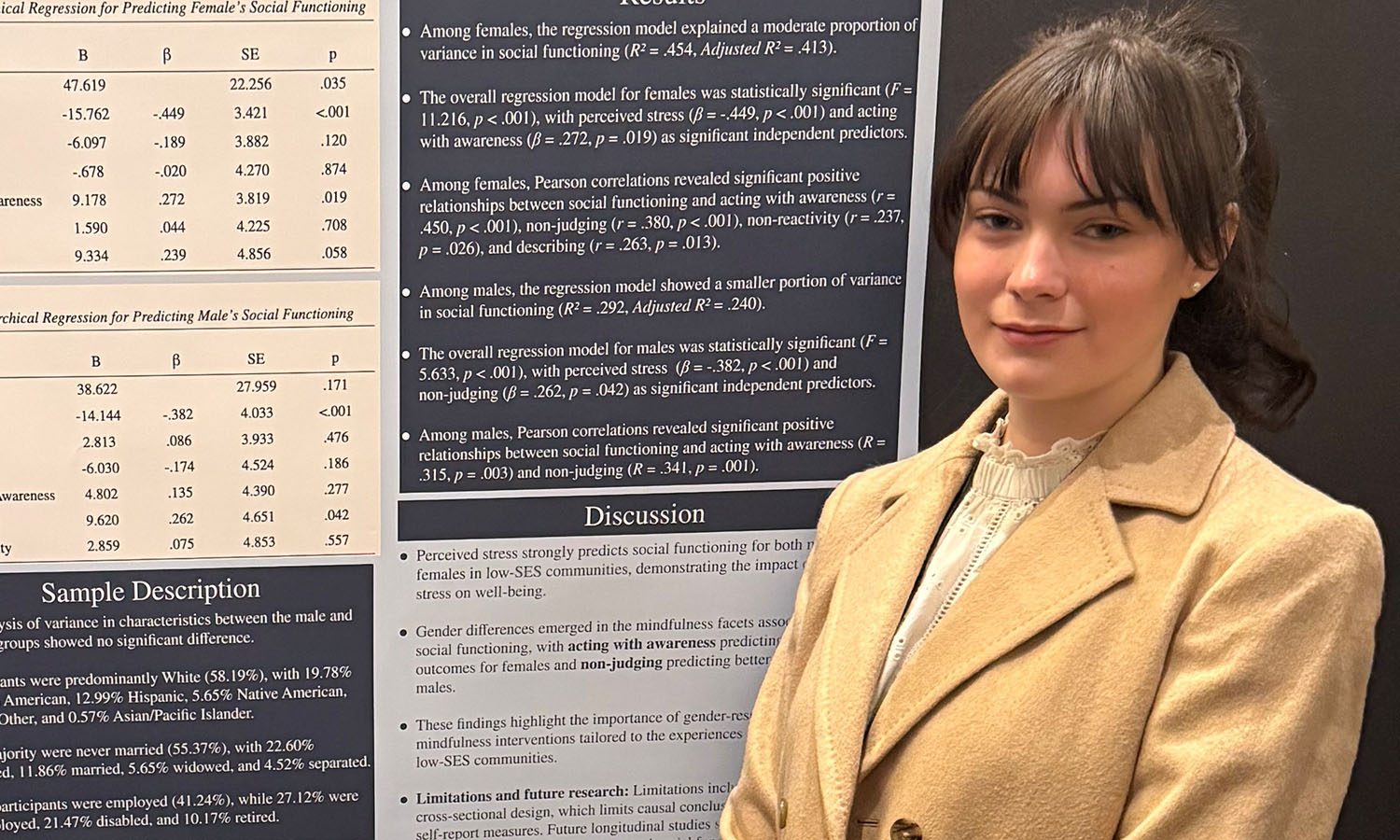
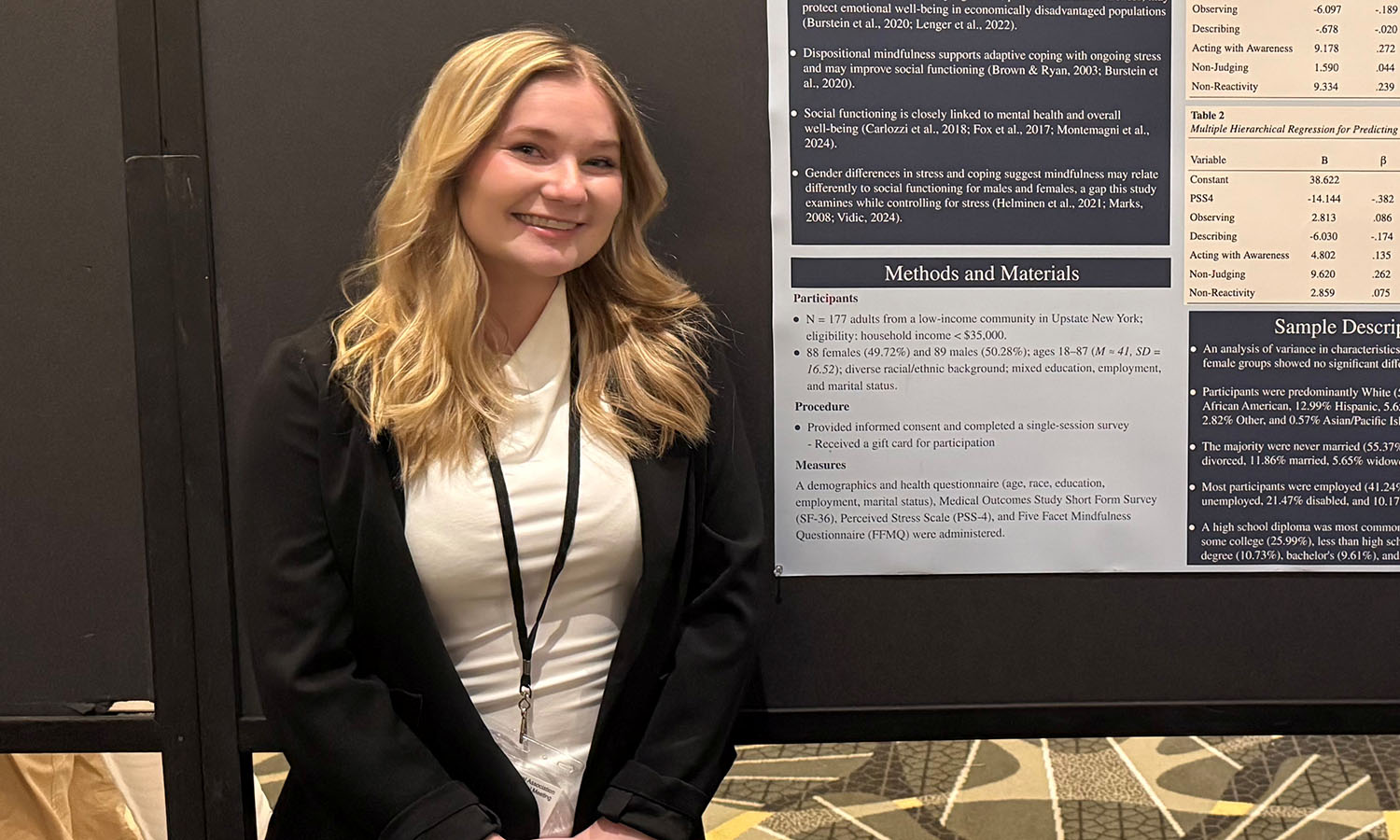
Ashley Seelmann ’26, Madelyn Dingman ’26 and Maya Joy ’26 shared their findings at the Eastern Psychological Association conference, held in Boston this year.
Their study analyzed data from 177 adults from the Geneva community, compiled by Sarah Burstein '19, Professor Bodenlos, Elizabeth S. Hawes ’19 and Kelsey M. Arroyo ’18 for their 2020 article “Facets of Mindfulness and Health Among a Predominantly Low-Income Community Sample.”
By analyzing the data, Seelmann, Dingman and Joy demonstrated how certain aspects of mindfulness, such as labeling thoughts or suspending self judgement, are related to social functioning in economically stressed communities, a group Bodenlos says is often underrepresented in psychological research.
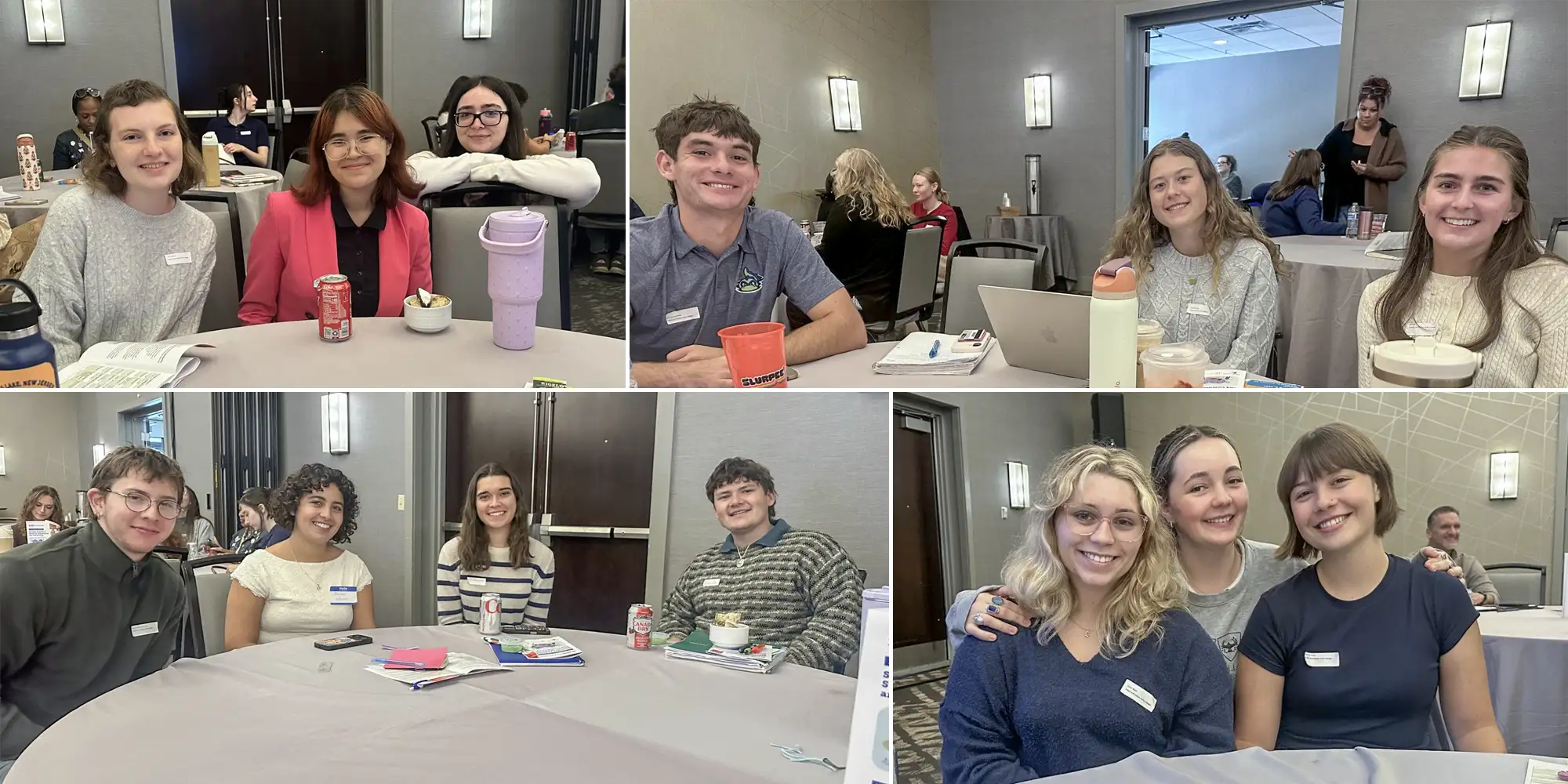
At the annual gathering of psychologists, researchers and students from across the region, HWS students presented the poster, “Facets of Mindfulness Predicting Social Functioning across Genders in a Low-Income Population.” The EPA conference is one of the nation’s longstanding academic forums for sharing new research in psychology and mentoring emerging scholars.
Bodenlos says students’ findings suggest mindfulness may support people differently depending on the person. Students add that this may provide evidence to tailor mindfulness practices to patients so they can leverage the maximum benefit.
“While our findings are correlational, they suggest that different facets of mindfulness may support social functioning in slightly different ways for men and women from a low-income background,” Bodenlos says.
Dingman’s role in the group was to analyze the data, which she says meant changing any written answers into numbers, fixing reporting inconsistencies and formatting the data in a way that rendered it for analysis. She then split the data by gender to run correlations and regressions using software that merged data and performed quantitative analysis.
Her objective was to compare outputs and check for the group’s hypothesized differences.
While students point out their findings are correlational, results suggest that acting with awareness, being attentive and present in their behaviors linked to better social functioning for women, Bodenlos says.
Men, however, saw more improvement in socialization by trying to be less self-critical.
Among women in the study, “acting with awareness” — being attentive and present in one’s behavior — was linked to stronger social functioning.
People often eliminate socializing when they are stressed, Dingman explains. She says, “This could be due to feeling more irritable or just because social time is often easiest to miss when compared to work and family obligations.”
Mindfulness is a concept the American Psychological Association defines as an awareness of one’s internal state and surroundings to help overcome automatic habits and responses without reacting to them. Students examined mindfulness as a personality disposition or trait. By incorporating gender differences into their analysis, students generated insights that could make mindfulness-based interventions more precise and impactful.
Seelmann says the differences they observed between men and women’s responses to various mindfulness approaches were immediately apparent.
Women, she says, are raised to be attuned to others, so acting with awareness builds on strengths women already have. “In contrast, men are often discouraged from expressing vulnerability or engaging in self-reflection, which may make non-judgment especially impactful when it is present.”
Seelmann says she realized using mindfulness strategically could both help reduce stress and challenge prevailing ideas about how men and women should think, feel and behave. It also shows people the importance of connecting with each other.
Turning away from social interactions might seem like a logical way to deal with stress, they explain, but it can become a vicious cycle. Withdrawing from socialization tends to exacerbate existing stressors, not alleviate them.
By presenting their work at EPA, Seelman says her group shared how to deploy mindfulness more deliberately in a population that is both overlooked and overburdened by disproportionately high levels of stress, anxiety and poor physical health due to systemic and structural barriers.
“These barriers — including limited access to quality healthcare, financial stability, inadequate insurance coverage and reduced availability of mental health resources — create conditions in which chronic stress becomes both persistent and difficult to manage,” Seelmann says.
One takeaway from the work she would like people outside psychology to understand is that mindfulness is more than a buzzword. It’s a practical, accessible and modular tool.
“Whether it’s being more present in conversations, less reactive in stressful moments or simply taking a pause, small shifts can make a big difference in overall well-being,” Seelmann says.
“At the same time, this project reminded me that not everyone has equal access to the resources that support mental health, which is why it’s so important to be mindful not just of ourselves, but of the communities around us.”
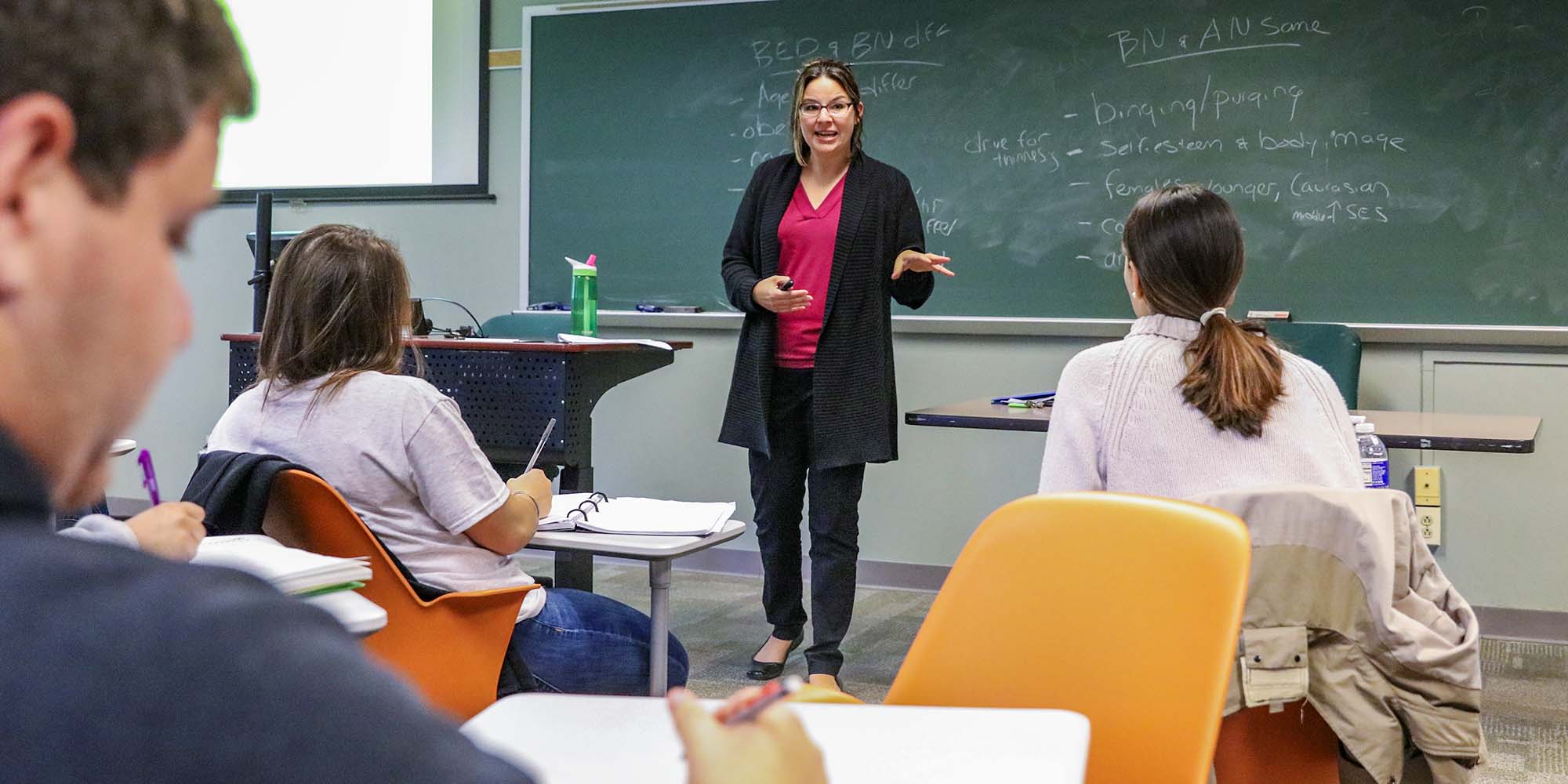
Top: Professor Jamie Bodenlos teaches in class.