

Lives of Consequence
Steven G. Kaminsky '76
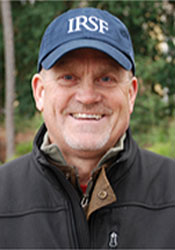
Chief Science Officer, International Rett Syndrome Foundation
As the chief science officer for the International Rett Syndrome Foundation (IRSF), Steven G. Kaminsky ’76, Ph.D., oversees scientists and researchers in their work to develop treatments for girls and women living with Rett syndrome.
According to the IRSF, Rett syndrome is a unique postnatal neurological disorder that strikes all racial and ethnic groups, occurring worldwide in roughly one in 10,000 female births. Almost exclusively seen in girls, Rett syndrome is first recognized in infancy.
“I do everything from talking to parents about the latest research, to sitting with scientists and designing the next 10 years of experiments,” Kaminsky says. “I have the responsibility to follow all science developments that could make a difference in the life of a girl or woman with Rett syndrome. More importantly, I have the duty to push that science which could bring about quality of life changes for those suffering with Rett syndrome.”
Before he joined the IRSF, Kaminsky was a vice president of research at Uniformed Services University (USU) in Bethesda, Md., where he was focused on overseeing faculty research, not all of which coincided with his own area of expertise, pathology. In part what brought him to the IRSF was his desire to “focus on the things I was interested in from a biochemical perspective,” but moreover, “one look into the eyes of a girl with Rett syndrome will change you forever,” Kaminsky says.
After the Rett syndrome’s initial onset during infancy—usually between six and 18 months—symptoms develop to including a slowing down, stagnation and/or regression of motor and communication skills; stereotyped hand movements such as handwashing, gait disturbances and a slowing of the normal rate of head growth; seizures; and disorganized breathing patterns.
“This debilitating disorder robs these girls and women of almost any means to communicate, but they have learned to use their eyes and with those eyes they will grab your heart and mind,” Kaminsky says. “Changing the biology of this disorder is what drives me so that someday they can communicate with more than their eyes.”
Currently, the IRSF is sponsoring two clinical trials designed to alter the biology associated with Rett syndrome.
“The clinical trials process is a long and hard road but if we successfully travel it we will be changing the course of this disorder and changing the quality of life for those suffering from Rett syndrome,” Kaminsky says.
The potential benefits of treating Rett syndrome successfully don’t stop there, though.
“If we can correct the biology in Rett syndrome, we open up a frontier for a huge number of synaptic disorders like schizophrenia, Parkinson’s, autism, Alzheimer’s and compulsive behaviors,” Kaminsky says. “Insight into Rett syndrome is a keystone into all these other psychiatric disorders as well as acquired brain disorders, like sports-related head injuries and traumatic brain injury (the signature injuries of the wars in Afghanistan and Iraq).”
Success with treating Rett syndrome would provide a formula for “a roadmap,” Kaminsky says, for future neuropathologists to see how other scientists had worked out related issues.
“Exploring a rare disease like Rett syndrome has a big impact because it lays down a footprint for a large group of synaptic disorders,” he says. “That’s the power of this particular model.”
Kaminsky has a long distinguished career serving at a senior level for several universities and as a program officer at the National Institutes of Health.
He has been awarded two prestigious military awards: the Order of Military Medical Merit was bestowed to Kaminsky for his dedicated application of talent, effort and spirit which has made a significant exemplary contribution to the U.S. Army Medical Department. The award grants the recipient membership to a unique, private organization and is rarely given to a civilian.
The second award, the Uniformed Services University Medal, was given to Kaminsky to recognize his 11 years of outstanding service as USU vice president for research. He advanced the frontiers of scientific research at USU through passionate mentoring, educating junior faculty, and by building trusting relationships with the National Institutes of Health and all research elements of the military services.
He graduated from Hobart with a B.A. in biology. He went on to get an M.S. in biology from Northern Michigan University and a Ph.D. in pathology at SUNY Buffalo.