
Lives of Consequence
Ralph Walter Graystone Wyckoff 1916
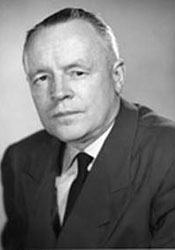
Ralph Walter Graystone Wyckoff's contributions to the world of scientific discovery are numerous and impactful. As a published author, a foreign member of the highly prestigious Royal Society of London, and a pioneer of X-ray crystallography, Wyckoff's ties to the global scientific community run as deep and pure as the molecular structures of the crystals he studied.
In September of 1916, Wyckoff published his first scientific paper in the Journal of the American Chemical Society titled "An Apparatus for Determining the Ions in a Solution." The paper, which he published at the age of 19, was followed by more than four hundred publications throughout the course of Wyckoff's long and prosperous career.
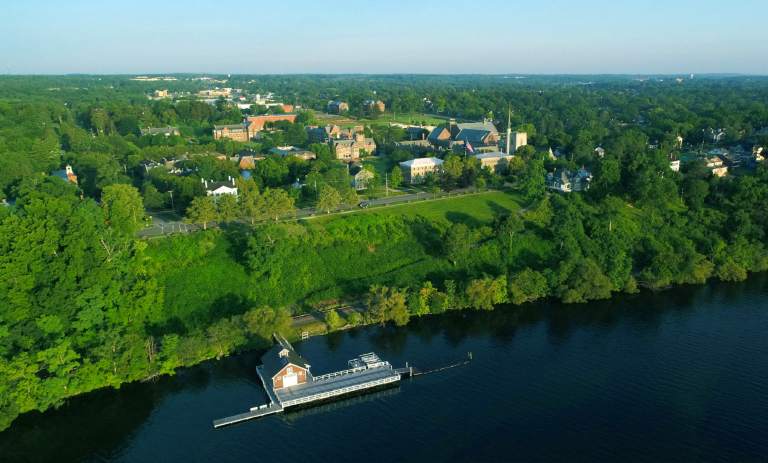
That same year, Wyckoff graduated from Hobart College with a bachelor's of science, and continued his education at Cornell University where he studied analytical chemistry before obtaining his Ph. D. in 1919. While at Cornell, Wyckoff presented his doctoral thesis to esteemed physicist Shoji Nishikawa. Nishikawa was later credited as a major influence on Wyckoff's work in crystallography, as acknowledged by Wyckoff in his influential 1935 publication, "The Structure of Crystals."
In 1927, several years after receiving his Ph. D., Wyckoff moved to Rockefeller University where he studied the structures of bacteria and viruses and published numerous scientific papers and texts. His time at the Rockefeller Institute for Medical Research proved to be highly influential and inspired him to pursue a career in the private sector generating vaccines against various viruses. Wyckoff assisted in the creation of a vaccine against both the Western equine encephalitis virus and epidemic typhus, the latter of which had become ubiquitous during World War II.
Wyckoff began work with both the University of Michigan and the Michigan State Department of Health in Ann Arbor in 1943, where he collaborated with biophysicist Robley Williams in pioneering the metal shadowing technique that allowed for three-dimensional imaging of bacteria. From 1946 to 1952, he researched macromolecules and viruses at the National Institutes of Health in Bethesda, Md.
One of Wyckoff's greatest achievements, rivaled only by the development of metal shadowing, would come in 1948 when he helped found the International Union of Crystallography. The IUCr, a subsidiary of the all-encompassing International Council for Science, allowed for an extensive international community amongst esteemed crystallographers. Wyckoff served on the organization's executive board for six years between 1951 and 1957, eventually holding the office of IUCr president.
A man who was never content to remain sedentary, Wyckoff left the IUCr and moved one final time in 1959 to serve as a professor of microbiology and physics at the University of Arizona in Tucson for nearly 20 years.
Wyckoff's career spanned more than 80 years and through the publication of countless papers and books, the creation of several vaccinations and the teaching of numerous pupils, his impacts on the world of crystallography and microbiology are both diverse and innumerable. Wyckoff lived to be 97, leaving behind four children and a legacy within the global scientific community which still resonates to this day.