
Lives of Consequence
Dr. George N. Abraham '59
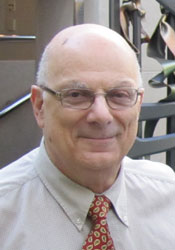
The author of more than 100 scientific articles, contributor to three books, and holder of three patents, Dr. George Abraham's research is credited with the discovery of an early gene mutation that initiates the transformation of benign human lymphocytes into malignant lymphoid tumors. His laboratory also discovered a cell receptor that is found on all white blood cells and now serves to target therapy in treatment of some cancers.
A native of Geneva, N.Y., Abraham graduated from Hobart College in 1959 with a bachelor of science degree in mathematics and chemistry. While at Hobart, he was active with the Herald, the Little Theatre, Schola Cantorum and Canterbury Club. After graduation, he earned master of science and medical degrees from the State University of New York at Buffalo. From there, Abraham's medical career took him California, New York, and Washington, D.C. where he worked on several national initiatives involving the causes, diagnosis, and treatment of cancers of the blood cells.
After his return to New York, he assumed several leadership positions at the University of Rochester School of Medicine and Dentistry, including the Associate Dean for Research and the directorships of the Center on Aging, the James P. Wilmot Cancer Center and the medical scientist training program. During this time he also was a member of the Director's Advisory Committee of the National Institutes of Health, and chaired the Board of Scientific Counselors and the steering committee for the Council of the National Institute on Aging. Abraham is the recipient of an Allergic Diseases Academic Award and a MERIT award from the National Institutes of Health, and is currently a Professor Emeritus of Medicine, and Microbiology and Immunology. In 2005, President Mark D. Gearan awarded him with the President's medal. The honor recognizes individuals for their outstanding service to their community, country and profession.
A dedicated philanthropist, Abraham has served on the board of the Memorial Art Gallery of the University of Rochester, and currently serves on the board of the Eastman School of Music and on the photo acquisition committee of the George Eastman House. An enduring symbol of his generosity, four of the "Stations of the Cross" created by artist Frances A. Hart, are the most recent of his donations to the Colleges which comprise several important artworks including: James Rosenquist's "Sailor-Speed of Light;" Jasper Johns' "After Holbein;" Robert Rauschenberg's "People Have Enough Trouble without Being intimidated by an Artichoke;" Kathe Kollwitz's "Death, Woman and Child;" and Julian Lethbridge's "Chapel."