Back to issue
The Pulteney Street Survey · Spring 2026
Feature · Building the Future of Science

The Fish Center
for the Sciences

Faculty-led collaboration shapes a new hub for interdisciplinary research and learning — transforming how science happens at HWS.

$25M
Founding GiftFrom Cynthia & John Fish
4
StoriesGlass & brick structure
7
FacultyOn the Working Group
18mo
Faculty PlanningBefore ground broke
2027
OpensFall semester

The new Fish Center for the Sciences will do more than change the campus skyline — it will transform how science happens at Hobart and William Smith. At its heart is a story of collaboration, innovation and careful planning that began long before the first shovel hit the ground.
Faculty at the Helm

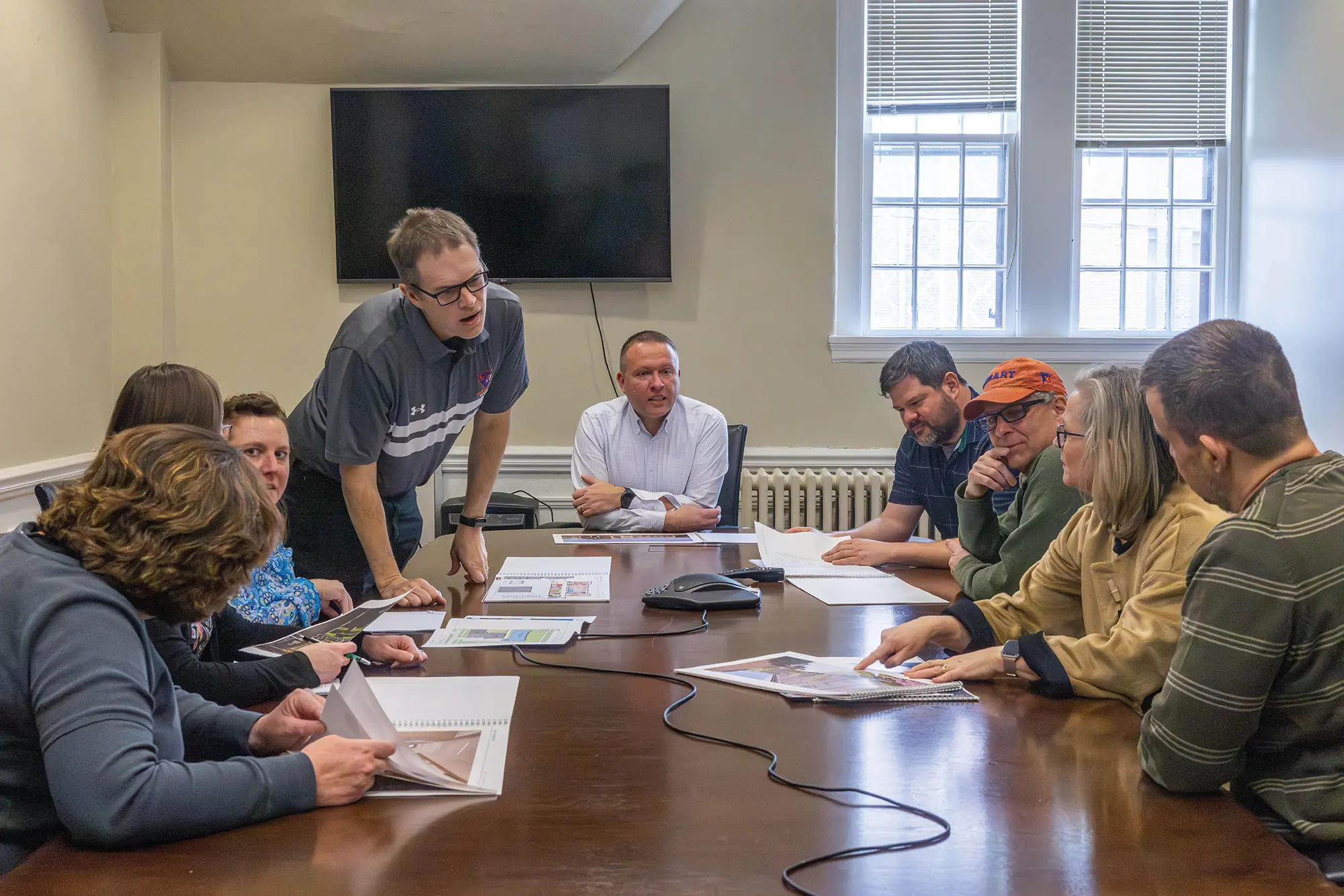
For 18 months, faculty members representing more than 40 science professors formed the Science Faculty Working Group — meeting repeatedly to shape a center that would merge research, teaching and collaboration across disciplines.

The Science Faculty Working Group meets in the Maney Room
In the Maney Room
Kristen BrubakerEnvironmental Studies
Shannon StraubBiology
Emily FisherPsychological Science
Erin PelkeyChemistry
Nick MetzGeoscience · Group Lead
Joseph RusinkoMathematics & Computer Science
David FinkelsteinGeoscience
Sarah KirkProvost & Dean of Faculty
Jonathan FordeMathematics & Computer Science
Leslie HebbPhysics

Designing a building as ambitious as the Fish Center required the expertise and the imagination of those who know the sciences inside and out. Associate Provost and Associate Professor of Geoscience Nick Metz led the team, describing the process as a research project in its own right.

The faculty considered every detail: how to share labs without sacrificing specialized equipment, how to consolidate instrument rooms, and how to integrate teaching spaces that encourage collaboration without sacrificing focus. They worked with Boston-based Suffolk Design to test ideas, refine layouts and ensure that ambitious designs were feasible within the budget.

A Quad Reimagined

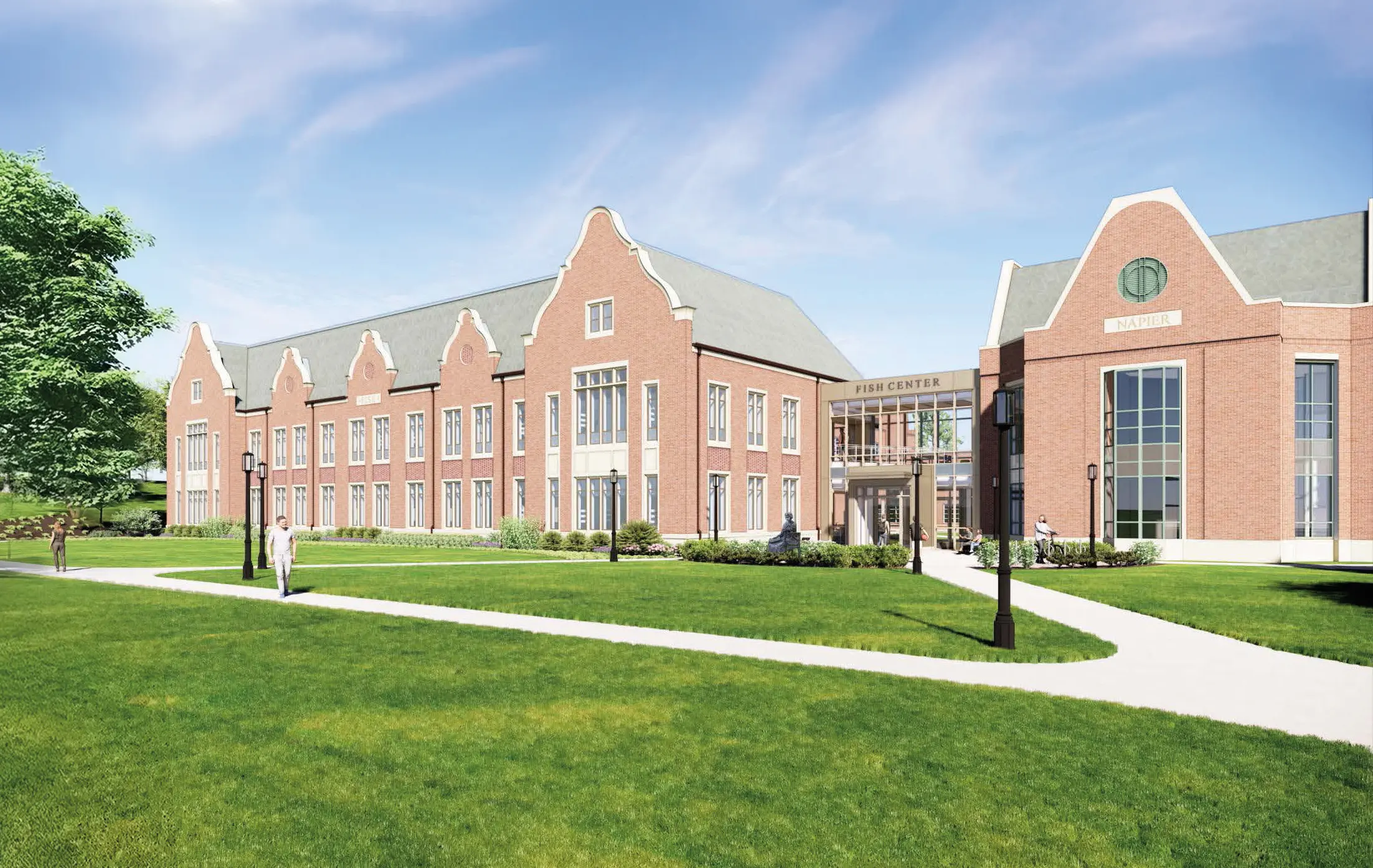
The design of the Fish Center — a sleek, four-story glass-and-brick structure — reflects the interdisciplinary mission of the sciences at HWS. A striking glass connector will link the Fish Center to Napier and Rosenberg Halls, guiding visitors through the science precinct and visually anchoring the southern axis of the Quad.

A second-floor gathering space will offer sweeping views of Lansing Hall and the Science Quad — a vantage point Metz calls "a space for reflection, collaboration and seeing how far we've come."

Science Quad in Transition

A puzzle of extraordinary complexity.

As Eaton Hall emptied, renovations across the Science Quad moved at full speed to prepare for the Fish Center and accommodate displaced departments. Senior Project Manager Chris Button tracks every move on an eight-foot whiteboard in his office.

01

Gulick Hall

A new hub of science activity

Summer renovations transformed Gulick into a hub of science activity. Psychological science, plus spaces and offices for mathematics, computer science and physics now occupy Gulick.

02

Lansing Hall

From chemistry lab to teaching classrooms

A former chemistry lab was converted into two teaching classrooms, while biology faculty and staff temporarily occupy third-floor offices as Fish Center construction continues.

03

Demarest Hall

Offsetting the loss

Additional classrooms in Demarest offset Eaton's instructional space loss, keeping science teaching uninterrupted through the transition.

04

Rosenberg Hall

A new home for environmental studies

Environmental studies found new homes in Lansing and Rosenberg. Rosenberg now houses three permanent physics teaching labs, along with prep, storage and student areas.

Senior Project Manager Chris Button in his office
Behind the move

Tracking every move.

The relocation of departments has been a puzzle of extraordinary complexity. Physics, mathematics, computer science and psychological science now occupy carefully reconfigured spaces in Gulick Hall, while chemistry labs, Rosenberg's basement infrastructure, and Lansing's classrooms were upgraded to temporarily house other programs.

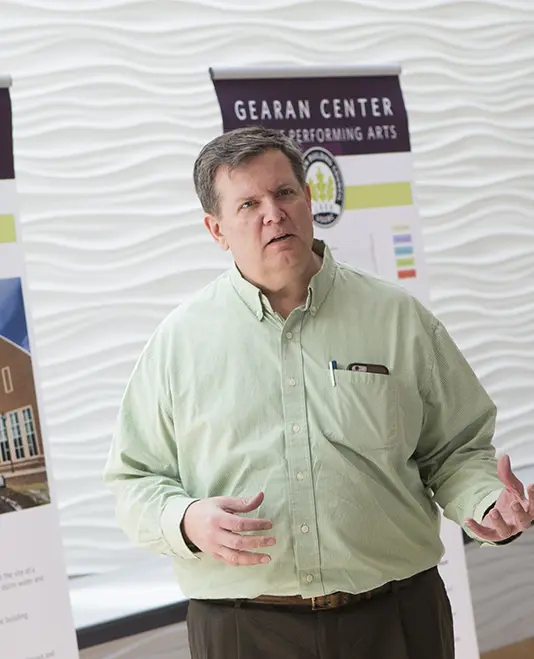
Senior Project Manager Chris Button tracks every move on an eight-foot whiteboard in his office, coordinating faculty, architects and construction teams to ensure continuity.

Chris Button Senior Project Manager
Thinking Ahead
$25M

A founding gift to power the future of science on the Quad.

Cynthia Gelsthorpe Fish '82, L.H.D. '23 & John Fish CEO and Chairman of Suffolk Construction

The donors envision a space that breaks down traditional silos, encouraging faculty and students from different disciplines to share tools, knowledge and ideas in ways that spark innovation.

The future of science on the Quad is unfolding in real time. The building, with its glowing glass connector and collaborative workspaces, is a testament to thoughtful planning, faculty dedication, and a willingness to embrace change.

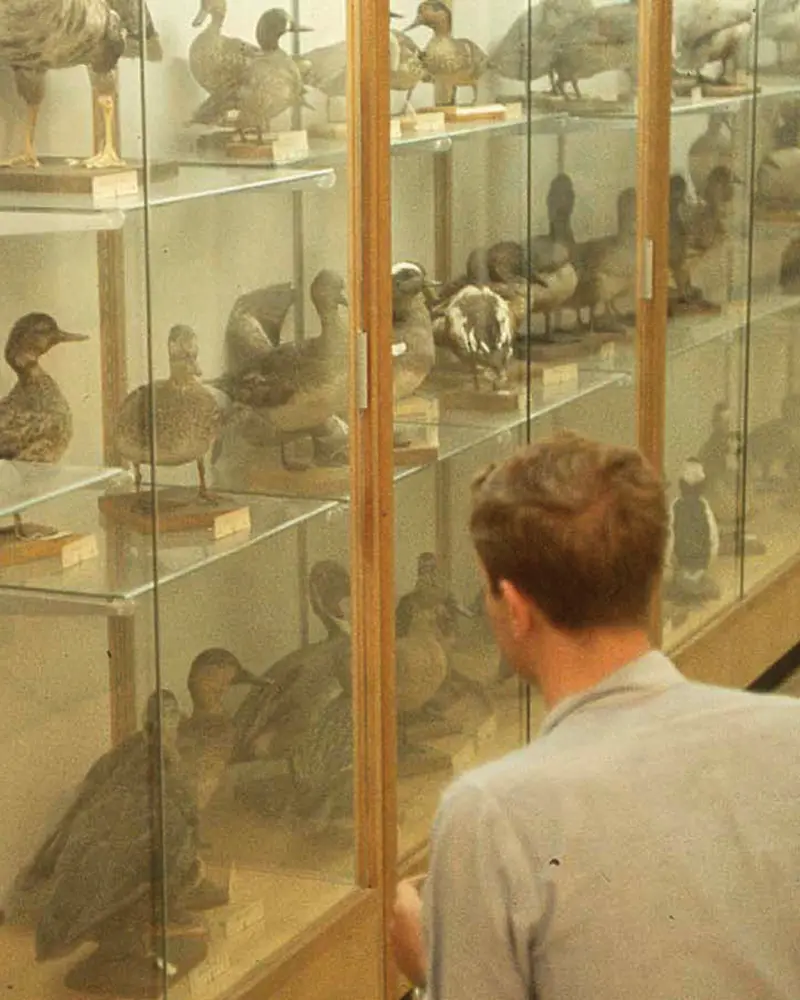
Some of the more than 200 taxidermied birds in HWS' ornithological collection
Eaton Hall's Ornithological Legacy

A century of birds, carefully relocated.

While the Fish Center looks forward, Eaton Hall leaves a tangible connection to the past through its renowned ornithology collection. Built in 1961 and named for Professor Elon Howard Eaton — founder of HWS' Biology Department — Eaton Hall housed 217 taxidermized birds, more than 160 of which were carefully relocated before demolition.

217
Taxidermied birds
in the original collection
160+
Carefully
relocated
1961
Eaton Hall
built

Among the specimens is a group of Passenger Pigeons — an adult male and two juveniles — that add to the collection's scientific and historical value.

The birds are descendants of Eaton's vision of connecting students to the natural world. They're now in storage until a permanent home in our science complex is established, ensuring that Eaton's legacy continues to inspire curiosity, learning and discovery for generations to come. Prof. Mark Deutschlander · Biology

Champion Curiosity

Be part of making this vision a reality.

Naming opportunities offer a lasting way to champion curiosity, collaboration and impact at the Fish Center for the Sciences.

Explore naming opportunities
Bob O'Connor P'22, P'23 Vice President & Senior Philanthropic Advisor
(315) 781-3535 · oconnor@hws.edu

More from this issue

View all stories →
©