Back to issue
The Pulteney Street Survey · Spring 2026
Hill & Quad · Research

A Culture
of Discovery

Carnegie's new Research College designation recognizes how HWS faculty and students collaborate to advance knowledge.

Photo by Adam Farid '20

The Carnegie Classification of Institutions of Higher Education has designated Hobart and William Smith as a "Research College and University," recognizing HWS' strong commitment to faculty and undergraduate research.

HWS is one of just 216 institutions nationwide to receive the designation — and one of only 38 primarily undergraduate institutions recognized — underscoring the distinctive role HWS plays in advancing meaningful, student-centered research.

Each summer, HWS supports more than 100 students on campus through summer scholarship funded by external grants and the generosity of donors. The Colleges continue to invest in the teacher-scholar model, ensuring that faculty remain at the forefront of their fields and that students benefit directly in the classroom and through collaborative research.
By the Numbers

A research enterprise built on student–faculty partnership.

216
Institutions nationwiderecognized as Carnegie Research Colleges
38
Primarily undergraduateinstitutions on the list
100+
Students researchingon campus each summer
3 + 1
NSF REU grantsplus an NIH AREA grant in active funding
Two Students. Two Discoveries.

Where the work actually happens.

From a chemistry bench in Geneva to a research vessel in the North Atlantic, HWS students are pursuing questions that matter — alongside the faculty who help them get there.

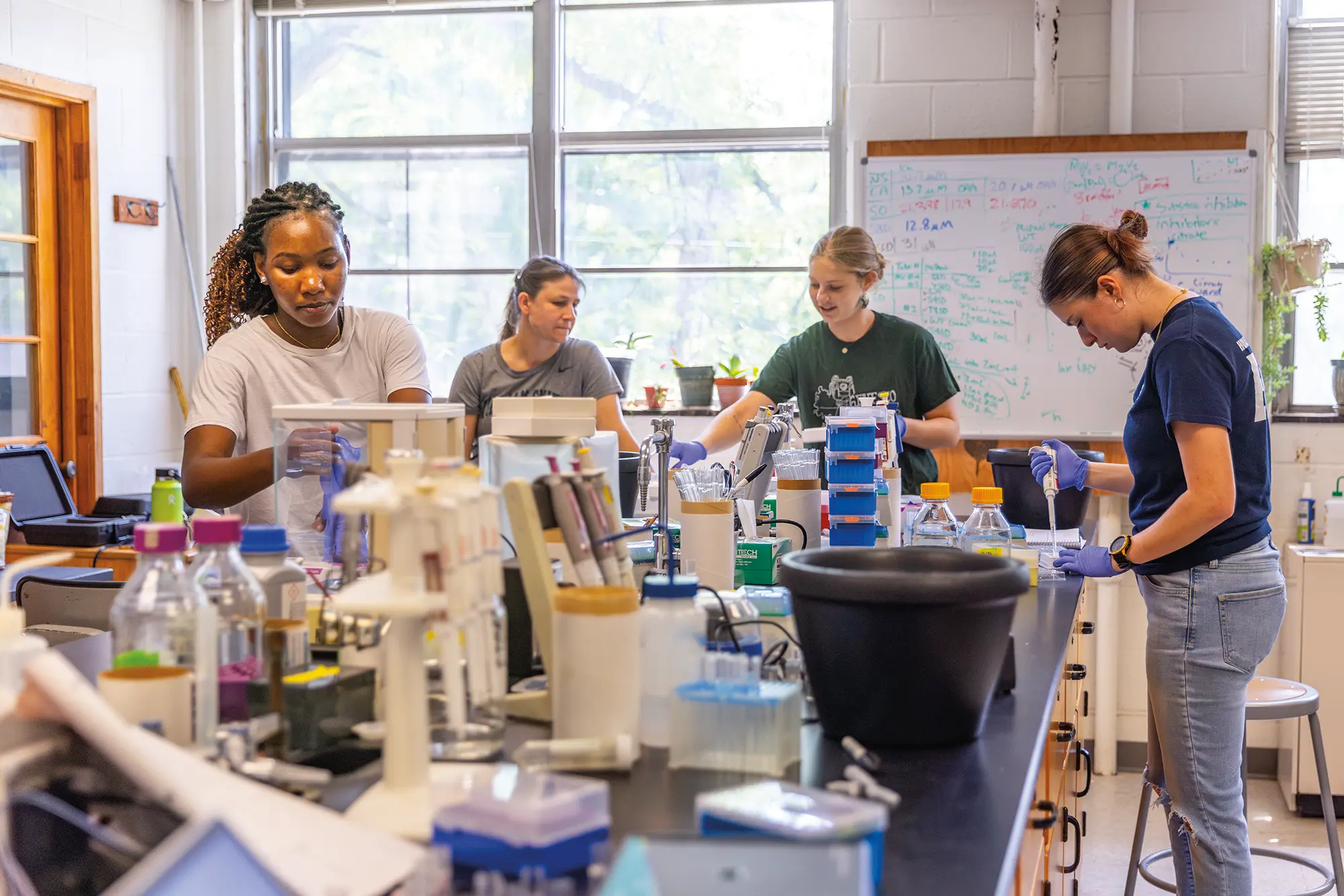
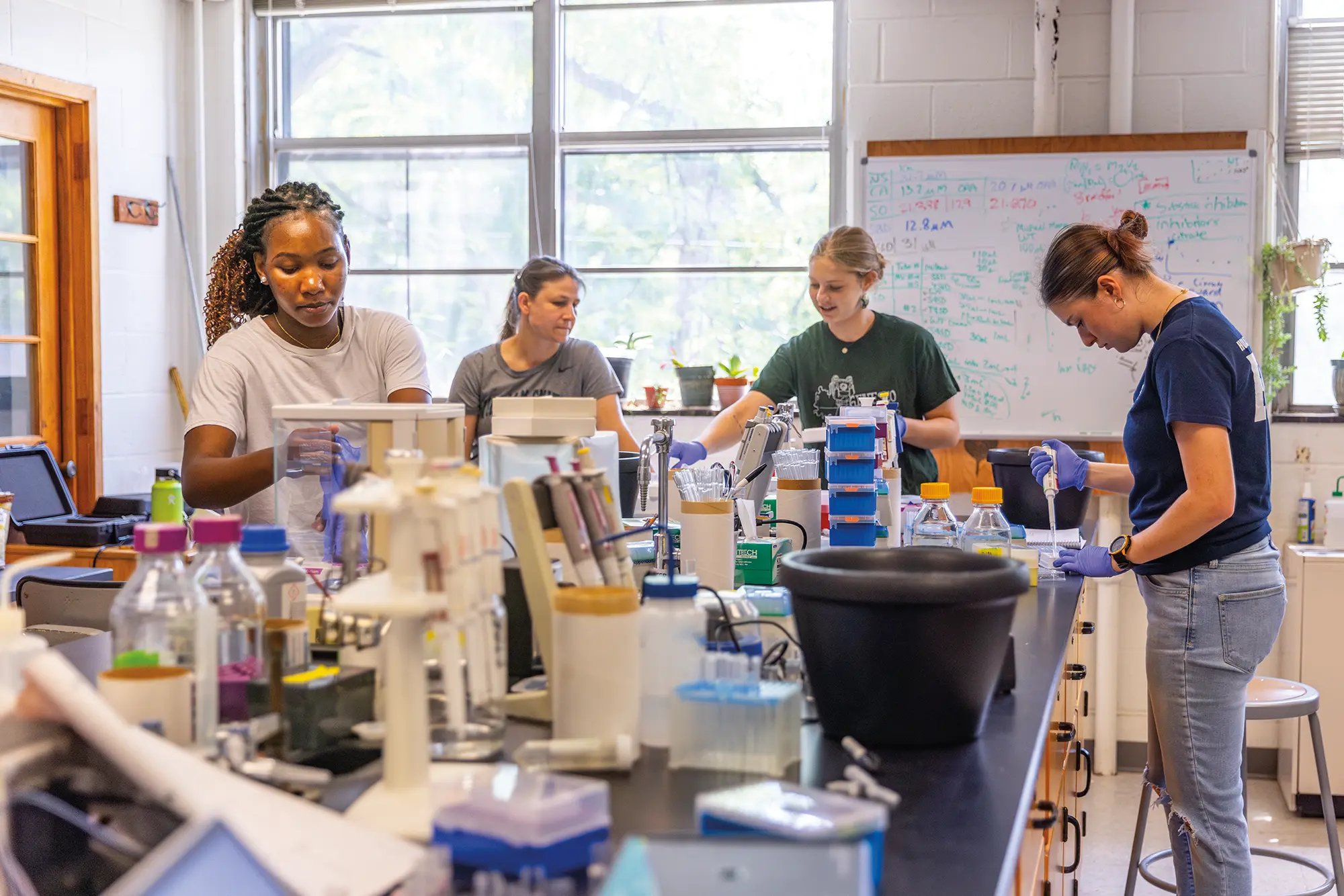
Selina Owino '28, Catherine Antoulinakis '28 and Nora Smith '27 in the chemistry lab with Professor Kristin Slade
Enzyme Research
Chemistry · Cellular Energy

Selina Owino '28, Catherine Antoulinakis '28 & Nora Smith '27

with Professor of Chemistry Kristin Slade

Owino and Smith study malate dehydrogenase — an enzyme central to how cells convert sugar into energy — to understand how quickly it works and what conditions affect its performance.

The work sits at the intersection of biochemistry and cellular biology, the kind of patient, hypothesis-driven inquiry that defines a teacher-scholar lab.

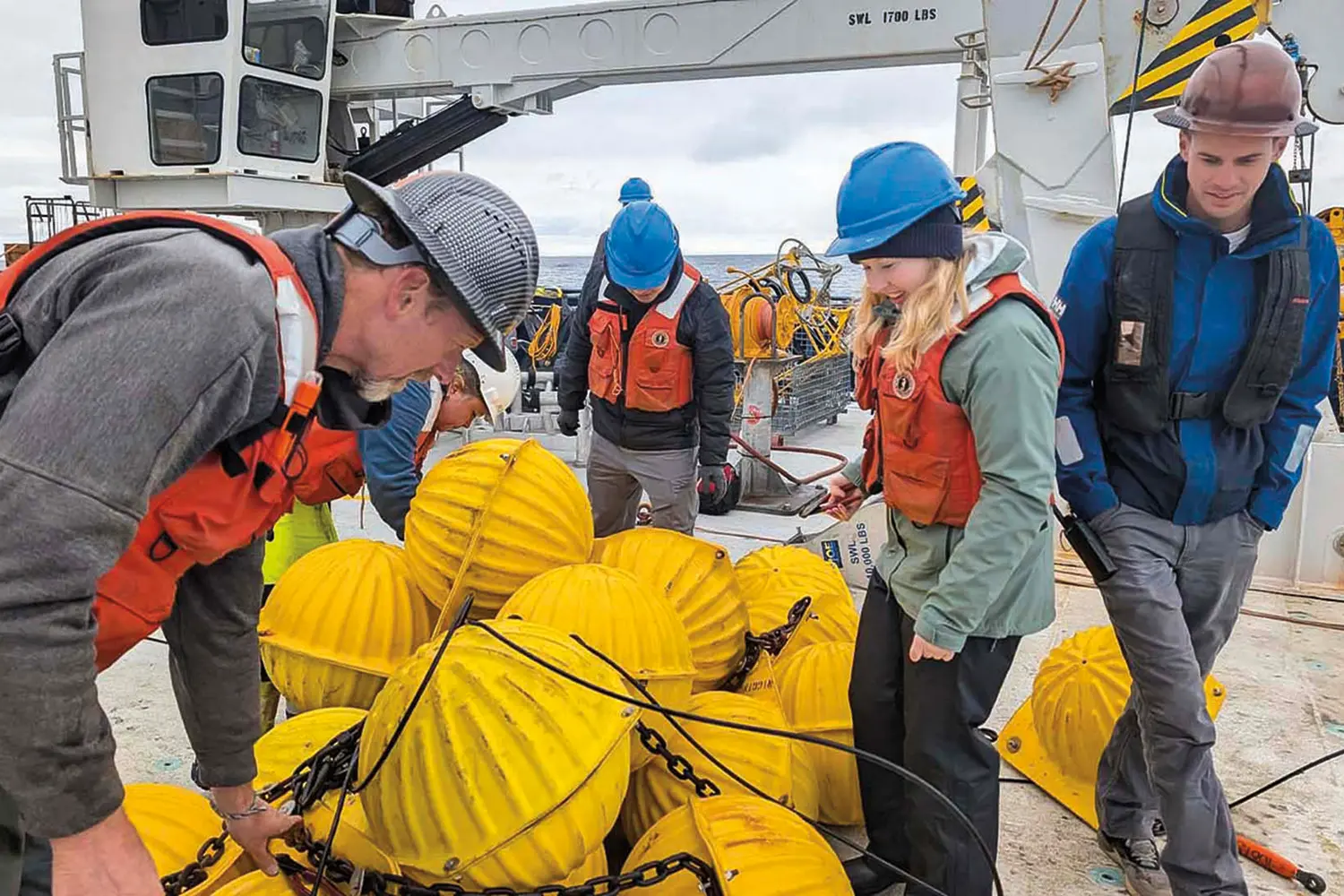
Fiona Howes '27 dismantles a recovered mooring in the North Atlantic
Hydrology · North Atlantic
Geoscience · Hollings Scholar

Fiona Howes '27

Between Iceland and the Faroe Islands

Geoscience major Fiona Howes '27 is a 2025 recipient of the Ernest F. Hollings Undergraduate Scholarship — the nation's leading award for undergraduates pursuing careers in oceanic and atmospheric science.

Her work at Woods Hole Oceanographic Institution led to a coveted invitation to join the Upstream Pathways of the Faroe Overflow project, analyzing hydrographic data from the 2024 UFO Cruise and spending a month aboard the R/V Roger Revelle.

"I was honored to contribute and learn from the scientists leading this important work." — Fiona Howes '27

On campus, Howes combines rigorous academics with engagement: she studies geoscience and biology, runs cross country, serves as vice president of the Geoscience Club, mentors first-year students and volunteers with the Food Recovery Club. Through HWS' Summer Research Program, she has also explored how sediments in Seneca Lake reveal long-term climate trends — work she presented at the American Geophysical Union conference in Washington, D.C.

Stories like these are what the Carnegie designation recognizes: a culture in which curiosity is supported, mentorship is intentional, and student researchers leave HWS not just having read about discovery — but having done it.

More from this issue

View all stories →
©