Back to all profiles
04 / 23 Access That Endures
Access That Endures · Profile 04

Guardians of the Great Lakes

Inspired by HWS, Alex Gatch '16 now leads research at the U.S. Geological Survey to protect and restore native fish.

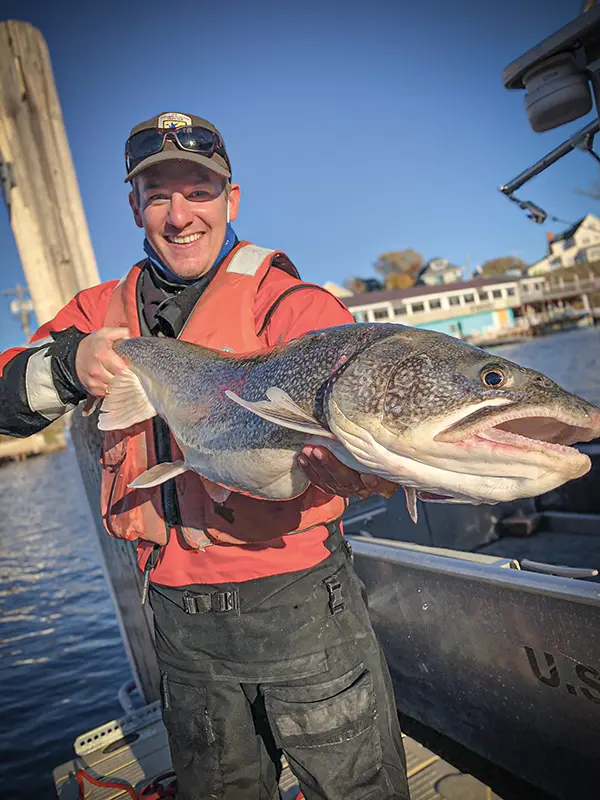
Alex Gatch '16, research biologist at the U.S. Geological Survey
Name
Alex Gatch '16
Majors
Biology and Environmental Studies, magna cum laude
Awards
Bollettieri Family Scholarship & Fred L. Emerson Foundation Scholarship
Position
Research Biologist, U.S. Geological Survey

In a lab tucked away in upstate New York, Alex Gatch '16 is tracking the comeback story of Lake Ontario's native fish.

As a research biologist with the U.S. Geological Survey, he's on a mission to bring native fish species back to the Great Lakes. Think: lake trout, cisco and bloater — once abundant, now struggling to survive due to the invasive mussels and sediment buildup that have wrecked their habitats.

Gatch is even leading a lake-wide acoustic telemetry project (like fish GPS) to track where these species are still spawning and what they need to recover.

His path into fisheries science began at HWS, where he graduated magna cum laude in Biology and Environmental Studies, earning Honors in Biology under the mentorship of Professor Meghan Brown.

My advisors, Meghan Brown, Susan Cushman '98, Lisa Cleckner and Roxanne Razavi, were instrumental in shaping my education and inspiring me to go to grad school.Alex Gatch '16

With support from the Bollettieri Family Scholarship and the Fred L. Emerson Foundation Scholarship, Gatch says he was able to pour his time into his Honors thesis instead of juggling extra jobs. His research, "Age and Size as Predictors of Mercury Accumulation in Lake Trout from the Finger Lakes," analyzed mercury levels in lake trout across Seneca, Cayuga and Canandaigua Lakes to help anglers make safer choices.
The Work, by Species & Water

Three native fish, three Finger Lakes.

Gatch's recovery work centers on species that were once abundant in the Great Lakes, and his Honors thesis analyzed mercury accumulation across three of the Finger Lakes closest to home.

Species 01

Lake Trout

Salvelinus namaycush

The subject of Gatch's HWS Honors thesis on mercury accumulation — and a keystone species in the Lake Ontario recovery effort.

Species 02

Cisco

Coregonus artedi

Once abundant, now struggling to survive. Tracked through the lake-wide acoustic telemetry project Gatch leads at the USGS.

Species 03

Bloater

Coregonus hoyi

A deepwater whitefish whose habitat has been disrupted by invasive mussels and sediment buildup — a target for ecosystem-scale restoration.

Honors Thesis · The Three Lakes

"Age and Size as Predictors of Mercury Accumulation in Lake Trout from the Finger Lakes" — research that helped anglers make safer choices.

  • Seneca Lake

    Sample site · Lake trout
  • Cayuga Lake

    Sample site · Lake trout
  • Canandaigua Lake

    Sample site · Lake trout

From Honors thesis to Purdue to USGS

After graduating, Gatch went on to earn his M.S. in Fisheries Science from Purdue University. Today, that early investment is paying dividends in science, environmental restoration and a full-circle return to the waters where it all started.

From an undergraduate Honors thesis on the Finger Lakes to a federal research role on Lake Ontario, Gatch's career hasn't strayed far from the waters where it began. The species change. The questions get larger. But the through-line is the same: scientific evidence in service of recovery.

Carry It Forward

A scholarship today, a fishery restored tomorrow.

Two named scholarships gave Alex Gatch '16 the time to focus on his Honors thesis — research that became the foundation for his federal recovery work. Help the next student do the same.

Support student scholarships

More from Access That Endures

View all 23 profiles →

©